-
Dramatic plot: Shakespeare’s New Place, Stratford
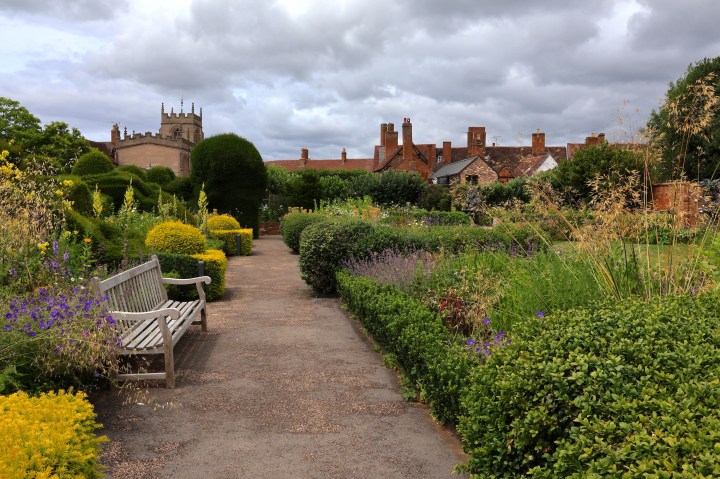
Shakespeare’s family home – the largest in Stratford – is long gone. But there’s more to this plot on Chapel Street than meets the eye, including a Tudor real-life story of “murder most foul”.
Words and photography by Liani Solari
The Reverend Francis Gastrell was a tourism marketer’s worst nightmare for Stratford-upon-Avon. Until he wasn’t. Irritated by literary pilgrims to the 150-year-old mulberry tree planted in his garden by former homeowner William Shakespeare, Gastrell took an axe and felled it with “Gothick barbarity”. You’d think it a hard act to follow, destroying the only living memorial to Stratford’s beloved Bard, but dramatic tension peaked in 1759 when Gastrell also reduced the house on the site to rubble, to avoid paying taxes.
Before the dust could settle, Gastrell was run out of town and entrepreneurial locals were flogging Shakespeare souvenirs carved from the salvaged mulberry wood (and a suspicious number of knock-offs). Gastrell had unwittingly sown the seeds of bardolatry, and despite Stratford’s first Shakespeare Jubilee in 1769 being a washout, the English market town was becoming a popular tourist destination.
And there’s the rub: New Place, Shakespeare’s final home for 19 years, had vanished from Chapel Street, conspicuous by its absence from a streetscape of other medieval half-timbered houses. “Do you see nothing there?” Hamlet might have asked.
In the Oscar-nominated film Hamnet, it’s the “new house” that daughter Susanna says, “everyone in town is talking about”.
Excavating and regenerating the site 10 years ago, the Shakespeare Birthplace Trust resisted re-creating the house literally, instead reimagining New Place to appeal to literary enthusiasts and gardeners alike. Bronze markers trace the home’s footprint, purpose-designed gardens and commissioned sculptures speak to Shakespeare’s life and works, and Nash’s House next door provides an exhibition space.
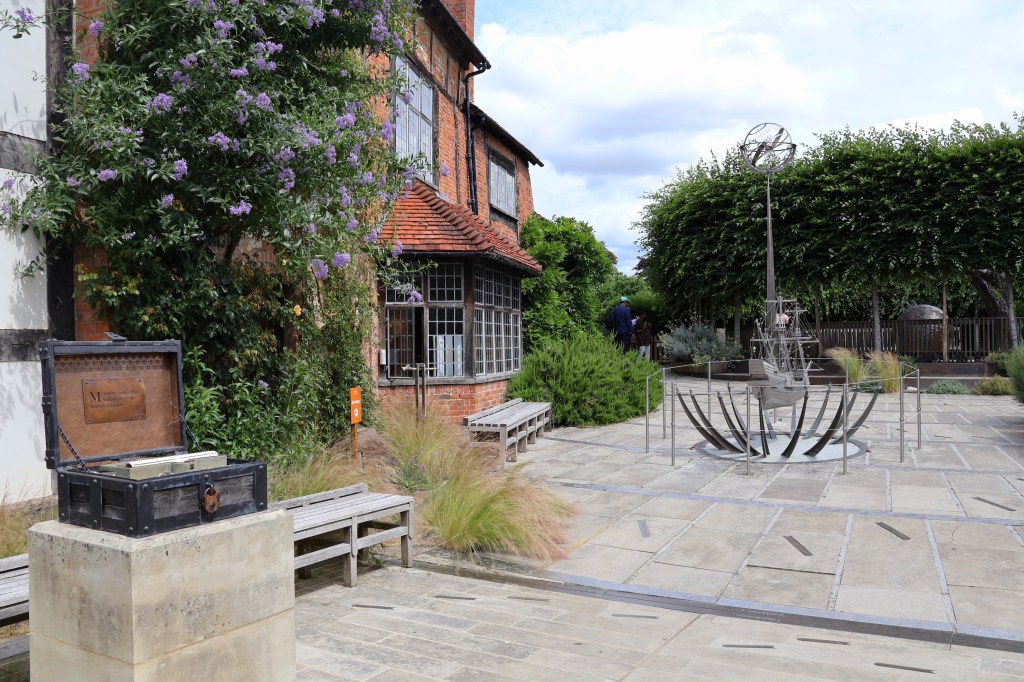
The site of Shakespeare’s gatehouse and courtyard at New Place, overlooked by Nash’s House next door, Stratford-upon-Avon; The Strongbox by Chris Lloyd, 2016, is at the left (Photo © Liani Solari) Shakespeare purchased New Place in 1597, nine months after the death of his only son, 11-year-old Hamnet, from an unrecorded cause. This multistorey 20- to 30-room house at the centre of Stratford’s civic and social life was surely a status symbol, reflecting the playwright’s rising star on London’s theatre scene.
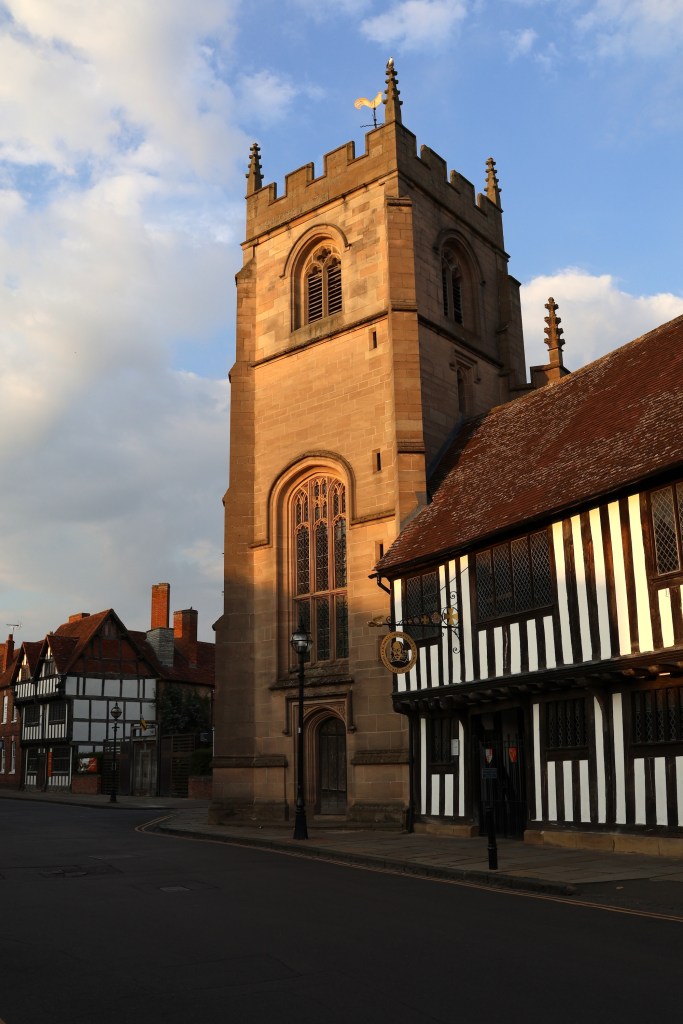
Stratford-upon-Avon’s Chapel Street; (left to right) Nash’s House, New Place, Guild Chapel, Shakespeare’s Schoolroom & Guildhall (Photo © Liani Solari) In the Oscar-nominated film Hamnet (2025), it’s the “new house” that daughter Susanna says, “everyone in town is talking about”. Everyone, that is, but grieving mother Agnes (aka Anne Hathaway, played by Jessie Buckley), who is openly hostile to her husband’s purchase of Stratford’s largest house when their family of five has been so cruelly cut down.
If, as the film suggests, Shakespeare’s preoccupation with prestige grated with Agnes’s raw, private anguish, there’s also the matter of Shakespeare helping his father apply for a coat of arms – the hallmark of a gentleman – 10 weeks after Hamnet died. Today, the Shakespeare coat of arms, crowned with a falcon punningly shaking a spear, lords it over visitors entering New Place on Chapel Street.
Shakespeare’s new house had come with its own fatherly ghost, casting the playwright’s ownership into legal limbo for five years.
Inside the entrance, a replica Tudor strongbox holding the title deed to New House chillingly recalls the fatal poisoning of the previous owner, William Underhill, by his son Fulke. Shakespeare’s new house had come with its own fatherly ghost, casting the playwright’s ownership into legal limbo for five years. Writing Hamlet at the time, Shakespeare had found a “murder most foul” close to home, perhaps prompting him to favour the clandestine poisoning of the king over the tradition of slaying in the original sources.
There’s no conclusive evidence that the worldly-wise dramatist ever travelled outside England, which has contributed to the contentious authorship question: could Shakespeare have written so knowledgeably about aristocratic life and foreign customs without experiencing them? British sitcom Upstart Crow makes light of the debate through Shakespeare’s parochial sources of inspiration and his Tudor public transport misadventures on the Stratford–London commute. New Place acknowledges the question with Terrestrial Sphere, a metal globe with the earth’s axis thrust through Shakespeare’s Stratford-centric world, not the poles.
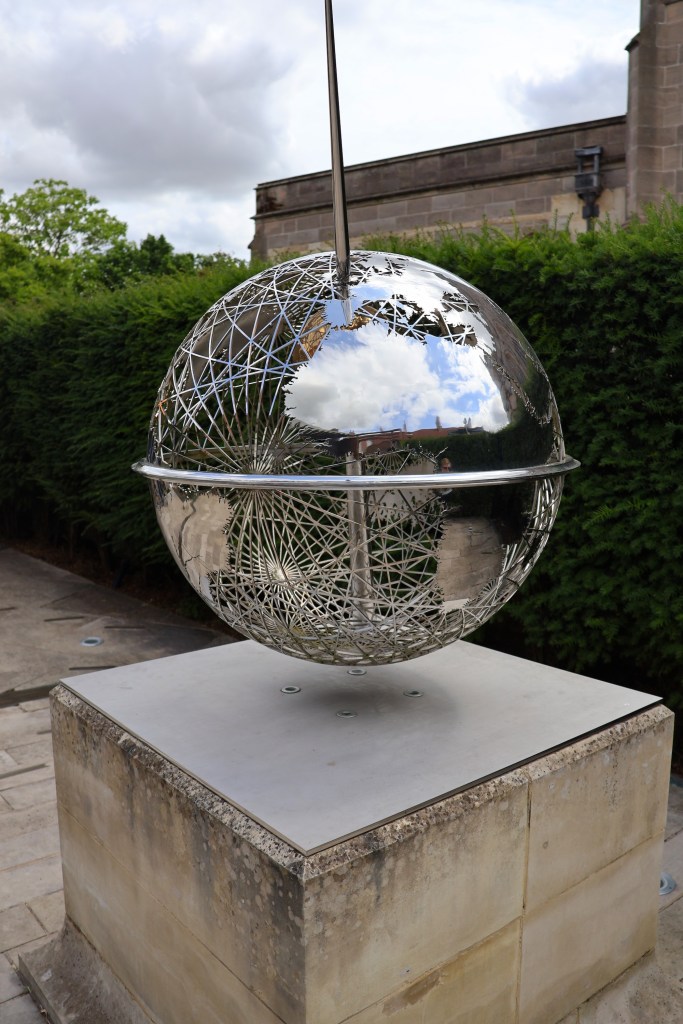
Terrestrial Sphere by Benjamin Ryan and Rupert Todd, 2016, New Place, Stratford-upon-Avon (Photo © Liani Solari) At the heart of Shakespeare’s family life was the large hall, now pegged out by a ring of 26 pleached hornbeam trees representing the number of plays Shakespeare wrote when he owned New Place. Their intertwined branches encircle two bronze focal pieces: a writing desk and chair; and a spectacularly windswept hawthorn tree and massive sphere suggesting Shakespeare’s genius. Surprisingly, there’s no nod to the family members who energised this space more than Shakespeare did (owing to his absences in London) – namely the Shakespeare women. Four generations, from Shakespeare’s mother to his granddaughter, are likely to have gathered here in the spring/summer of 1608.
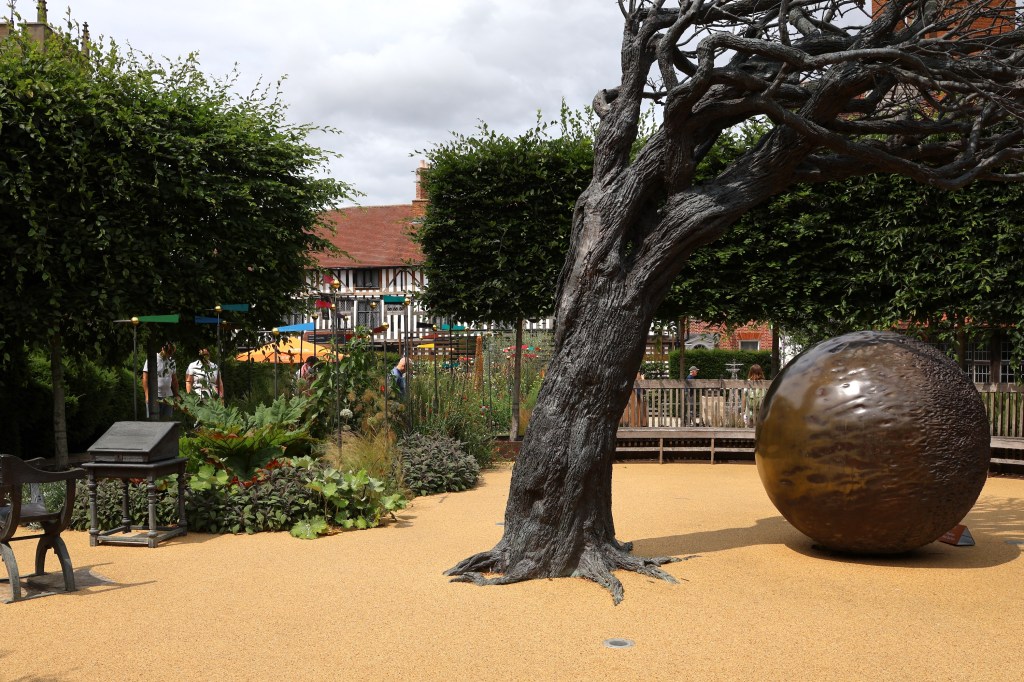
His Mind’s Eye by Jill Berelowitz, 2016, at the centre of the hornbeam circle at New Place, Stratford-upon-Avon (Photo © Liani Solari) It’s debatable whether the Shakespeares had a knot garden, and the film Hamnet shows Agnes tending an informal patch (at a 15th-century country house in Surrey that stands in for New Place) rather than the fashionable manicured parterre. To get a sense of Agnes’s beautifully untamed garden – without perfectionist stepmother Joan appearing like an attack of blight – visit New Place in summer when the flowering perennials are swaying to a wilder beat.
To get a sense of Agnes’s beautifully untamed garden – without perfectionist stepmother Joan appearing like an attack of blight – visit New Place in summer when the flowering perennials are swaying to a wilder beat.
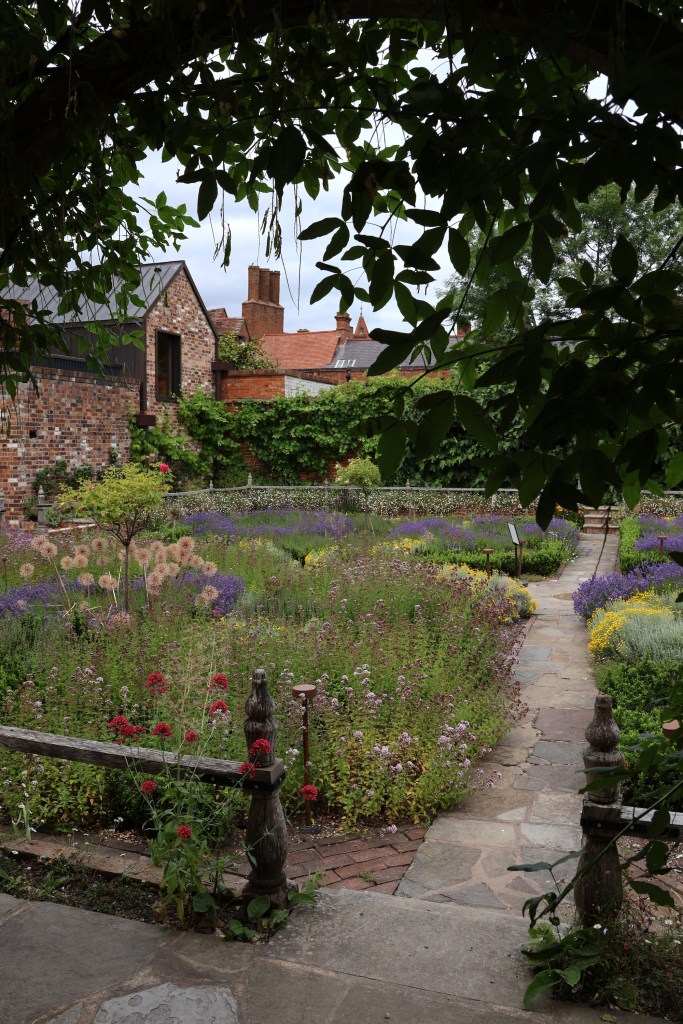
It’s when the sunken knot garden is flush with purple lavender spikes and yellow santolina orbs, and the giant onion flowers guarding the standard roses from aphids are getting ready to stand down. See if you can spot the evergreen spindle substituted for diseased box hedges – a horticultural nod to Shakespeare’s fondness for using mistaken identity as a plot device.
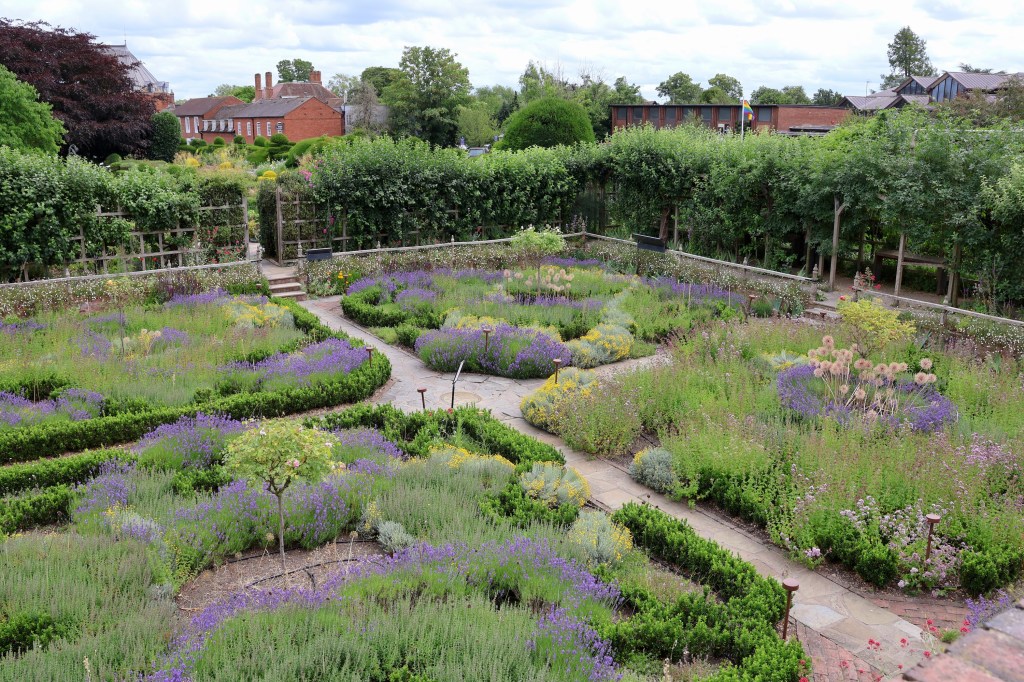
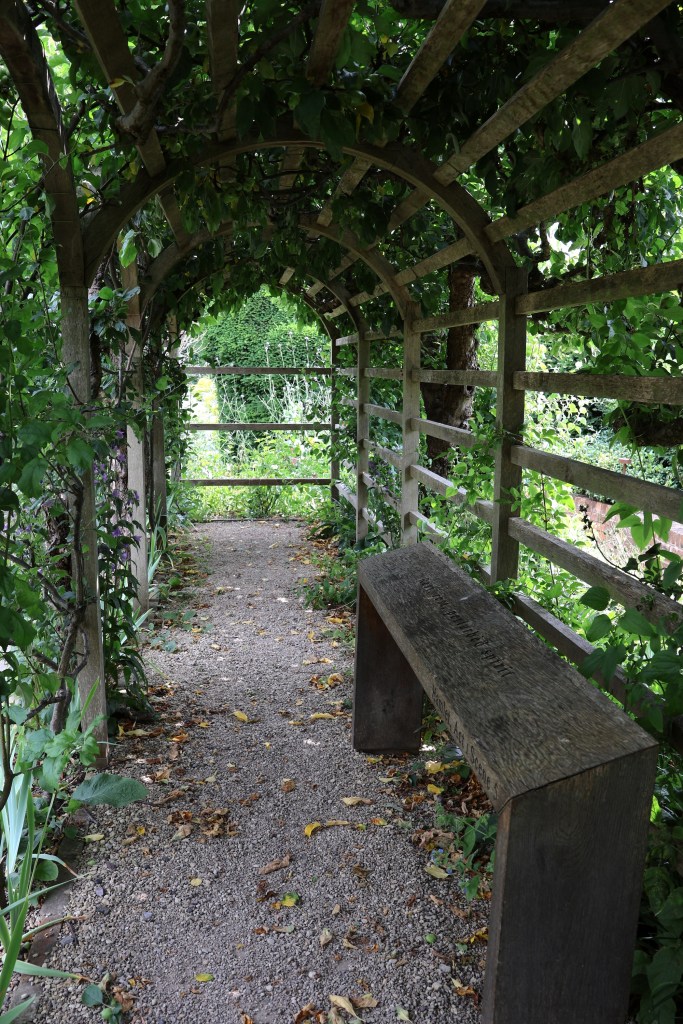
Sunken knot garden at New Place, Stratford-upon-Avon (Photo © Liani Solari) Flanking the knot garden, the crabapple arbour promises midsummer shade and tantalisingly immature fruit. Take a leaf out of Hamlet here (“Rest, rest, perturbèd spirit,” invites an oak bench) before going up to the viewing terrace at Nash’s House. That’s where you’ll get an overview of the knotwork, plus a distant glimpse of the Royal Shakespeare Company’s Theatre Tower sprouting up behind the tree line.
The garden’s showstopper is arguably the yew hedge that runs past the Great Garden to the Wild Bank, where beneficial insects and pollinators board at Falstaff’s Luxury Bug Hotel and dine on flowers mentioned in Shakespeare’s plays. Like the knot garden, the yew walk is a relic of an earlier interpretation of the site, intended as a neat, straight hedge but allowed to grow with abandon during World War I and sprout cloud-like bulges.
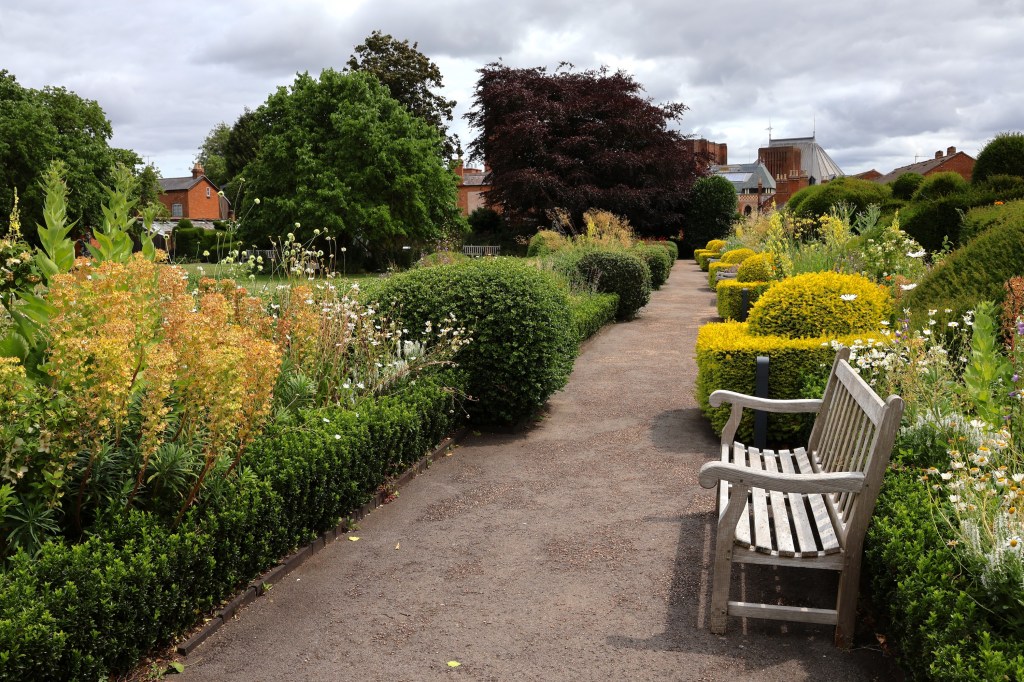
The yew walk at New Place, Stratford-upon-Avon (Photo © Liani Solari) Sculpted yew buttresses now cradle borders of flowering perennials (fragrant mock orange, spiky sea holly, intensely vibrant cranesbill) and – no, your eyes do not deceive you – opium poppies (a permitted garden-variety plant in the UK, unlike Australia). If this attention-loving wing of the garden has a dark, secretive side, it’s the yew tree’s traditional association with death and its possible identity as the “cursed hebenon” used to poison the king in Hamlet.
Bordering the Great Garden’s half-acre lawn, a sculpture trail of bronzes inspired by Shakespeare’s plays commemorates the site of Stratford’s first permanent theatre, which staged its last performance (Hamlet) in 1872 before being demolished.
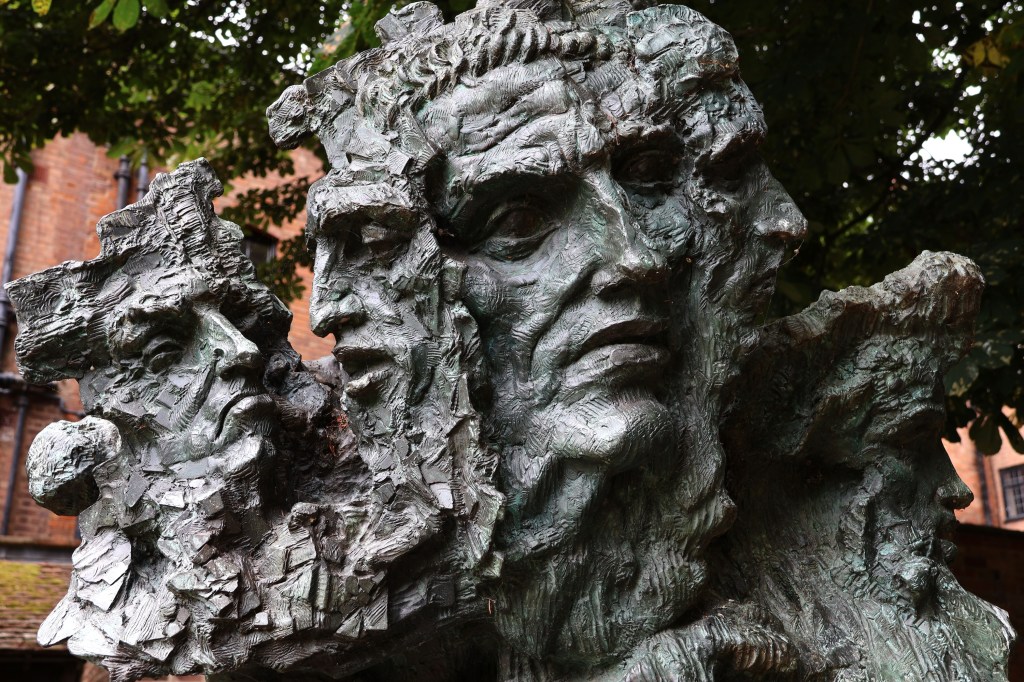
One of nine bronzes by Greg Wyatt on the sculpture trail in the Great Garden, New Place, Stratford-upon-Avon; detail of Julius Caesar, 2002 (Photo © Liani Solari) 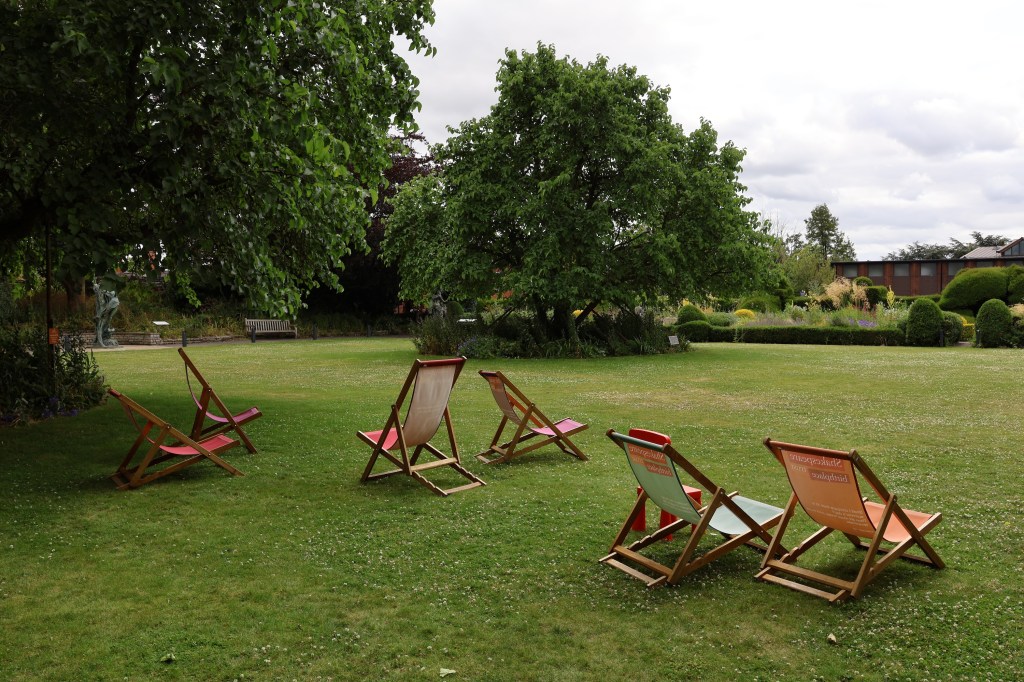
The Great Garden at New Place, Stratford-upon-Avon (Photo © Liani Solari) Low-slung deckchairs sprouting Shakespeare quotes are strewn across the lawn, inviting you to watch the clover grow in the shade of a 270-year-old mulberry. “I am old and frail. Please do not shake my branches,” says this immortal tree propagated from Shakespeare’s felled mulberry. Not even Shakespeare himself could have devised a better plot twist.
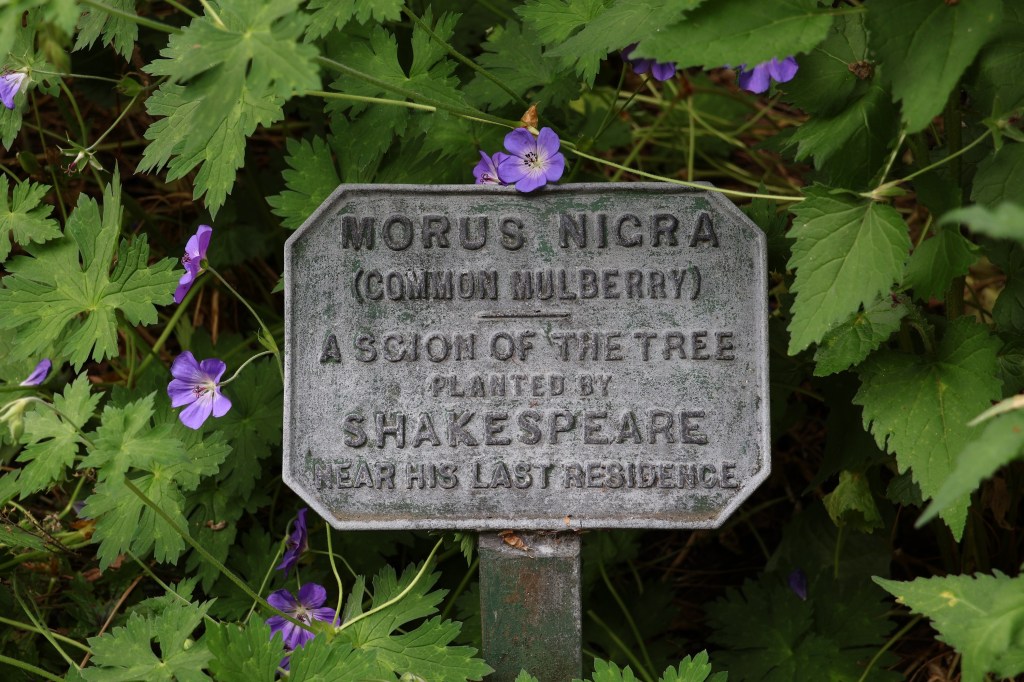
Sign under the 270-year-old mulberry propagated from Shakespeare’s felled tree, New Place, Stratford-upon-Avon (Photo © Liani Solari) © Liani Solari
Posted 15 March 2026.
The writer saw the film Hamnet and visited New Place at her own expense.
-
The cat’s whiskers: Trattoria al Gatto Nero, Burano
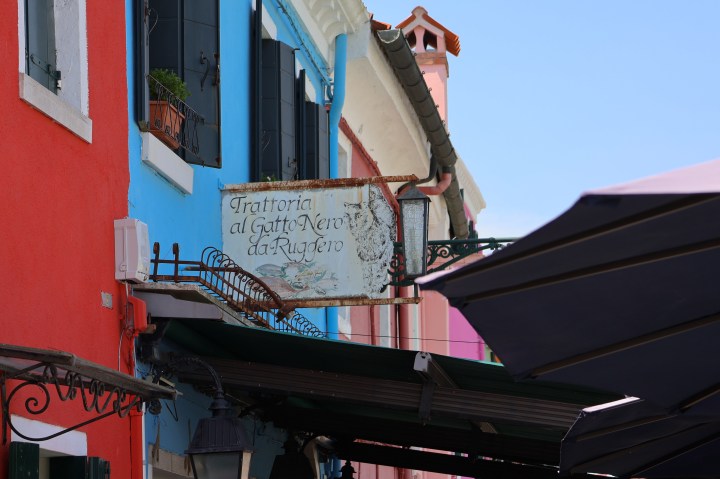
How we snagged a table at one of Venice’s best seafood restaurants without a reservation during high season.
Words and photography by Liani Solari
Lucky for us, my mother speaks Italian with a foreign accent.
After emailing Trattoria al Gatto Nero (Black Cat Restaurant) to request a lunch reservation but not hearing back, we take a chance and just turn up on the doorstep of this renowned family-run restaurant on the Venetian island of Burano. Mind you, turning up is no spur-of-the-moment thing.
We melt on the 65-minute vaporetto ride that departs the ferry stop near Venice’s Bridge of Sighs, the waterbus heaving under the weight of a high-season glut of hot, sweaty tourists. On our first trip back to Italy since the pandemic, it’s clear this small island in the Venetian Lagoon is just as swamped with summer tourists as Venice proper. I imagine the giant hand of tourism holding a jug overhead, pouring a steady stream of visitors into the streets and canals lined with the multicoloured houses of fishers and lacemakers.

Colourful buildings line the canals on the island of Burano in the Venetian Lagoon, Italy (Photo © Liani Solari) Fortunately for us, Burano’s Bovo family, having just returned from holidays, has decided to go with the season and scoop up some of the flow, opening the door to their sky-blue Trattoria al Gatto Nero for the first time this summer. However, when we arrive, the canalside tables are full and there’s no guarantee we’ll get in for lunch, especially without a reservation.
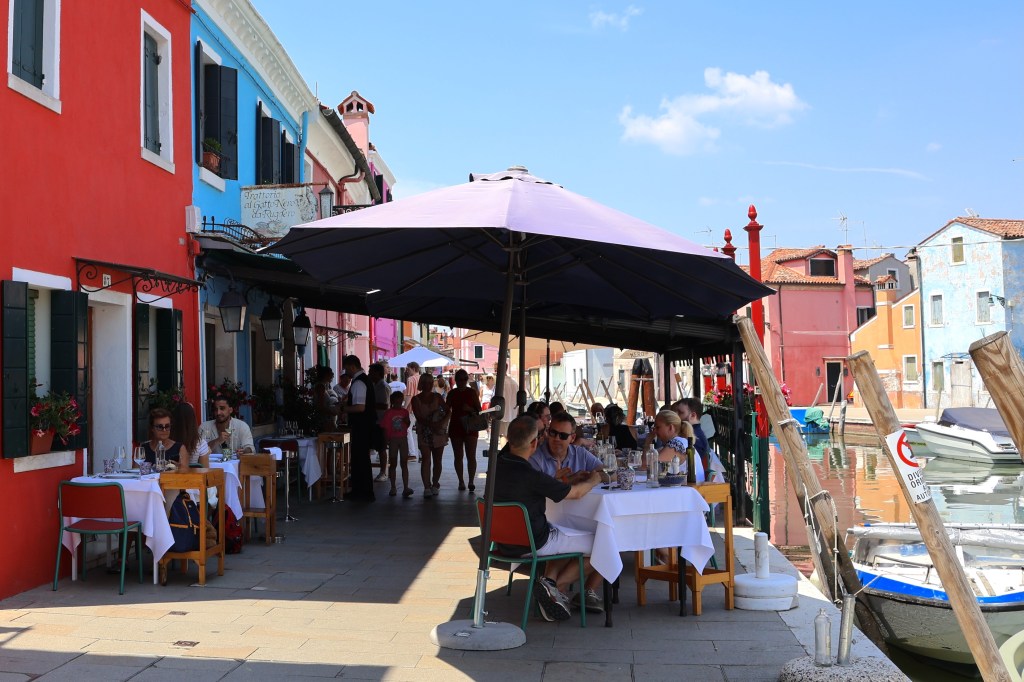
Canalside dining at Trattoria al Gatto Nero, Burano, Veneto, Italy (Photo © Liani Solari) Managing people and expectations with adeptness, front-of-house extraordinaire Massimiliano Bovo (aka general manager and son of chef Ruggero Bovo) is a welcome apparition. My mother (an Australian Italophile) asks him for a table for two in Italian. Massimiliano can accommodate us in 40 minutes, he responds in Italian at a speed usually reserved for native speakers. It’s faster than my heat-affected neurons can process, but my mother successfully wrangles her covid-rusty Italian to explain that we’d tried to book a table via email.
And that’s when our luck changes. “Wait. I’ll get rid of some people,” Massimiliano says, before removing his tongue from his cheek. Leaning in, he confides that the emails on the family’s return from holidays were “too much”.
It’s 33 degrees Celsius in the shade and we’re melting faster than a toddler’s gelato. We inch our way into the restaurant’s narrow doorway, where the cool blast of air conditioning is a godsend, sucking in our bellies as the waiters squeeze past, their hands full of plates.
“I’ll get you a prosecco,” Massimiliano announces, to our surprise. Within minutes, he appears with two perfectly chilled glasses of this local sparkling wine. We grin like cats that got the cream.
We’ve barely taken two sips when Massimiliano shows us to a table inside. We can have the table nearest to the air conditioning because he likes Australians, he says in English. We can’t believe our luck, although I suspect it’s less about where we’re from and more about being foreigners attempting to speak with him in his native tongue.
“How do you know we’re Australian?” I naively ask, thinking we’d done a pretty good job of communicating in Italian (I’d even asked my mother to double-check Google Translate’s grammar before I sent the email in Italian). “Your accent,” he says. And with those two words he puts us at ease. We can stop feeling self-conscious about being tourists and simply enjoy the hospitality.
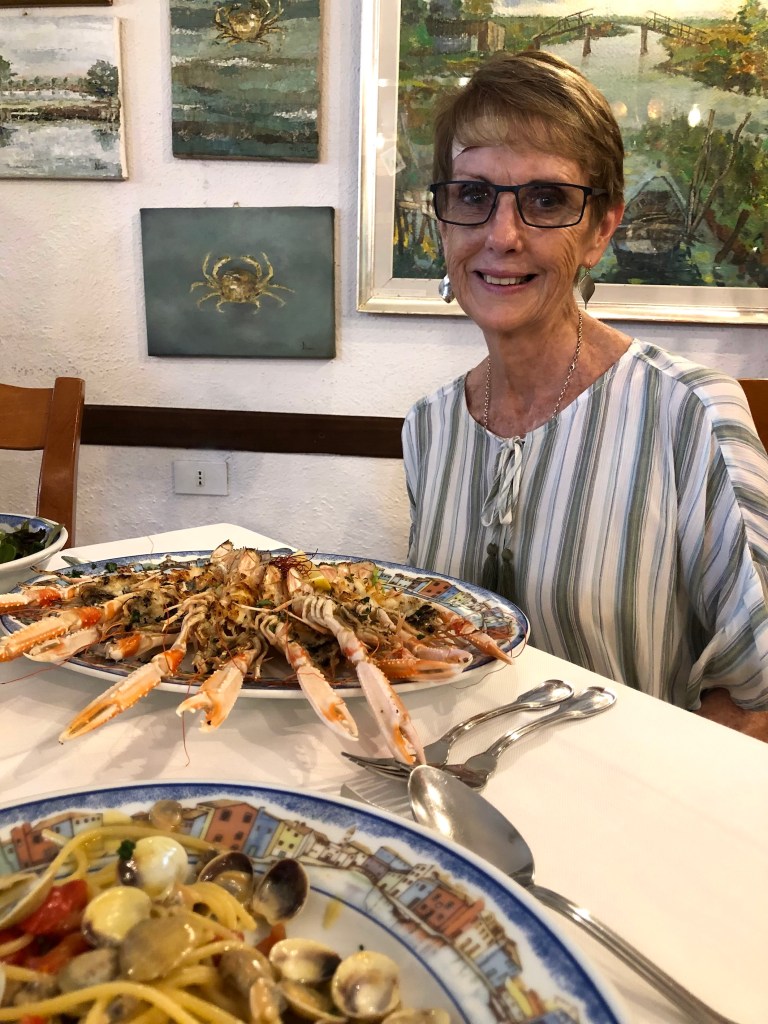
Settling in at one of the five tables in the restaurant’s front room, we admire the walls hung with framed seascapes and scenes of lagoon life. The star, though, is the tableware. Burano’s palette is reflected in the customised plates depicting the island’s colourful buildings (spot the trattoria overlooked by a black cat on a lamppost) and the brightly speckled Murano glasses with dents for ergonomic handling.

Spaghetti alle vongole at Trattoria al Gatto Nero, Burano, Veneto, Italy (Photo © Liani Solari) Normally we’d rather be eating alfresco and people-watching, but nothing can match dining like a local in this unpretentiously elegant indoor setting. The tourists seated by the canal or filing past the restaurant don’t know what they’re missing out on. We feel like we’re in on a local secret.
We’re messing with the system when I order a first course – spaghetti alle vongole (spaghetti with clams) – for my main and my mother skips the first course and orders scampi alla griglia (grilled scampi) from the second courses. But our lovely waiter, who also accommodates us in English, doesn’t seem to mind. The days of feeling obliged to order every course on the menu are long gone and our hosts don’t push us. Besides, we have limited time. If only this were a progressive family meal and we could linger over the seafood-led menu… but today we’re tourists bound to the ferry timetable.
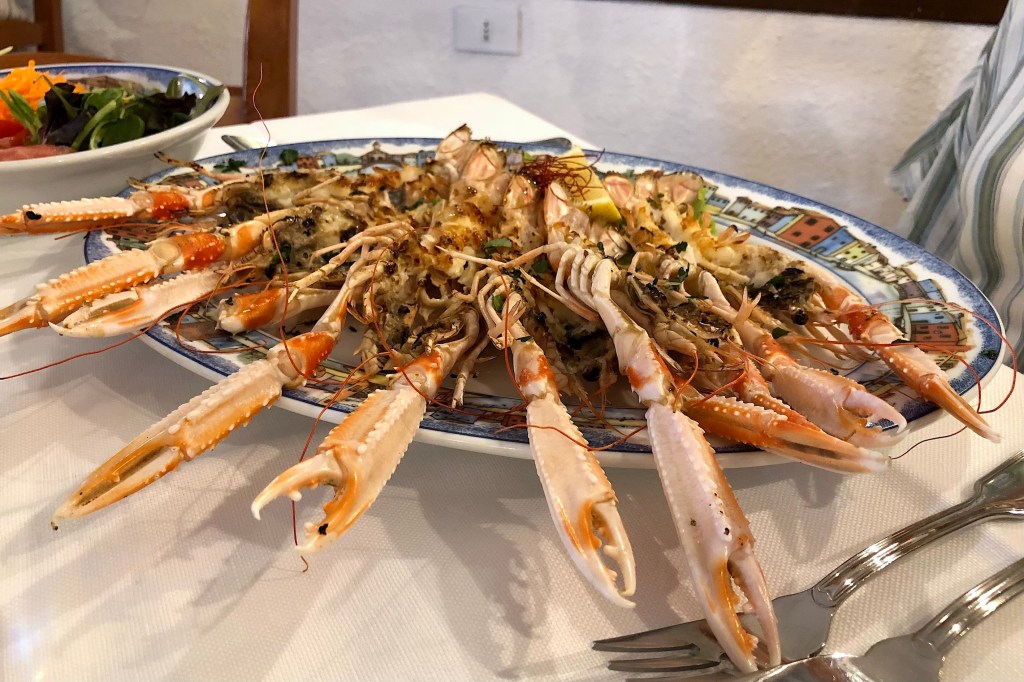
Scampi alla griglia at Trattoria al Gatto Nero, Burano, Veneto, Italy (Photo © Liani Solari) Behind us, the bar clad with upcycled wooden wine boxes hints at Massimiliano’s curated list of offerings from 10 of Italy’s regions, with an emphasis on Veneto and its northern neighbours. The wines are available by the bottle, but our waiter says I can order by the glass; he’ll see what’s open. Would I like red or white, fruity or dry? “Bianco secco,” I reply, happy to leave the decision-making to him.
Returning with a bottle of Orto di Venezia, he tells me this locally produced white wine is made from grapes grown near the water, so it has a slightly salty quality. Delving a little deeper, I later discover the vines are cultivated in the lagoon on the island of Sant’Erasmo, ‘Venice’s vegetable garden’, the terroir contributing to Orto’s minerality. Magnums of the wine, which is a blend of the malvasia istriana, vermentino and fiano grape varieties, have been aged under water in a sunken sandolo (traditional flat-bottomed rowing boat), but today I’m having a glass from a 750ml bottle. The waiter pours me a sample – it’s deliciously medium-bodied and refreshing – and assures me it goes beautifully with seafood.
When my dish arrives, the wine pairing makes perfect sense. The spaghetti is al dente and the proportion of pasta to the locally sourced bevarasse clams is just right – not a huge pile of spaghetti with a scattering of shellfish. As much as I love garlic, it’s subtle enough not to overpower the flavours of the sea. Everything is balanced – and generous, too, with my mother noting there’s no skimping on the scampi.
It’s refreshing that there’s no hint of the aloofness that often characterises wait service in upmarket restaurants in Italy. After we pay the bill, it’s not deal done, va via (on your way), our waiter taking the time to chat with us about our mother-and-daughter travels.
Massimiliano returns too, nodding knowingly when my mother tells him it was an Australian friend who recommended his restaurant. Trattoria al Gatto Nero is globally renowned, which means there’s always the risk of it becoming too much, too big, he says. “It’s a double blade, but you must know how to use the double blade, to be smart,” he states, employing that Italian superpower: the ability to bring everything, even metaphors, back to la cucina.

Canalside tables prepped for the next wave of diners at Trattoria al Gatto Nero, Burano, Veneto, Italy (Photo © Liani Solari) I don’t recall ever asking for a doggie bag in Italy and today is no exception. (We’re at the Black Cat, after all.) We’ve polished our plates clean. (Ooh, how I’d love to take one home.) But there is a takeaway: You don’t need to be fluent in the local language. In fact, you could be treated to a very local experience because you speak Italian like a foreigner.
© Liani Solari
Posted 19 January 2025.
The writer dined at her own expense (and accomplished her mission to eat her body weight in spaghetti alle vongole during a week in Venice).
-
Rail review: Italy’s ‘Red Arrow’ high-speed train
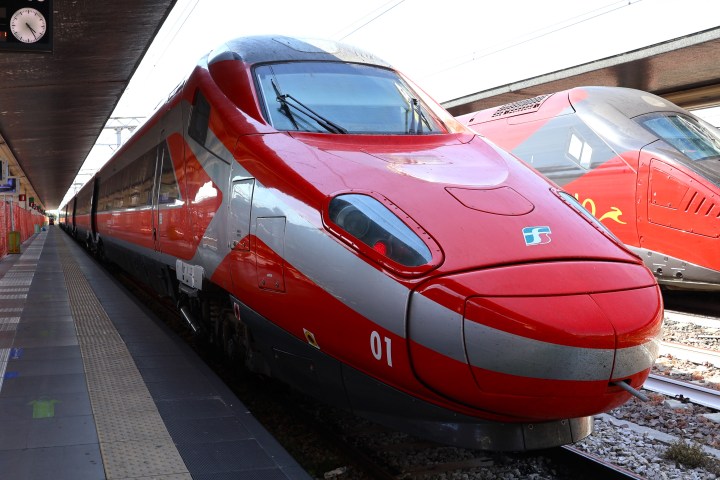
As an alternative to flying to Venice, the Frecciarossa ETR 600 train is not only fast but greener to boot. Time for the influencers to get on board.
Words and photography by Liani Solari
There’s a perception that travelling to Venice by train is the transport equivalent of cucina povera compared with the glamour of flying to Marco Polo Airport and taking an eye-wateringly expensive taxi boat into Venice proper, six kilometres away. Those influencer likes don’t come cheap.
But can I just say this: either way, you’ve arrived. Taking the Frecciarossa (Red Arrow) high-speed train really deserves more likes for being a pleasant, efficient and environmentally sustainable way to arrive in Venice itself, at a transport hub where you simply roll your luggage out of the station and onto a Grand Canal ferry to your accommodation.
As former flyers to Venice, my mother and I decide to put the fast train to the test this summer. Here’s a snapshot of what to expect when you choose this greener transport option.
Six regions in one day
We board the Frecciarossa ETR 600 at Brindisi Centrale, the second stop on the 7am direct service from Lecce to Venezia Santa Lucia (pictured above). Scooting along the east coast of Italy’s boot from heel to top, we traverse six regions (about 700 kilometres) from Puglia to Veneto in eight hours and 45 minutes. In summer, Trenitalia SpA operates two direct Frecciarossa services daily (FR 8816 and FR 8828).
Carbon footprint
According to EcoPassenger, the carbon emissions for this train trip are 44.3 kilograms per person, compared with 181.7 kilograms each if we’d flown. By taking the train instead of flying, we’re reducing our CO2 emissions by 75 per cent.
Booking
Business class is the premier level of service on the Frecciarossa ETR 600. We book online with Australian-based company International Rail four months in advance, paying €85.90 per person for non-refundable business class tickets. That’s cheaper than a 30-minute Venetian gondola ride. We’re automatically allocated seats 11D and 12D in coach 2 at the time of booking. (See the seating plan at The Man in Seat 61.)
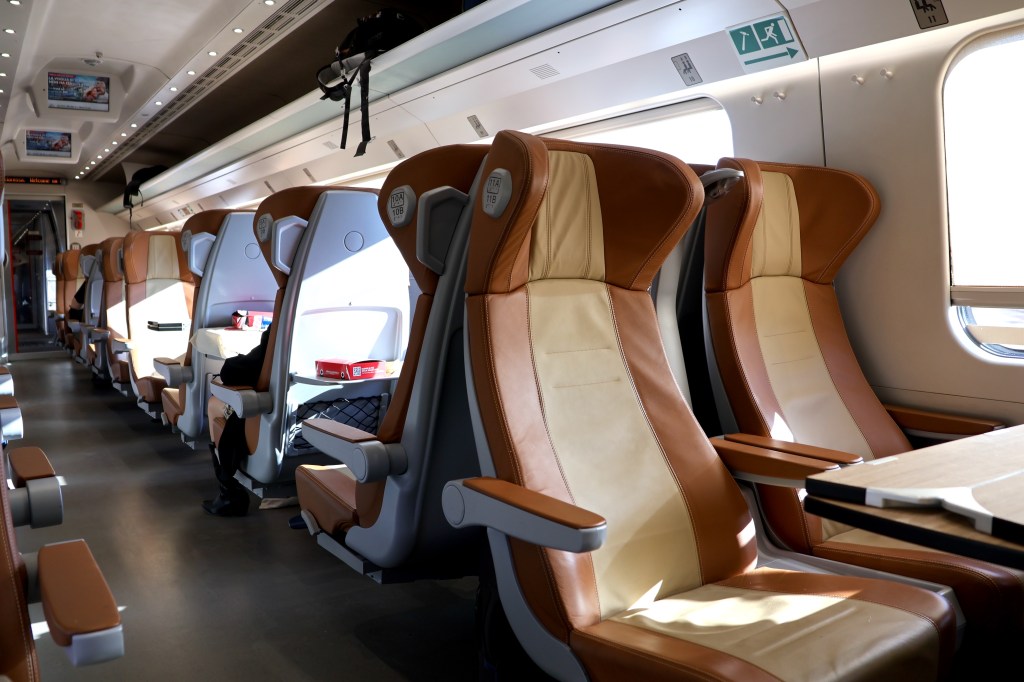
Reclining leather seats in business class (coach 2 shown) on the Frecciarossa ETR 600 high-speed train, 6 July 2024 (Photo © Liani Solari) Boarding and baggage
Our tickets for this high-speed train don’t need to be validated before boarding because they have a specific date, time and seats. However, that’s not the case for all rail travel in Italy, so it pays to check.
Coach numbers displayed on the platform at Brindisi Centrale take the guesswork and stress out of knowing where to board when the train pulls in. We have lovely locals to thank for helping us lug our two 20-kilogram suitcases up two dozen steps to the platform (there’s no lift) and up four steps into the carriage (most trains in Italy are not flush with the platform).
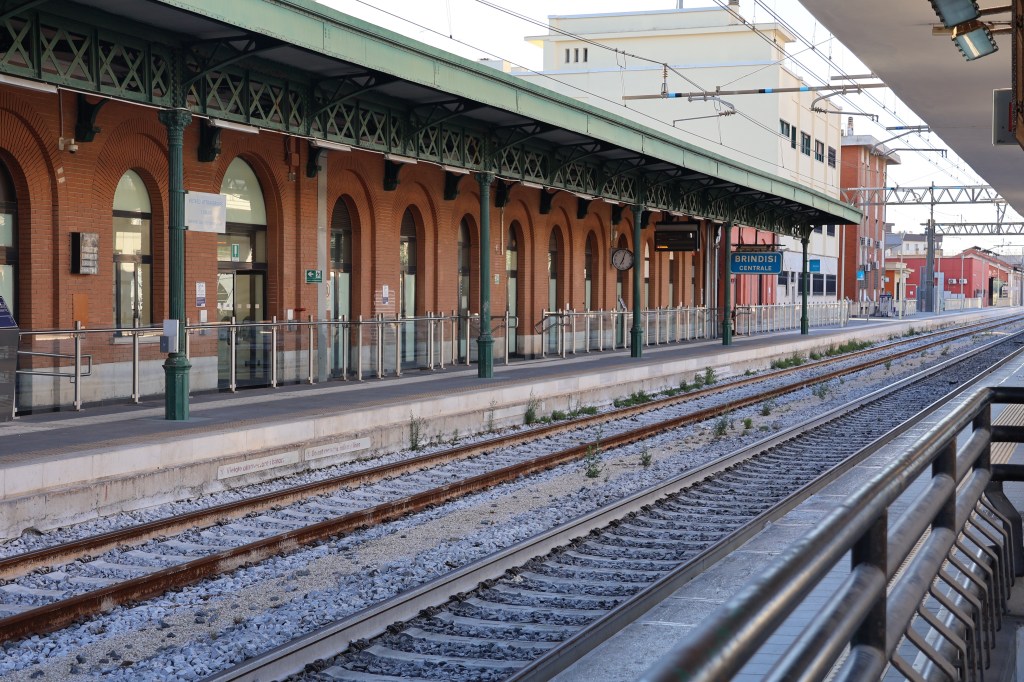
Brindisi Centrale railway station in Puglia, Italy (Photo © Liani Solari) There are only two small luggage racks in our coach, so we stow our suitcases on the floor between back-to-back seats, where we can see them. These oversized albatrosses are never in anyone’s way and are always ‘attended’ for insurance purposes.
Seating
Arranged in a 1-2 configuration in business class, the comfortable reclining leather seats in cream and caramel (interesting colour choice) look as new as when the Frecciargento (Silver Arrow) trains were converted to Frecciarossa (Red Arrow) a year or two ago. Our single seats face each other, so one of us is travelling backwards, but we have an extendable table between us and more room than the paired forward-facing seats with seatback tray tables. The air conditioning feels just right.
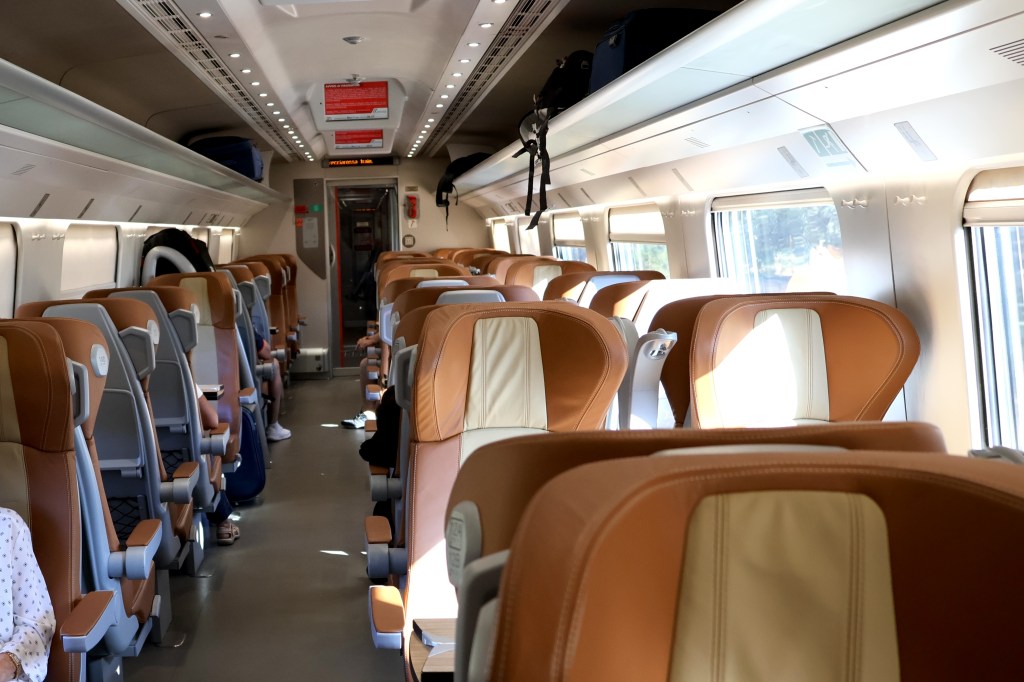
1-2 seat configuration in business class (coach 2) on the Frecciarossa ETR 600 high-speed train, 6 July 2024 (Photo © Liani Solari) We’re initially disappointed to be sitting on the left side of the train, not the Adriatic side. However, before we realise the water views will be mostly intermittent or obscured anyway (the beachside stretch between Ancona and Rimini is a notable exception), endless rows of olive trees and grapevines remind us of southern Italy’s greatest culinary attractions.
In the absence of the dramatic water views you’d expect of a route that traces the coastline, we turn our gaze inwards for the seat-hopping theatrics that are a reliable feature of train travel in Italy. Surprisingly, nothing much to see here either. The few passengers trying to unofficially upgrade their seats are calmly moved on by the friendly, attentive staff.
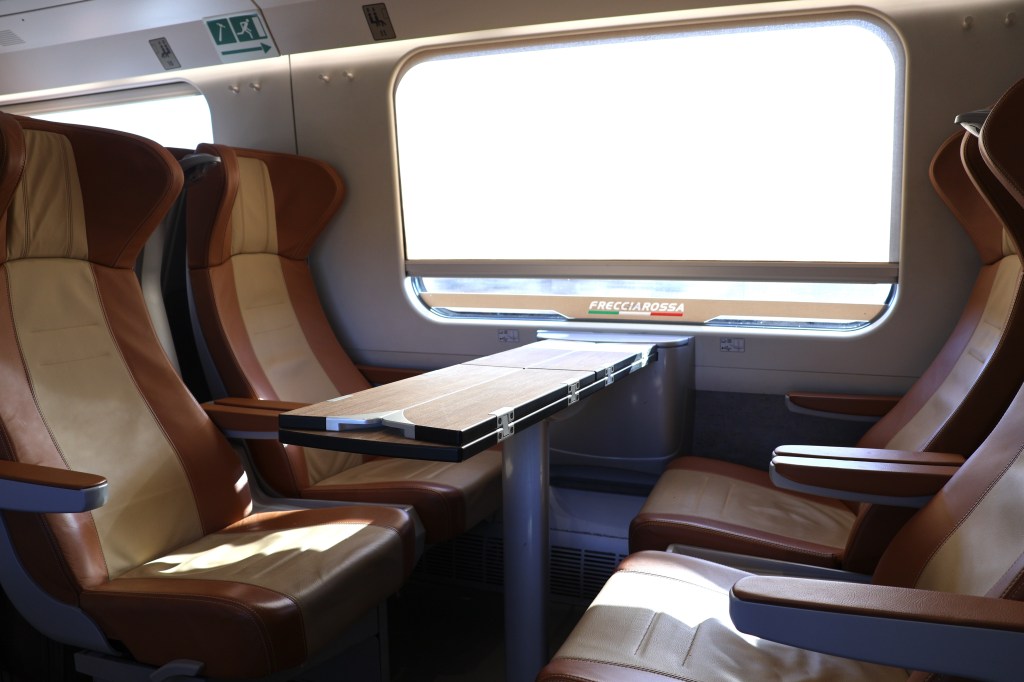
Four-seater with extendable table in business class (coach 2) on the Frecciarossa ETR 600 high-speed train, 6 July 2024 (Photo © Liani Solari) Food and drink
A catering attendant with a trolley welcomes us on board with an Australian-coffee-snob-approved espresso, a bottle of water and a snack box containing a shortbread and soft almond pastry. The QR code on the box launches a list of ingredients longer than a nonna’s scolding for eating out. The snacks certainly didn’t come out of her kitchen but are delicious nevertheless. There’s no further complimentary in-seat catering, however, we can purchase lunch items, such as pizza and panini, from the bistro car.
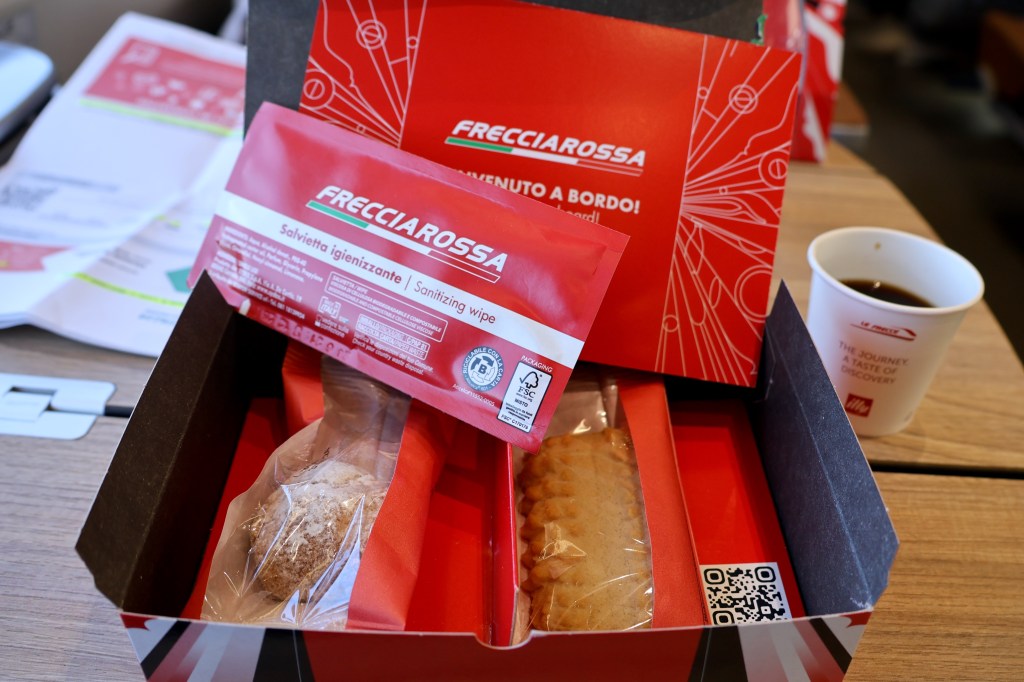
Complimentary snack box and espresso in business class on the Frecciarossa ETR 600 from Lecce to Venice (FR 8816), 6 July 2024 (Photo © Liani Solari) Entertainment and technology
Each seat is equipped with a power outlet and USB, so I keep my laptop and phone charged while using the FrecciaPlay entertainment, news and sports app I’ve downloaded over the train’s free wi-fi. English-speaking media is thin on the ground in Italy, so it’s a novelty to watch recent Hollywood films with English audio and Italian subtitles.
Speed
We average 150km/h (and sometimes get up to 180km/h) but this is no white-knuckle ride, as we don’t reach the Frecciarossa ETR 600’s operational maximum of 250km/h and we’re on a Pendolino (tilting train) that smoothly takes the curves. Our train arrives and departs each stop on time.
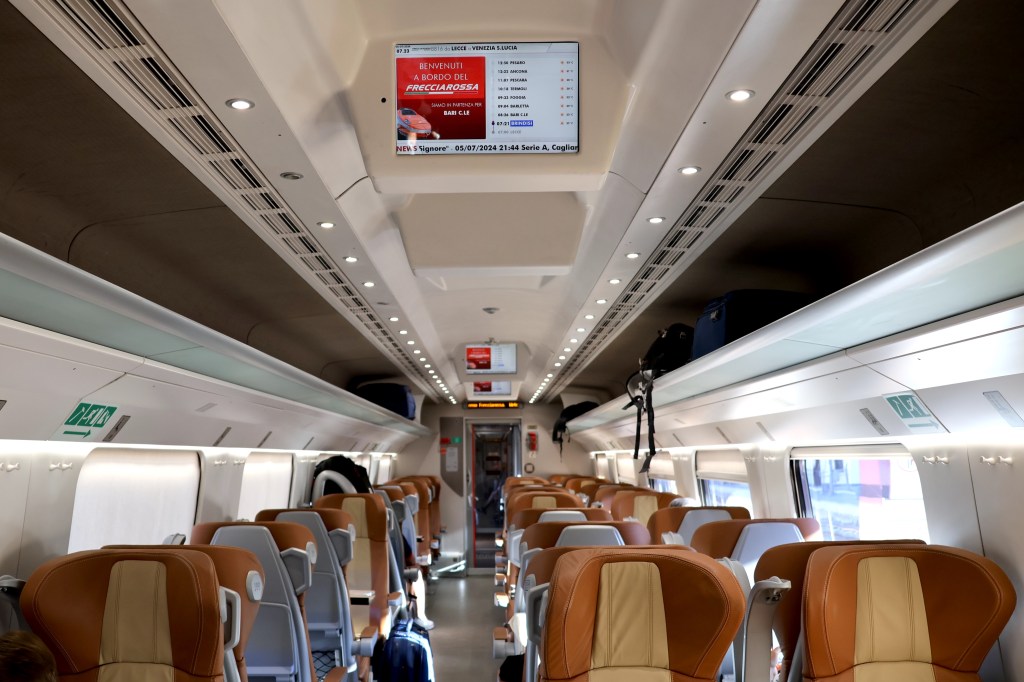
Real-time information about the journey is displayed on overhead screens in business class (coach 2) on the Frecciarossa ETR 600 high-speed train, 6 July 2024 (Photo © Liani Solari) Perfect timing
We have no gripes about today’s service, so we’re bemused by the frequent PA announcements (in Italian and English) explaining how to lodge a complaint with Trenitalia… until we discover there’s a planned 24-hour train strike from 9pm. If you’re not keen to chance it, know that Italy’s railway sector is prohibited from striking between 27 July and 5 September.
Train of thought
Had we flown to Venice instead of taking the fast train, our trip would have produced four times more carbon emissions (yikes) and we might still be at the airport, schlepping our bags from the arrivals hall to the water taxi dock. But here we are, at our hotel in San Marco, toasting our arrival (and impeccable timing) with a Hugo Spritz and scheduling our next stop: spaghetti alle vongole with water views.
© Liani Solari
Posted 2 January 2025.
The writer travelled at her own expense.
-
Venice’s best-kept secret
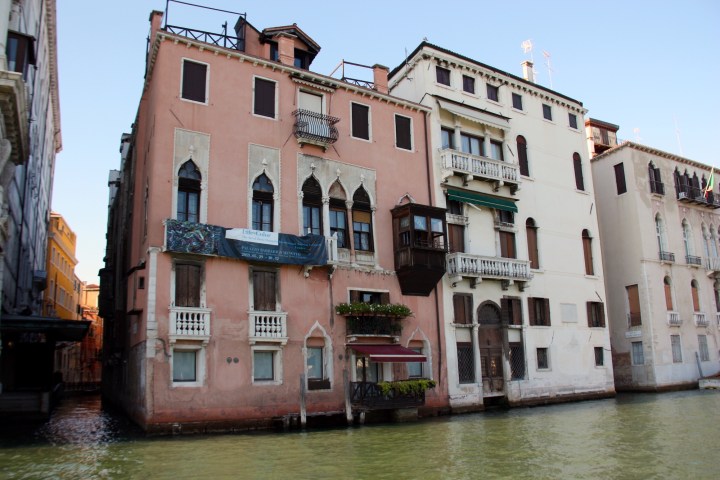
You don’t have to be an opera buff to enjoy Musica a Palazzo’s performances in an atmospheric palazzo on the Grand Canal.
Words and photography by Liani Solari
Despite the soft candlelight, I can still detect the cracks in the ceiling and stuccowork, the rough walls thinly disguised by deteriorating silk wallpaper, and the uneven terrazzo floor. The walls vibrate with every soaring operatic note as if defying the building’s foundations, which are little more than timber poles set into reclaimed swampland.
Attending a performance of Rossini’s comic opera The Barber of Seville in Palazzo Barbarigo-Minotto (pictured above) in Venice, I try to imagine the production in another setting – perhaps Venice’s ostentatious, dripping-with-gold La Fenice theatre – but I can’t. The fading grandeur and rustic elegance of this now uninhabited 15th-century palazzo lends a warmth to the performance that would be lost in a large, well-known venue. This is opera in the intimate mode.
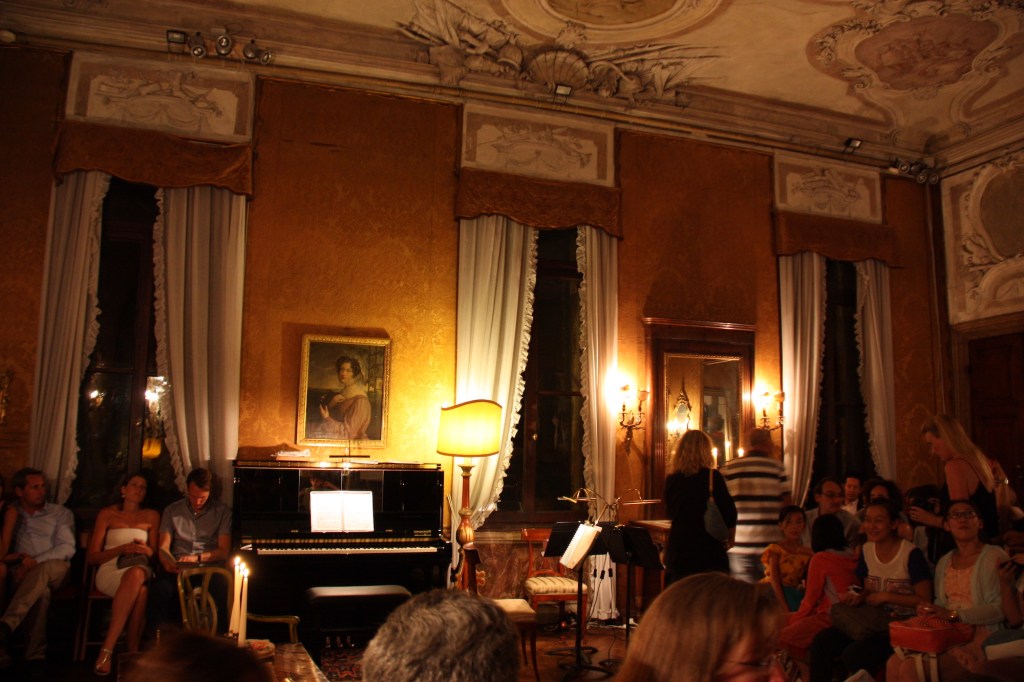
Inside Palazzo Barbarigo-Minotto, Venice, where Musica a Palazzo performs operas (Photograph: Liani Solari) We enter the palazzo via a dark, musty blind alley on a small canal, which belies the fact that the building backs onto the Grand Canal near the Santa Maria del Giglio ferry stop. Venice is like that. You can never fail to be surprised and fascinated by the grandeur and enormity of the interiors hidden behind the city’s less imposing facades and unassuming doorways, especially those of its churches. Venice really is the sum of its secret worlds.
Opera company Musica a Palazzo stages a number of operas in Palazzo Barbarigo-Minotto, the former home of the influential Barbarigo family, which died out in 1804 with the demise of the colourful and worldly dame Contarina Barbarigo. It’s an apt setting for an opera about a barber, as the barba (beard) in the Barbarigos’ family name is the stuff of legend. They assumed the name when a family member, Arrigo, defeated Saracen pirates in 880 CE and souvenired their beards, six of which are represented on the family’s coat of arms.
In this former palatial home, the audience, which numbers about 50, follows the singers and instrumentalists from room to room as the scenes unfold. We are individually greeted by a welcome host (who later doubles as the housemaid of cranky old Dr Bartolo) in the Central Hall before progressing to the Tiepolo Room (named for the 18th-century Venetian painter of the allegorical scene on the ceiling) and, finally, a bedroom with an alcove.
“Venice really is the sum of its secret worlds.”
Every aspect of the event flows effortlessly, including the prosecco at intermission, when we catch a glimpse of the Grand Canal at twilight through the palazzo’s Venetian Gothic windows.
Musica a Palazzo’s world-class opera singers have been perfectly cast in this dramma buffo (comic theatre) driven by the antics of the barber Figaro, an unashamed wheeler-dealer. “Quicker and quicker I go like greased lightning: make way for the factotum of the city!” sings the baritone, hinting at his upcoming ruse as go-between for the love-smitten Count Almaviva and Dr Bartolo’s ward, Rosina.
In this venue where the performers can really work the room, they capitalise on the intimate space to interact with the audience. Figaro plants himself in someone’s lap before planting a wig on a bald man’s head. Rosina, the object of affection in this comedic love triangle, flirts with the audience, feigning coquettishness with a glint in her eye.
The applause at the end is loud and appreciative, enough to lift the roof. As we file out of the palazzo, all abuzz, I wonder what the neighbours must think. We’ll probably never know. However, there’s a strong sense that we’ve just been initiated into their city’s secret life after dark.
© Liani Solari
‘Venice’s best-kept secret’ was originally published on Liani Solari’s Girls’ Own Adventure travel blog (now offline).
-
Owl encounter in the Cotswolds
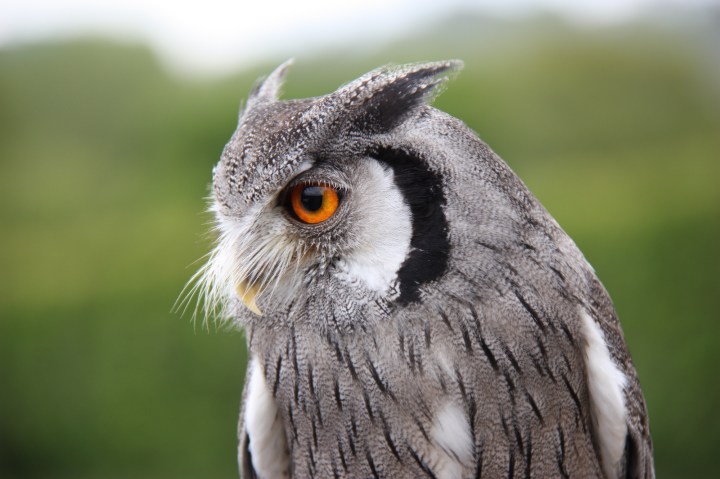
Have a hoot in the English countryside handling birds of prey in a small group with Walks With Hawks.
Words and photography by Liani Solari
It had been preying on my mind for weeks. Shouldn’t these owls be sleeping during the day? Would we be keeping them awake for our amusement?
And then we meet Lulu, a magnificent Bengal eagle-owl. We’re too in awe of her sheer size and elaborately patterned feathers to worry about whether or not we’ve interrupted her beauty sleep. Besides, it’s 11am and she’s feeling rather chirpy according to her upright mood feathers, or ‘ear tufts’. These shouldn’t be mistaken for ears, says her owner, Clare Lott. Owl fact number one.
Walks With Hawks’ owls, left to right: Lulu, Hibou, Henry, Oreo, Phoebe (Photographs: Liani Solari)
Size-wise, the southern boobook and the tawny – the most common owls in Australia and England, respectively – aren’t a patch on the exotic Lulu, whose species hails from the Indian subcontinent. The observation is a cue for Clare and Phil Lott, the husband-and-wife team behind Walks With Hawks in England, to imitate the “too-wit too-woo” courtship duet of tawny owls.
Lulu interrupts, hooting to get our attention. She rotates her head 270 degrees and then bats her eyes at us with a slow, all-knowing blink. We’re instantly mesmerised.
Having booked an owl encounter online from Australia, we’ve managed to follow our sat nav to a farm outside Cheltenham, in England’s picturesque Cotswolds, to meet with the Lotts and five of their owls. Establishing Walks With Hawks in 2001, the couple runs small-group hawk walks and owl encounters.
Lulu is the first out of the van. I slip my hand into a leather gauntlet and hold my breath. Clare lets the owl free. I try to remain unruffled at the thought of a bird with a one-metre-plus wingspan coming straight for me, hoping that Lulu’s space-time coordinates are as spot-on as our sat nav. It’s the perfect landing. Lulu is surprisingly lighter on my forearm than I’d imagined.
“She bats her eyes at us with a slow, all-knowing blink. We’re instantly mesmerised.”
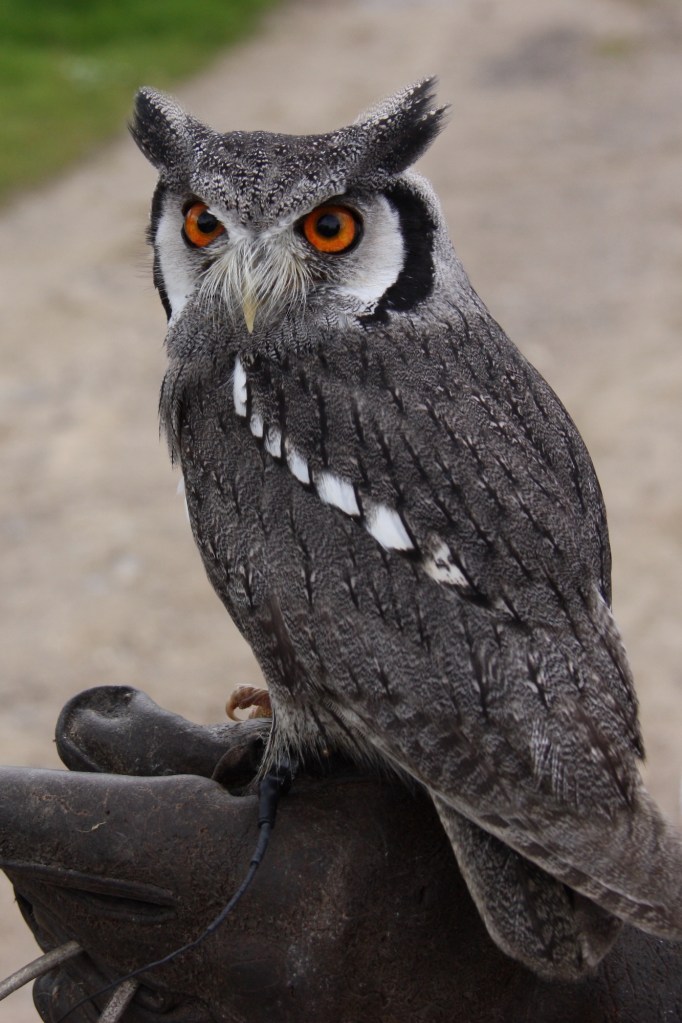
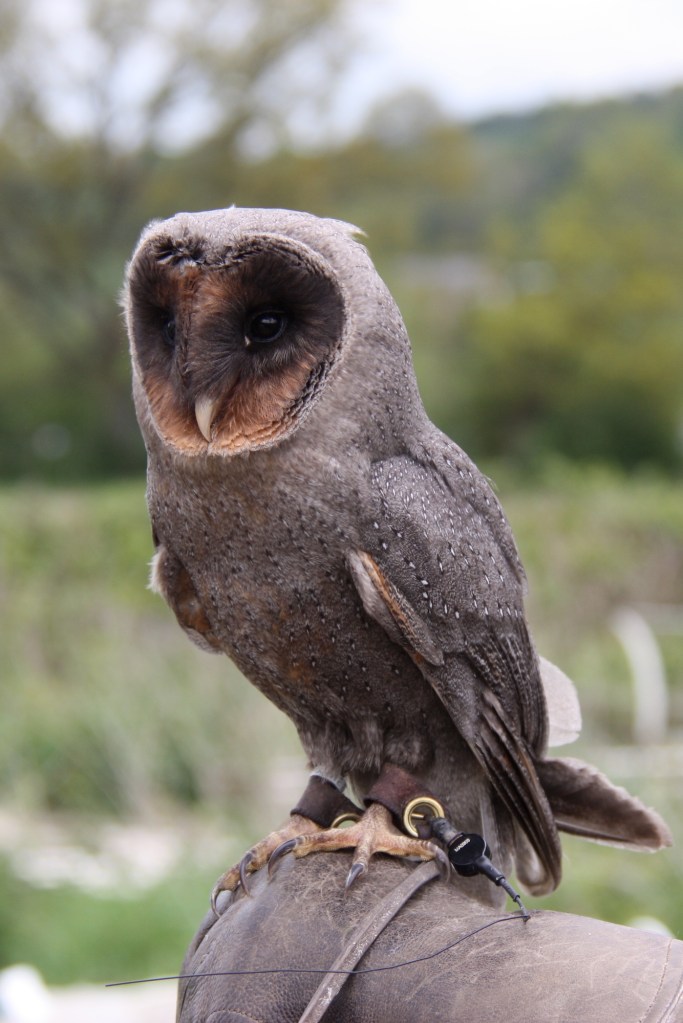
At the other end of the scale is Hibou (featured image), a southern white-faced scops owl measuring just 20 centimetres tall. His name means ‘owl’ in French, but looks-wise it’s easy to see why owls are dubbed ‘cats with wings’. Hibou’s intense gaze is framed by prominent ear tufts that draw your eye to his ‘moustache’ of whisker-like beak feathers.
“If he flies today, I’ll eat my pants!” says Clare, transferring the small, timid bird to my glove. Spooked by the presence of a buzzard in the area, Hibou nervously runs up my arm, seeking refuge in the crook of my neck. An owl encounter doesn’t get more up-close-and-personal than this.
During our two-hour session, it’s clear that Clare and Phil care about the welfare of their birds. They caution us to be wary of the handful of unscrupulous operators out there – the ones typically asking for donations ‘for conservation’ using their under-stimulated, hollow-eyed owls as a hook.
Clare and Phil hand-rear each owlet in a see-through imprint tank in their lounge room. When outside of the tank, the young owl interacts with the family, including the pet dog. Though the couple’s affection for their owls appears to be reciprocated, Clare sets us straight. “For the owls, it’s all about food. It’s as simple as that,” she says. If you see an owl just sitting around in a tree, that means it’s had a meal and there’s nothing else for it to do, she explains. It’s a good sign (for the owl, not the meal).
Not all owl species are nocturnal, we discover. Owls with yellow irises tend to hunt in the daytime; those with orange irises generally hunt at dawn and dusk; and those with dark irises are usually nocturnal hunters. So, if we’re keeping any of these owls from sleeping (not that they seem to mind), it’s the two barn owls: Henry, a soft-faced white bird with dark eyes and delicate wing patterns; and Oreo, a rare black melanistic barn owl.
Henry and Oreo are owls after his own heart, jokes Phil, as their ‘selective deafness’ means they can block out sounds in the paddock here while focusing on the sound of a field mouse in a paddock over there. Don’t be fooled by the barn owl’s pretty, heart-shaped facial disc, though. It’s what helps to make it an awesome hunter. The disc channels sounds to the bird’s ears, while serrated wing feathers silently cut through air molecules to enable the owl to take its prey unawares.
Phil temporarily disappears under the wing of a great grey owl, named Phoebe, to double-check a recently repaired feather. He gives us the go-ahead to handle this splendid bird with feathers that resemble medieval chain mail. We quickly realise the regal-looking Phoebe has no table manners. Drops of saliva fall from her delicate beak – “It’s all about food” – before she wolfs down a piece of raw chicken in one unceremonious gulp.
Despite having a healthy appetite and belonging to one of the largest owl species, Phoebe is surprisingly lightweight. Like most big owls, her plump, duvet-like feathers disguise the small body underneath. She’s all fluff and no substance. In more ways than one, it seems. “Owls are not really wise,” says Clare. “That’s just a myth.”
I’m slightly disappointed by that last owl fact, but should it really come as a surprise? A group of owls is, after all, called a parliament.
© Liani Solari
‘Owl encounter in the Cotswolds’ was originally published on Liani Solari’s Girls’ Own Adventure travel blog (now offline).
-
Giving art the hurry-up in Glasgow
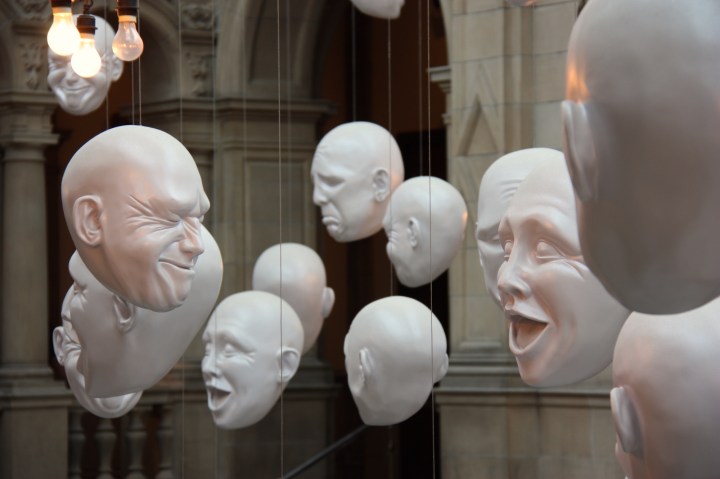
The popular Kelvingrove Art Gallery and Museum houses 8000 objects in 22 galleries. But what if you have only one hour?
Words and photography by Liani Solari
“You have one hour. Be back at the bus on time,” our guide announces laconically when we pull up outside Glasgow’s Kelvingrove Art Gallery and Museum and get an eyeful of its magnificent red ‘Spanish Baroque’ facade. My jaw drops. I’m being asked to give art the hurry-up, which is foreign to me. But, then, so are coach tours.
We race up the stairs of the grand entrance, trying to think fast on our feet. If we have 60 minutes to see 8000 objects in 22 galleries, how many nanoseconds per object, minus sprint time from gallery to gallery?
At the very least, we figure, we have time to see Kelvingrove’s most famous painting… and then come what may. Liberated by this quick thinking, within minutes we’re gazing up at the painting declared Scotland’s favourite in a Herald poll in 2005: Salvador Dalí’s Christ of St John of the Cross (1951).
Not everyone was enamoured of the Spanish surrealist’s painting when Dr Tom Honeyman, then director of Glasgow Museums, acquired it on behalf of the City in 1952. Though the price of the work was reduced from 12,000 to 8200 pounds, Glasgow art students protested against what they considered an extravagant purchase, arguing that supporting Scottish contemporary artists should have been the City’s higher priority. The newspaper cuttings in the curator’s electronic scrapbook paint the full, controversial picture.
Leaving the intimate room where Dalí’s evocative portrait of Christ is displayed, I can’t help but think Sister Wendy would have been in her element here, gliding along the tiled colonnades from one gallery to the next. We need to get our skates on.
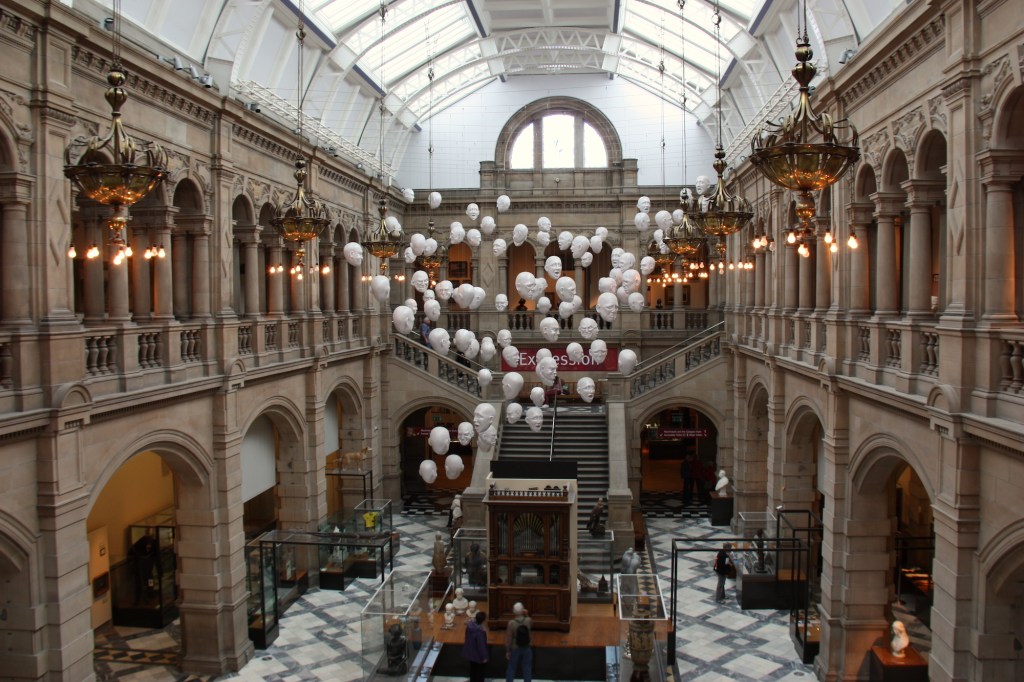
Featured image, and above: Installation view of the East Court at Kelvingrove Art Gallery and Museum, Glasgow, Scotland, featuring Sophie Cave Floating Heads 2006, photos © Liani Solari In one of these airy thoroughfares, a bronze sculpture by New York-based artist Patricia Cronin stops me in my tracks. Memorial to a Marriage is a mortuary portrait of Cronin and her life partner, artist Deborah Kass, lying half-naked in a loving embrace. It’s a brave artist who would portray herself in death.
The bronze is a copy of Cronin’s ‘19th-century American neoclassical’ Carrara marble sculpture installed on the Cronin–Kass burial plot in Woodlawn Cemetery, New York, in 2002. For a time, it was the third most visited plot in the Bronx cemetery after those of jazz greats Duke Ellington and Miles Davis.
“In death I make official my marriage, which was not legal for most of our relationship,” Cronin is quoted on the poster above the bronze, which includes a photo of the women celebrating their nuptials (yes, they are very much alive!) outside City Hall in July 2011 after the New York State Senate passed a bill allowing same-sex marriage.
If the best stories are those you come across unexpectedly, we strike gold again when we hurriedly gloss over the usual suspects (the European masters) and chance upon Lafaruk Madonna in a small adjacent room. The triptych was painted by Italian POW Giuseppe Baldan for the tiny mud chapel in the POW camp near Berbera, northwest Somalia, where he was held by the British during World War II.
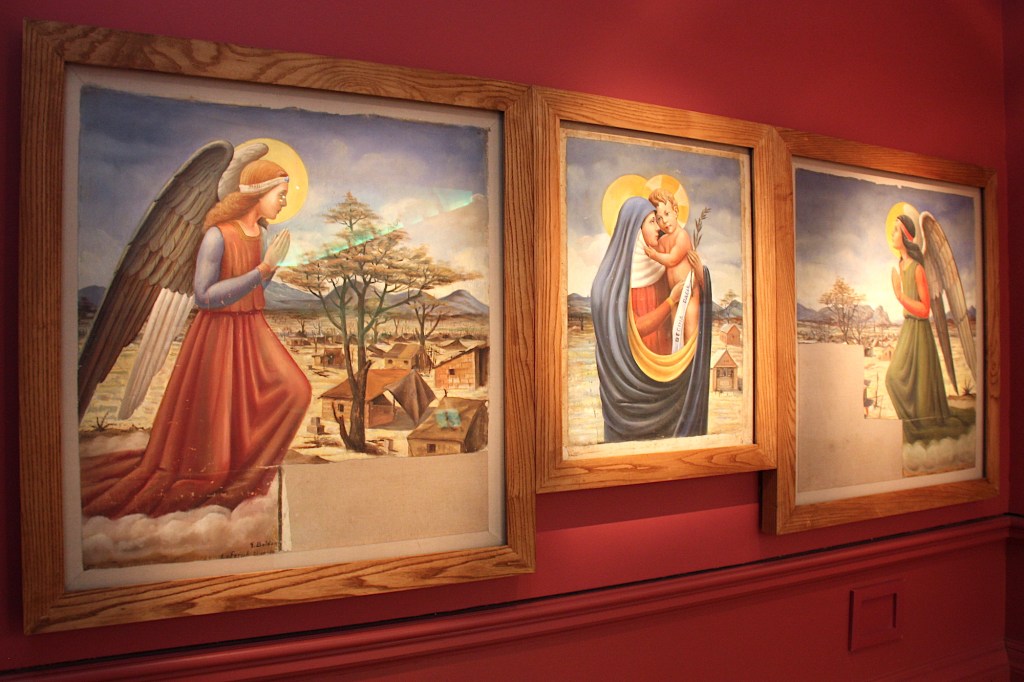
Installation view of the Every Picture Tells a Story gallery at Kelvingrove Art Gallery and Museum, Glasgow, Scotland, featuring Giuseppe Baldan Lafaruk Madonna, 1941–42, photo © Liani Solari Using the only materials available to him in the austere desert camp, Baldan painted the Madonna, Christ and angels on the back of flour bags. The background, far from grandiose or romanticised, depicts the POW camp, including the chapel where the paintings were installed above a makeshift altar. In an inconspicuous corner of one canvas, the Italian flag is disguised as washing on a line.
The survival of these poignant paintings amid the devastation of war is nothing short of miraculous. When the camp was disbanded, Somali soldiers destroyed the chapel and slashed the paintings. However, the Italian soldiers rescued the canvases and gave them to Captain Alfred Hawksworth, the British officer in charge of the camp.
When Captain Hawksworth tried to return the paintings to the former POWs in 1965, camp interpreter Luigi de Giovanni wrote to him: “You must keep them for ever as a gauge of gratitude and love by the 35,000 people who owe you, beyond their life, the dignity of a human treatment.” Thirty years later, Mrs Hawksworth gave the paintings to Kelvingrove, where they are displayed today in the Every Picture Tells a Story gallery.
Reflected in every brushstroke is the fact that Baldan and his fellow POWs had endless hours in the camp to contemplate their fate. Time stands still before we run for the bus.
© Liani Solari
‘Giving art the hurry-up in Glasgow’ was originally published on Liani Solari’s Girls’ Own Adventure travel blog (now offline).
-
Foynes: Flying boats and Irish coffee
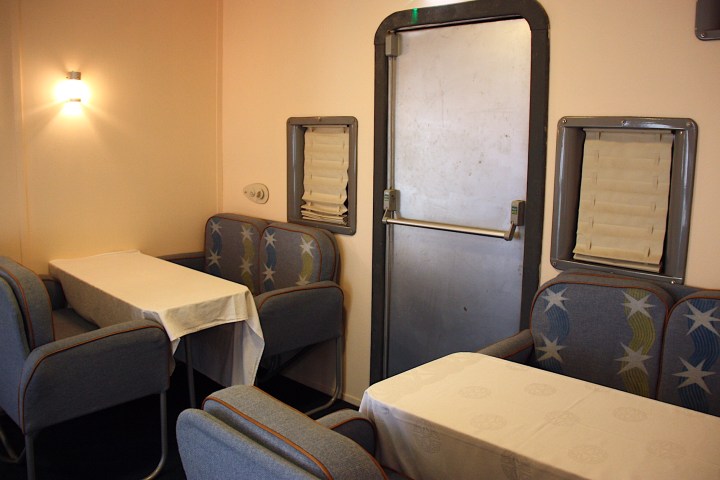
At the Foynes Flying Boat Museum discover aviation firsts that put the Irish village on the map as ‘the centre of the world’.
Words and photography by Liani Solari
The Pan Am press junket on 9 July 1939 was something to write home about. Propelling themselves into aviation history, 11 executives from America’s major newspapers and broadcasters boarded the luxurious flying boat Yankee Clipper in New York for the first transatlantic passenger flight to Foynes, Ireland. What a cub reporter would have given to be a fly on the wall…
In the 14-seat dining room (pictured above) of the Boeing 314, its tables laid with crisp linen, these high-flying media execs had 20 hours to swill champagne from crystal glasses and dine out on stories of their encounters with politicians, royalty and Hollywood stars.
Today, more than 80 years later, the Yankee Clipper’s inaugural transatlantic crossing is remembered for putting the village of Foynes, County Limerick, on the map as ‘the centre of the world’. In a long list of firsts, aviation would also give this picturesque spot on the River Shannon other claims to fame as the birthplace of Irish coffee and duty-free shopping.
The first hotel in Foynes, the Monteagle Arms, became the airport terminal building and the first headquarters for aviation in Ireland in 1939 (until 1945). Today it houses the Foynes Flying Boat Museum, the only one of its kind in the world.
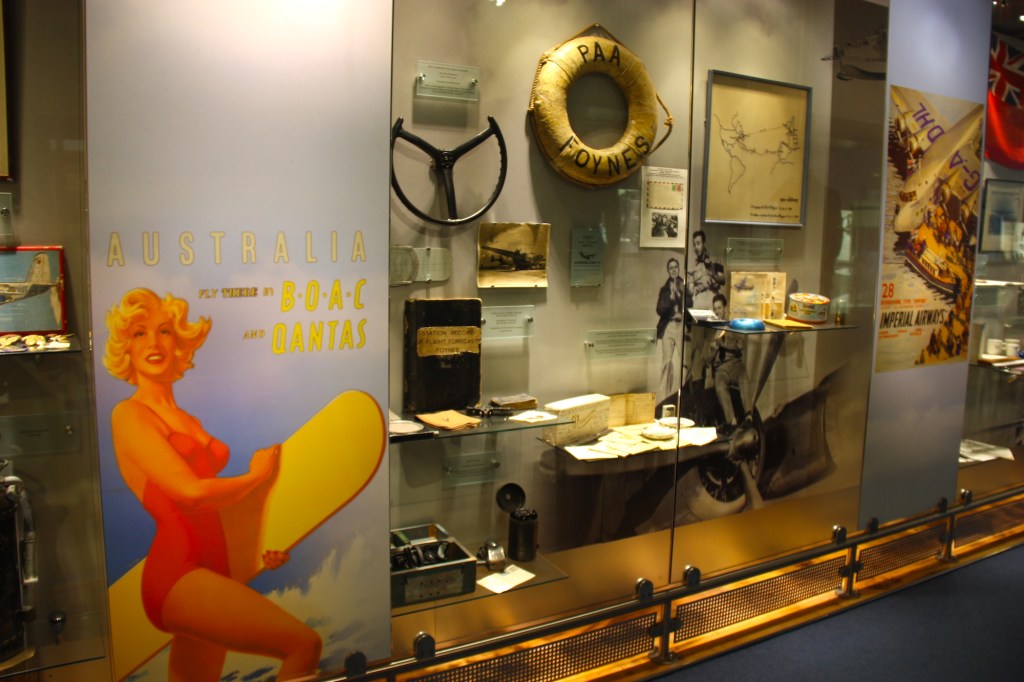
Exhibits in Foynes Flying Boat Museum, Ireland (Photograph: Liani Solari) The collection covers everything from navigators’ logbooks and radio communications receivers to a Tyne Brand continental cake that travelled around the world on the flying boats but was never opened. Glass cabinets filled with aviation artefacts are flanked by vintage posters promoting flights to Bermuda, Havana, India and surf-loving Australia.
The museum’s centrepiece is the world’s only full-scale replica of a Boeing 314 (B314), the Yankee Clipper. The original Yankee Clipper was one of a dozen B314 flying boats built for Pan Am to facilitate long-range flights over the Atlantic Ocean in the wake of the Hindenburg disaster, which had tarnished the golden age of transatlantic airship travel. Designed to land on water, flying boats were also a solution to the lack of runways around the world, even in the major cities, before World War II.
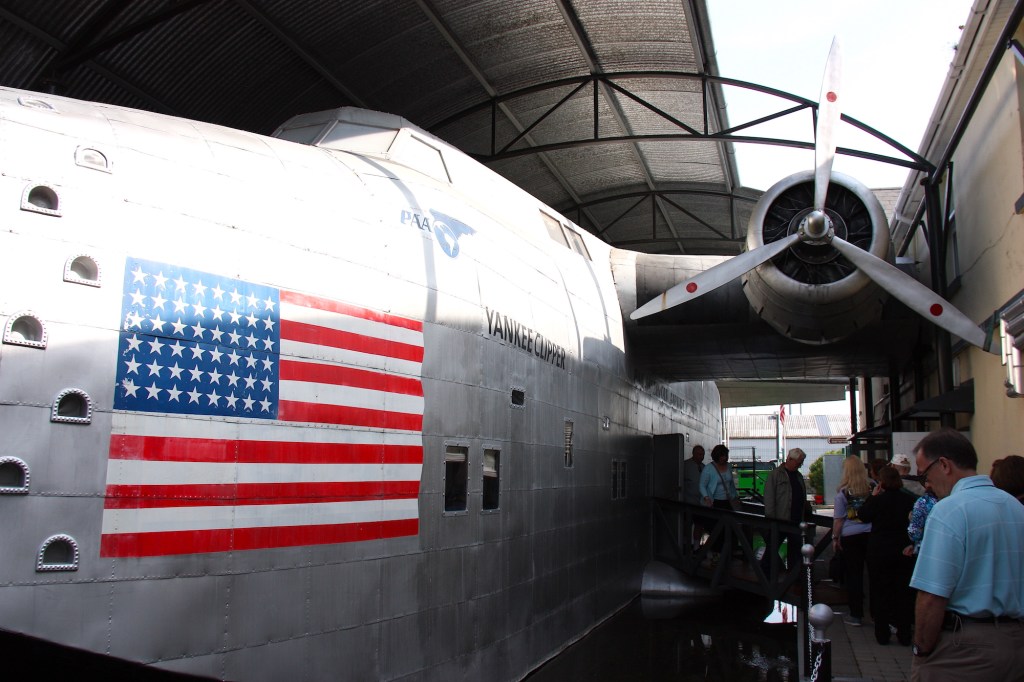
Full-scale replica of the Boeing 314 Yankee Clipper at Foynes Flying Boat Museum, Ireland (Photograph: Liani Solari) From the outside, the B314 looks like an unwieldy metal box with wings. However, stepping on board and into the spacious passenger areas, we’re reminded of a time when cattle class wasn’t an option and leg room was a given.
Ascending the stairs to the flight deck’s sprawling navigation and radio room, we enter nervous territory. These were the days before satellite navigation, when the crew would climb into the celestial observation turret at the top of the aircraft to check the flying boat’s position according to the sun, moon and stars. They would also toss a flare from the aircraft and observe the drift of the smoke to determine the strength and direction of the wind. Provided visibility was good, of course.
Unpredictable and treacherous conditions over the Atlantic Ocean could force a flight to turn back halfway, necessitating pleasant diversions at the Foynes terminal while the passengers waited out the weather.
One such night in 1943 led to the invention of Irish coffee when a group of damp, travel-weary passengers had to return to Foynes 10 hours after take-off. Called back to the terminal, the airport’s chef, Joe Sheridan, thought they could well do with a drop of whiskey, so he added it to their coffee. It’s said that a surprised American passenger asked, “Hey, buddy, is this Brazilian coffee?” to which Sheridan famously replied, “No. That’s Irish coffee.”
The beverage was an instant hit. And just as well. At the time, a return airfare between Foynes and the USA was half the average annual salary. Having paid for a flight that hadn’t delivered, the passengers were consuming a very expensive coffee indeed.
We round off our visit to the museum with an Irish coffee demonstration and tasting. Where better to learn the tricks to the perfect Irish coffee than in the airport terminal where the first Irish coffee was made? The key is in the spoon action, or lack thereof, to be sure.
Misty-eyed nostalgia for Foynes’ heyday increases with every sip and it’s almost easy to forget that World War II was constantly playing in the background like a black-and-white newsreel. Surprisingly, the war didn’t stop the flights into Foynes, although the flying boats were soon transporting more VIP military personnel and wartime politicians than civilians, including then Australian Prime Minister John Curtin.
Though Ireland was officially neutral during the war, Foynes secretly assisted the Allies by providing flights for Royal Navy and US Navy officers, transporting USO entertainers, relaying messages to the British Embassy in Lisbon, Portugal, and deciphering coded weather data – all the while taking pains to maintain the semblance of neutrality.
Foynes also “became a vital escape route for refugees from the war in Europe”, explains the museum’s website. “If they could get on a flight in neutral Lisbon, they’d be flown into Foynes and await a seat on a flight to America to begin a new life.”
When the war ended, so did the era of the flying boat. Most of the B314s were subsequently scuttled or scrapped, with the notable exception of the original Yankee Clipper, which had crashed in 1943 on approach to Lisbon, killing two of the seven USO entertainers on board.
Operations moved across the estuary from Foynes to Shannon Airport, where the world’s first duty-free shop was established in 1947. With the development of aircraft that could take off and land on solid runways, change was afoot.
© Liani Solari
‘Foynes: Flying boats and Irish coffee’ was originally published on Liani Solari’s Girls’ Own Adventure travel blog (now offline).
-
Authentic sightseeing: Copy that
Not everything in your travel sights has to be original to be authentic. These eight reproductions could even surpass your expectations.
Words by Liani Solari
If imitation is the sincerest form of flattery, ancient Roman sculptors were slathering the compliments on thick as plaster while making casts of Greek originals they admired.
Despite the cultural legacy of this practice of copying, somewhere on our travels we conflated ‘original’ with ‘authentic’ and snubbed replicas as ‘not the genuine article’. We haven’t really looked back. If anything, the pervasiveness of AI has only ramped up our obsession with authenticity.
However, just because something isn’t original doesn’t mean it can’t be authentic. Take the following eight reproductions of famous works and sites, which range from the actual to the virtual, the ancient to the modern. They’re not fakes that would have art authenticators on Fake or Fortune? clutching their pearls, but unmistakable imitators that have their own intrinsic meaning and value beyond appearances.
Read on or jump the queue:
1. Mona Lisa
2. Terrace of the Lions
3. The Parthenon
4. Il Porcellino
5. Statue of Liberty
6. Michelangelo’s David
7. Hearst Castle
8. ABBA concert1. Mona Lisa
The original: Florentine woman Lisa Gherardini, painted by Leonardo da Vinci 500 years ago, is unlikely to leave her fixed abode at the Louvre any time soon. During the Paris Olympic and Paralympic Games (26 July to 8 September 2024), about 30,000 visitors a day will jostle for a fleeting squint at her diminutive portrait as they speed date the artwork from behind a guardrail.
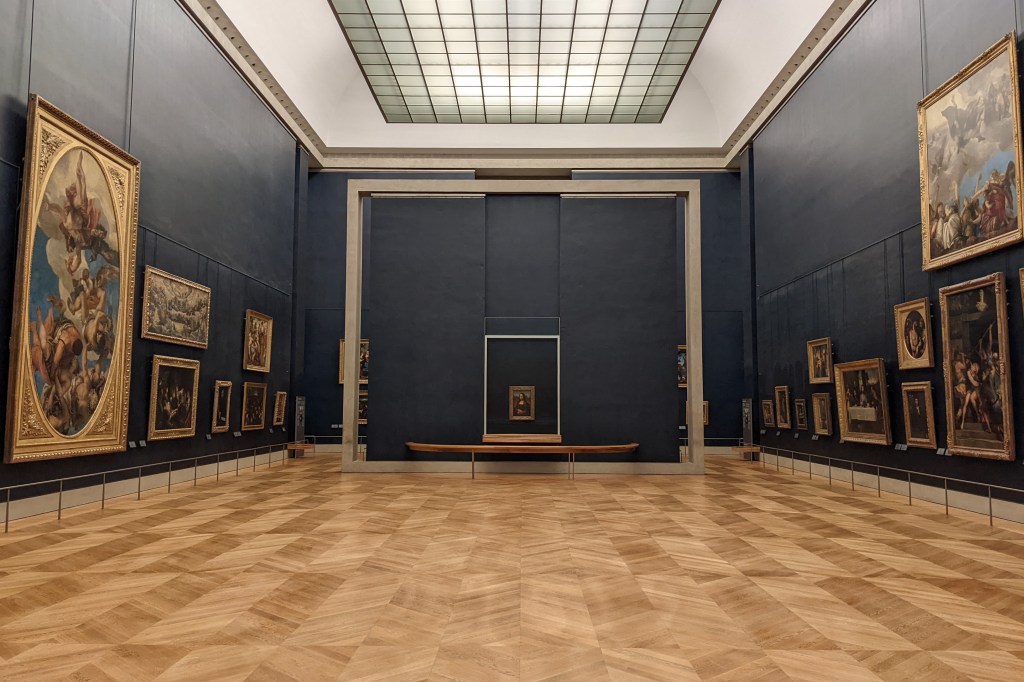
The Mona Lisa of your dreams – without the crowds on a Tuesday, when the Louvre in Paris is closed (Shonagon, CC0, via Wikimedia Commons, cropped) 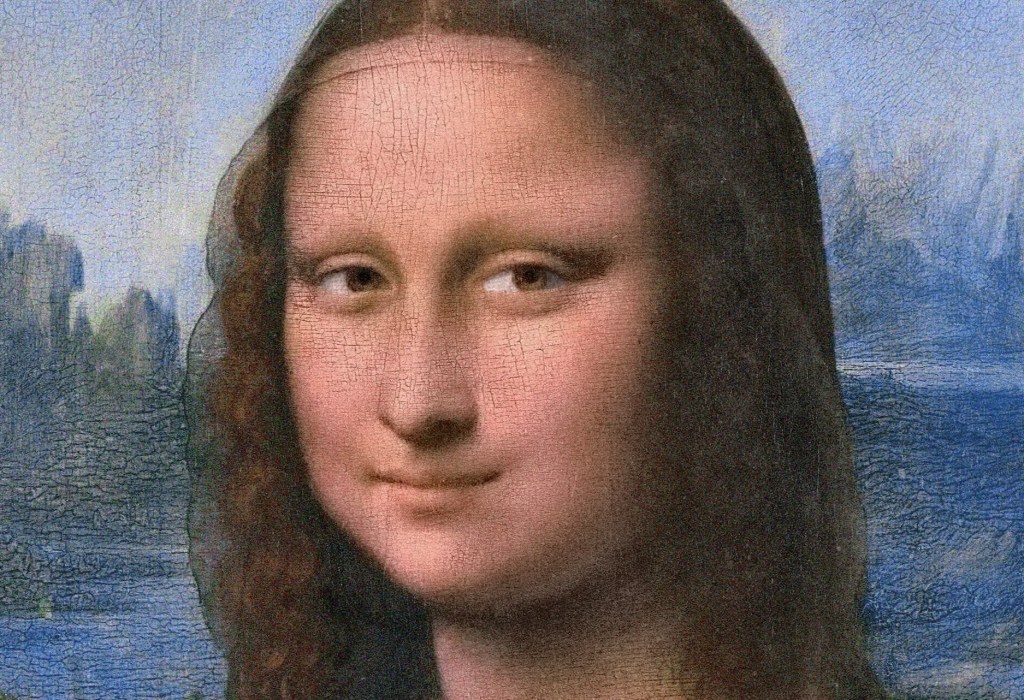
Digitally enhancing Mona Lisa visibly increases the appearance of fine lines (Leonardo da Vinci, Public domain, via Wikimedia Commons, cropped)
The copy: Mona Lisa is projected from floor to ceiling across the walls of the world’s largest digital art gallery, The Lume Melbourne, as part of the exhibition Leonardo da Vinci – 500 Years of Genius (16 March to 16 June 2024). Larger-than-life, digitally enhanced Lisa has reason to smile, liberated from the confines of the heavy frame and climate-controlled glass case in which her original likeness resides. She beams down on her admirers, who have longer than 30 seconds to forensically study the fine craquelure hairlines that are her badge of authenticity. Rounding out the representations of Mona Lisa is the world’s only 360-degree replica of the painting, which was produced using a powerful multispectral camera.
The takeaway: The da Vinci exhibition in Melbourne is the latest in the global trend of digitalising well-known artworks to provide viewers with an immersive, multisensory experience of an artist’s works in the context of their world. Traditionalists could argue the large-format projection of Mona Lisa is light-years away from the original oil painting on wood, but it does facilitate greater access to the work, or at least a semblance of the work, that is ironically more intimate.
And another thing… Purists can take a break from the debate with the Melbourne exhibition’s display of original pages from da Vinci’s Codex Atlanticus notebooks, along with machine inventions faithfully constructed from the Renaissance polymath’s sketches.
2. Terrace of the Lions
The original: Before it was eclipsed by Piraeus as the largest passenger port in Greece, Delos had its time in the sun as a cosmopolitan port buzzing with visitors to the Cyclades’ most sacred island, the birthplace of twin deities Apollo and Artemis. From the 7th century BCE, awe was inspired in worshippers by a row of up to 16 marble lions that roared across the island’s Sacred Lake. In the early 1900s, these leonine guardians of the sanctuary – weathered toothless and numbering only five – were unearthed by archaeologists and installed on pedestals in situ.
The copy: To protect them from further exposure to the Aegean’s strong northerly winds, the 2600-year-old lions on this World Heritage-listed island were moved inside to the onsite archaeological museum in 1999 and replaced with replicas.
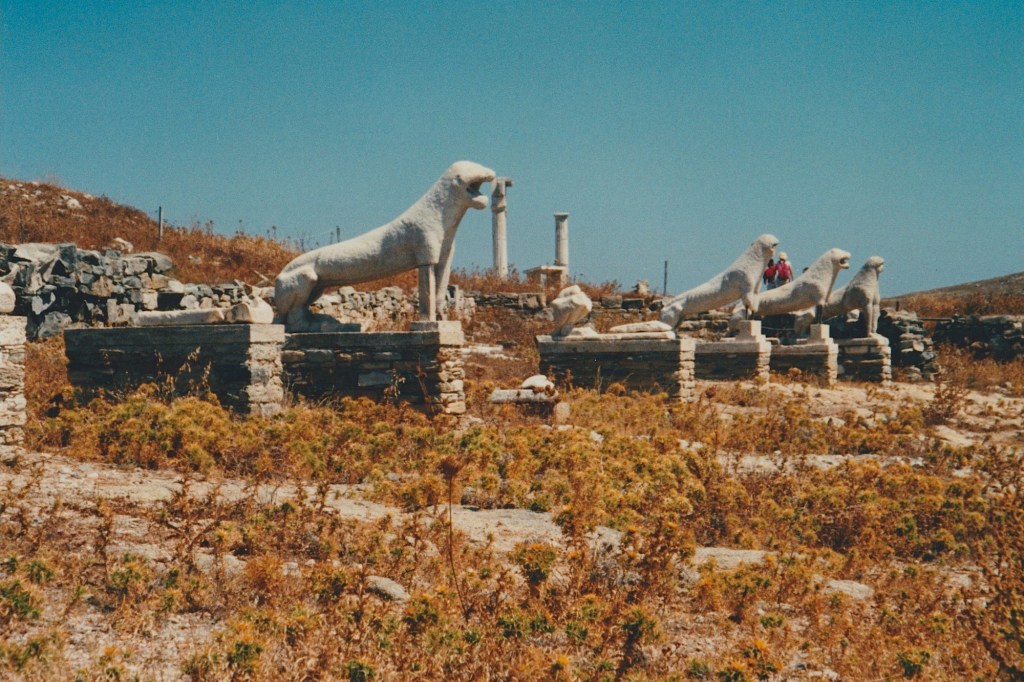
The original 7th-century BCE lions in their ‘natural habitat’ on Delos, Greece, in 1996 (Photo © Liani Solari) 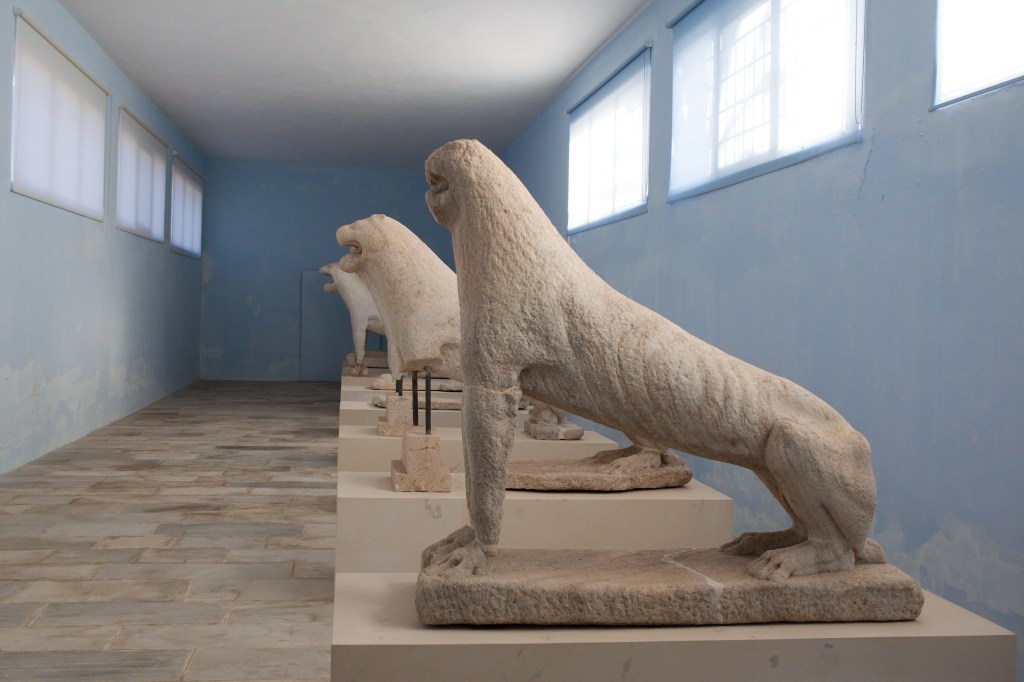
The original lions now inside the onsite museum on Delos, Greece (FreeCloudKent/Shutterstock.com) 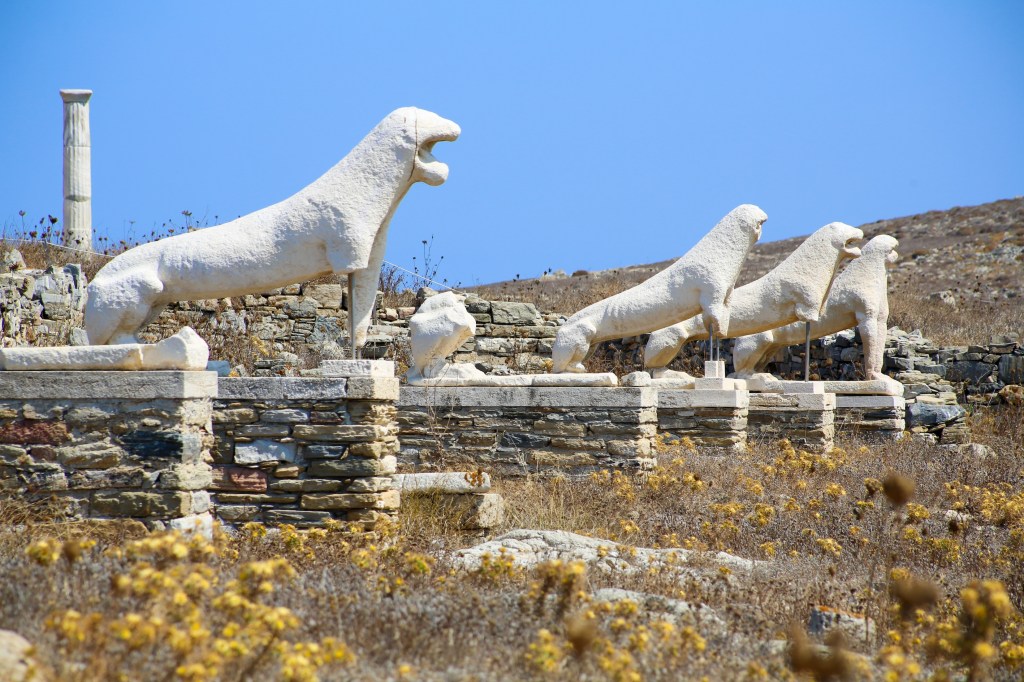
Modern replicas of the ancient lions on Delos, Greece (Kartouchken/Shutterstock.com) The takeaway: Retirement isn’t all it’s cracked up to be for the longstanding original lions now confined to a museum room, their silent roars bouncing off the wall opposite. Still, they have been saved from extinction, and their only risk of overexposure is the social media kind. Their body doubles enable daytrippers from Mykonos to appreciate the Delos lions in their ‘natural habitat’, although there’s the thorny question of whether the lions in antiquity were raised on pedestals or placed on the ground.
And another thing… Attempts to herd the missing cats have led to one being spotted outside the main gate to Venice’s Arsenale, an Art Biennale venue (20 April to 24 November 2024). Standing sentinel with two other Greek big cats and an accidental ‘lion dog’ – all spoils of war – the Delos lion looks decidedly woeful with its later, slightly oversized head and clammed-shut mouth.
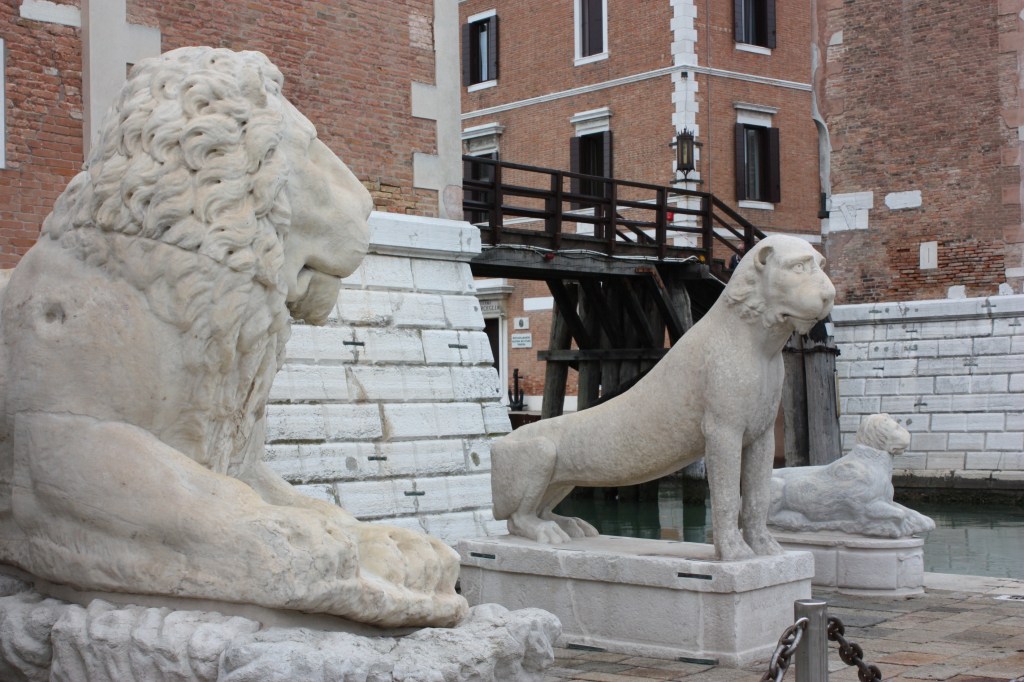
An original Delos lion (with a later head) flanked by another Greek big cat and an accidental ‘lion dog’ outside the main gate to the Arsenale in Venice, Italy (Photo © Liani Solari) 3. The Parthenon
The original: The Parthenon has been the crowning glory of Athens’ Acropolis since it was raised in the 5th century BCE as a shrine to the city’s patron deity, Athena. Doubling as Athens’ treasury, the marble temple contained a colossal ivory statue of the goddess that reportedly stood 11.5 metres tall and contained more than one tonne of removable gold. The sands of time have seen the temple converted into a Christian church, Islamic mosque, gunpowder store, army barracks and today’s archaeological site. They have also witnessed the building’s ruin from a wartime explosion and the souveniring of decorative features. Only the shell of the classical temple remains, its pediment statues and most of the frieze now controversially split between the Acropolis Museum and The British Museum. By late antiquity, Athena had left the building.
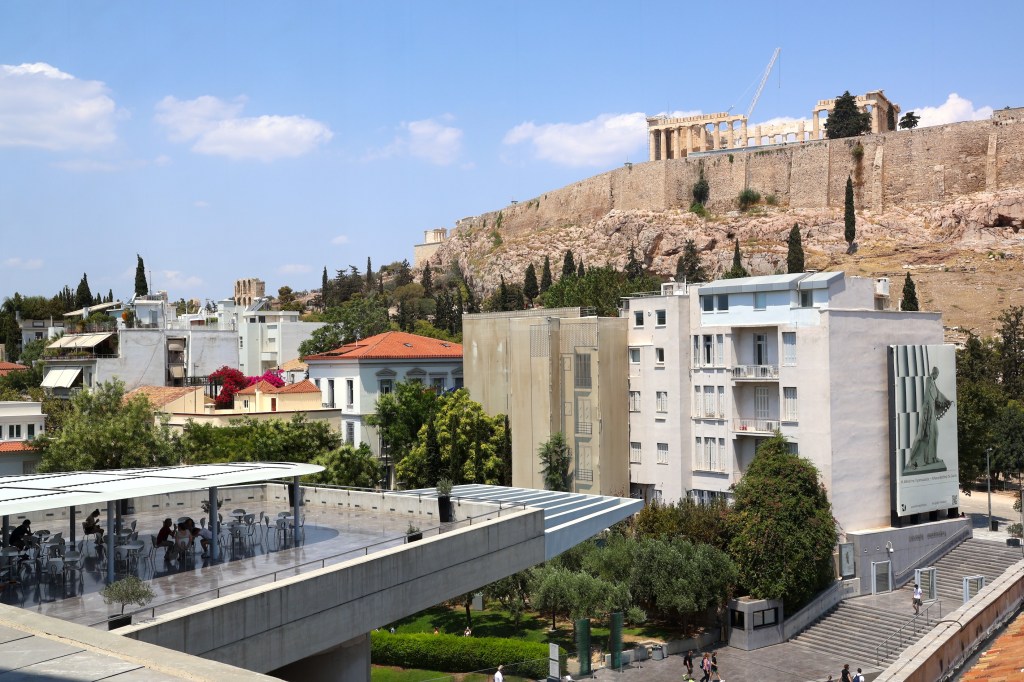
Ruins of the Parthenon viewed from the Acropolis Museum in Athens, Greece (Photo © Liani Solari) The copy: America’s country music capital, Nashville, was once touted as the ‘Athens of the South’ – a centre of learning and culture with a proliferation of colleges and universities, and Greek Revival edifices such as the Tennessee State Capitol. Taking Greek Revival to the nth degree, the 1897 Tennessee Exposition in Nashville’s Centennial Park featured a temporary replica of the Parthenon, which was later re-created in concrete and opened as a city museum in 1931. Athena eventually returned for an encore in the form of a gilded cement replica to rival her dazzling prototype.
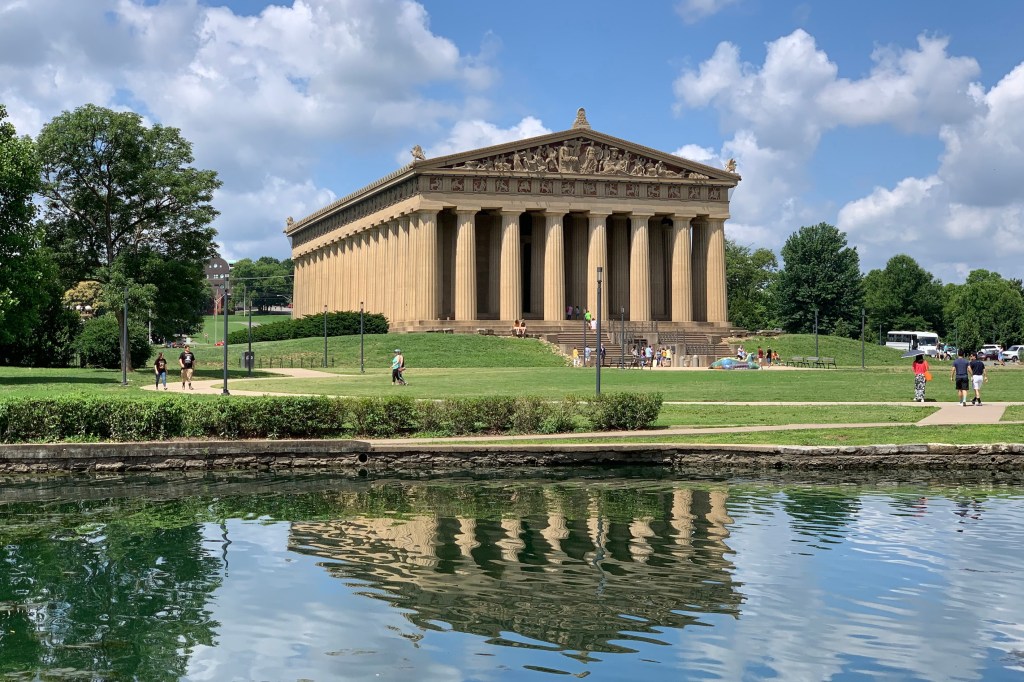
The Nashville Parthenon and Lake Watauga in Centennial Park, Nashville, Tennessee, USA (Anthony Orlando/Shutterstock.com) 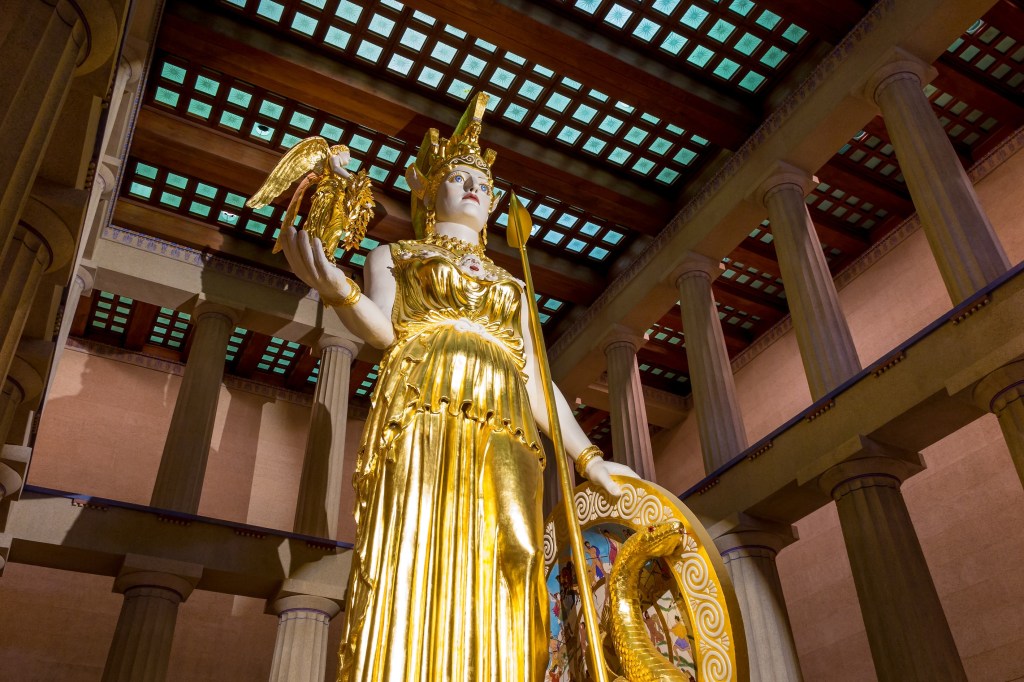
Replica of Athens’ lost statue of Athena inside the Nashville Parthenon, Tennessee, USA (f11photo/Shutterstock.com) The takeaway: The Nashville Parthenon fleshes out the skeletal remains of the ancient Greek megastructure, allowing visitors to envisage the original in its glorious entirety (minus the frieze). However, the replica’s lakeside location amid manicured parklands is clearly 9000 kilometres removed from the real thing atop a rocky outcrop overlooking Athens.
And another thing… Knowing the local historical context of the Nashville landmark – its precursor was built for an exposition that segregated African-American attendees and appealed to Confederate nostalgia – enables visitors to engage with it more critically and thoughtfully.
4. Il Porcellino
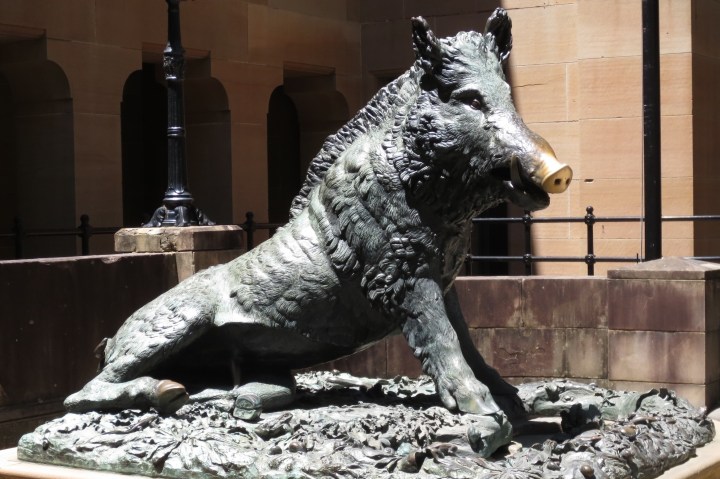
The original: The Uffizi Gallery in Florence says one of its most popular sculptures is a monumental boar. Enthusiasm for the Greek-inspired Roman marble of a feral pig hasn’t waned since the gallery’s early days, when Francesco Bocchi waxed lyrical about this work “so rare and so admirable that it reminds us of the animal’s fierce nature” in his 1591 guidebook The Beauties of the City of Florence. The Boar had entered the collection of the powerful Medici family in 1560 and, like the beast in nature, proved indomitable when it survived a devastating fire in 1762 that burnt other works to a crisp.
The copy: Since 1640, Florence’s locals and visitors have taken a shine to the more famous bronze copy of The Boar commissioned by the Medicis. Cast by Pietro Tacca, who re-created the statue as a fountain with a base of plants and small creatures, the ironically nicknamed Il Porcellino (meaning ‘little pig’ or ‘piglet’) was installed in the loggia of the New Market, near the Uffizi, where it could hog the limelight. For centuries, visitors have rubbed its snout daily and fed it with coins to invoke good luck and a return to Florence. Damage from overuse meant the celebrity swine had to be replaced in 1897 and again in 1998, but in recent years it has had a less invasive nose job.
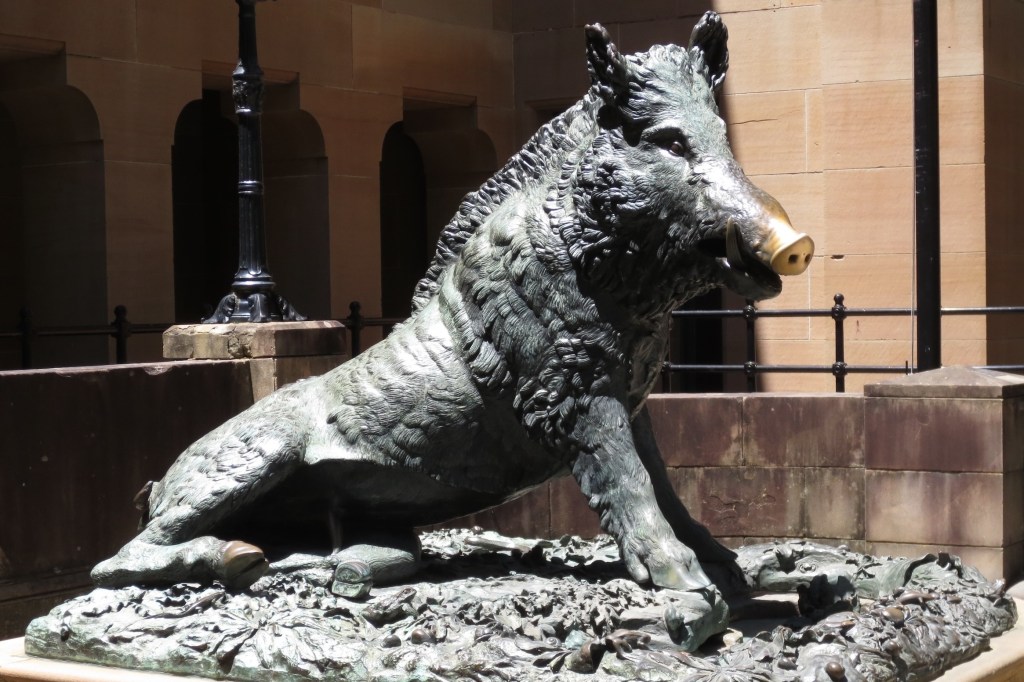
The 1968 bronze copy of Il Porcellino outside Sydney Hospital, Macquarie Street, Sydney, Australia (Photo © Liani Solari) The takeaway: Numbering about 50, the many copies of Il Porcellino around the world speak to the work’s wide-ranging and enduring appeal. Australia has its own bronze replica outside Sydney Hospital. There’s great humour in reimagining a ferocious beast as an endearing mascot you can pat without losing your hand, and the level of detail in the animal’s naturalistic rendering is masterful. Sure, Il Porcellino is a representation of a wild pig. But it’s a beautiful wild pig, so you can put away your lipstick.
And another thing… Someone forgot to tell these replicating replicas that the collective noun for a group of boars is ‘a singular’. How ironic.
More look-alikes to look out for
5. Statue of Liberty
A trick of the eye makes Tokyo Bay’s replica of New York Harbor’s Statue of Liberty appear just as large, but in reality the original could cradle the copy in her arm. Both have water views from their respective islands but, needless to say, you can’t access them from inside the crown of Japan’s Lady Liberty.
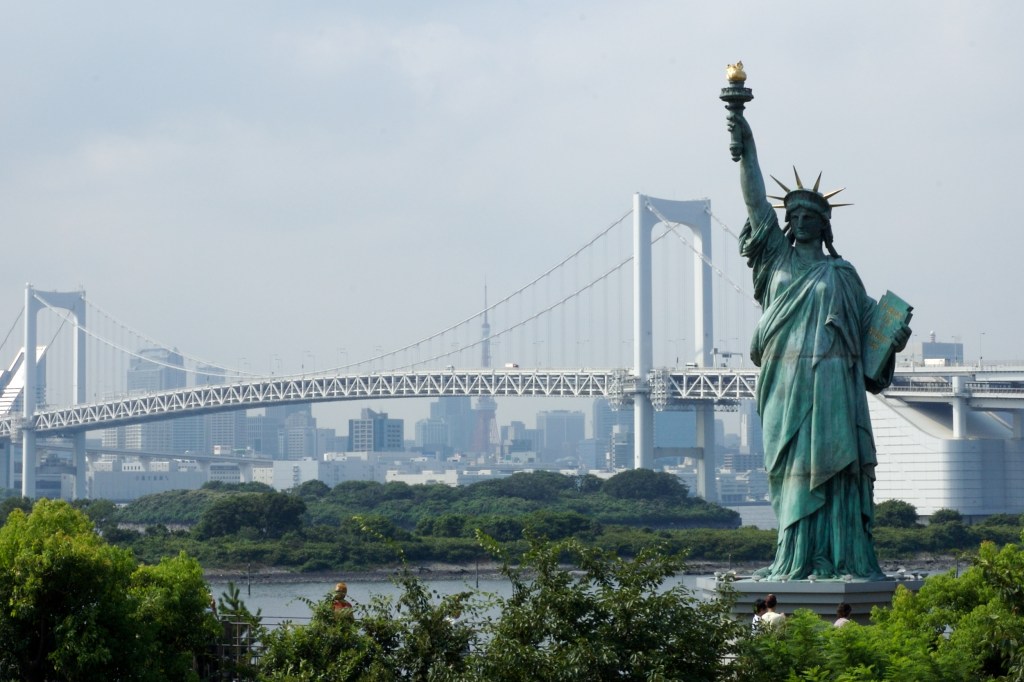
Japan’s replica of the Statue of Liberty with Tokyo Bay and the Rainbow Bridge in the background (Jacob Ehnmark from Tokyo, CC BY 2.0, via Wikimedia Commons, cropped) 6. Michelangelo’s David
Originally overlooking the piazza outside Florence’s Palazzo Vecchio, Michelangelo’s 16th-century marble masterpiece, The David, conquered Goliath but was no match for protesters and pigeons. Today, admire ‘a David’ in the piazza and the original in the city’s Accademia Gallery.
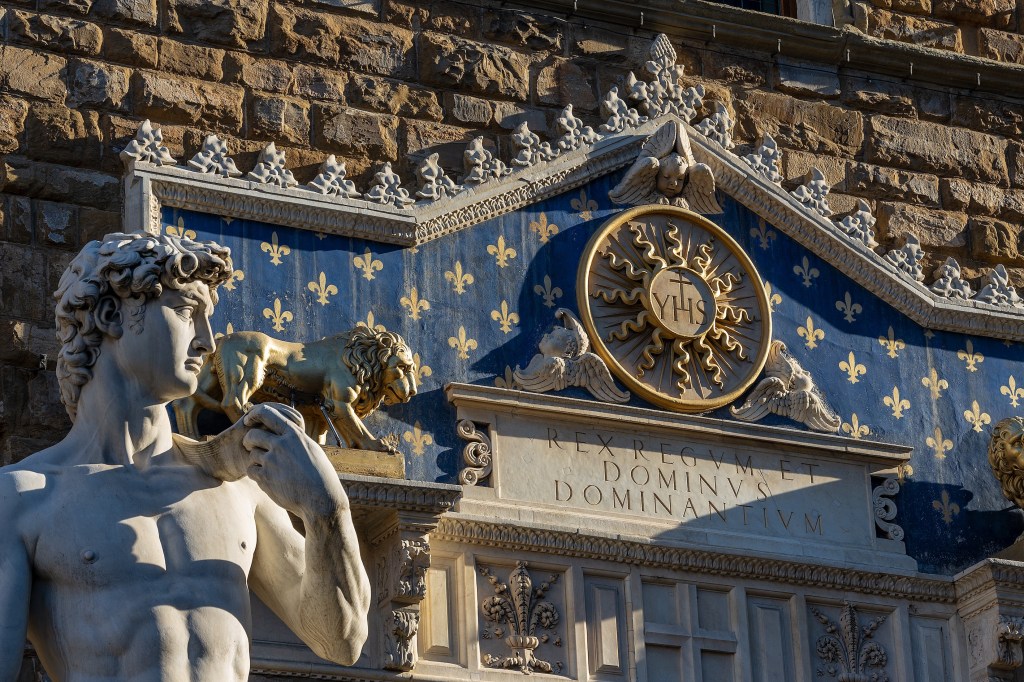
Copy of Michelangelo’s David where the original was installed outside the Palazzo Vecchio in Florence, Italy (Alberto Masnovo/Shutterstock.com) 7. Hearst Castle
Built by yellow journalism pioneer William Randolph Hearst in the early 1900s, Hearst Castle commands the fog-shrouded hills above San Simeon, California. On a tour of the estate, marvel at the mix of genuine antiquities and imitative Mediterranean Revival elements in the architecture, decor and grounds.
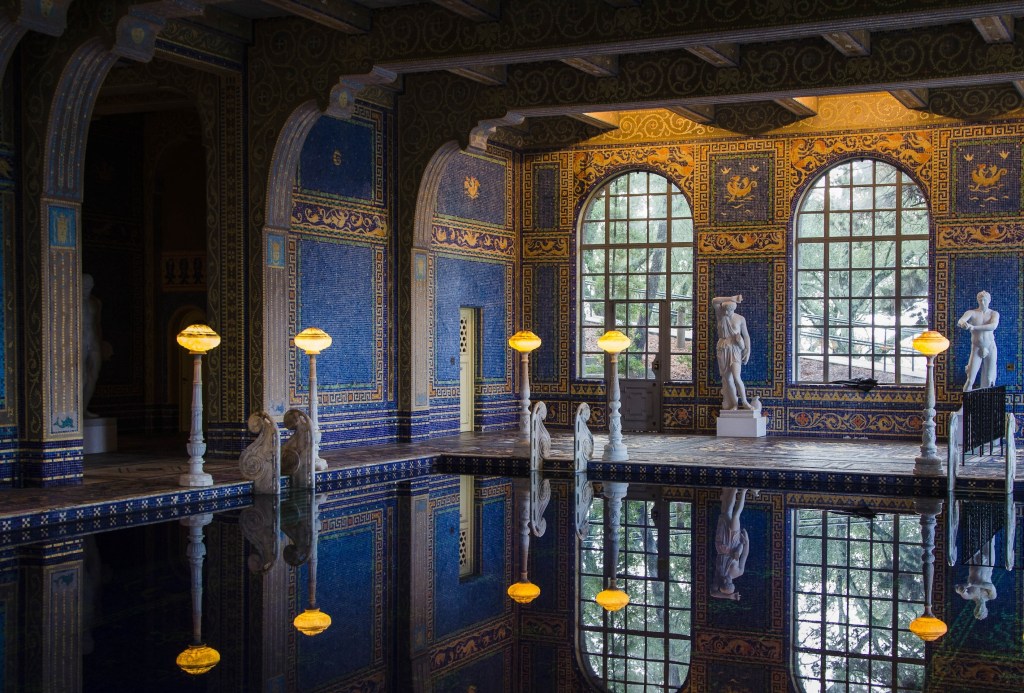
Roman-inspired indoor pool at Hearst Castle, San Simeon, California, USA (Scott Dexter from Brooklyn, US, CC BY-SA 2.0, via Wikimedia Commons, cropped) 8. ABBA concert
See virtual avatars of ’70s Swedish supergroup ABBA perform the Voyage concert in London (27 May 2022 to 5 January 2025), or sing on stage with the band’s holograms at ABBA The Museum in Stockholm.

ABBAtars of Björn, Anni-Frid and Agnetha performing at the ABBA Arena in London, England (Raph_PH, CC BY 2.0, via Wikimedia Commons, cropped) 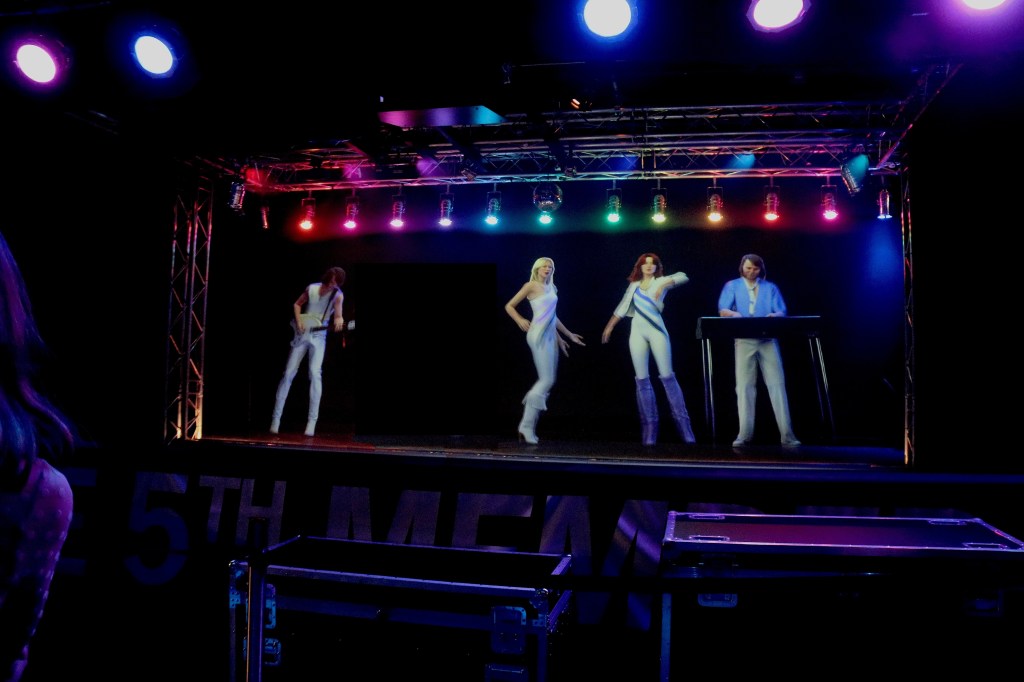
Holograms of Björn, Agnetha, Anni-Frid and Benny invite visitors to join them on stage as “the 5th member” at ABBA The Museum in Stockholm, Sweden (Photo © Liani Solari)
Words © Liani Solari
Posted 7 May 2024.
ABBA, ancient history, art, Athens, Australia, Biennale, California, Delos, exhibition, Florence, gallery, Greece, History, Italy, London, Mediterranean, Melbourne, Mona Lisa, music, Nashville, Olympian gods, Paris, Parthenon, Porcellino, Sydney, Terrace of the Lions, Tokyo, Travel, USA, Venice, World Heritage List -
When in Rome: Turtles and tartufo
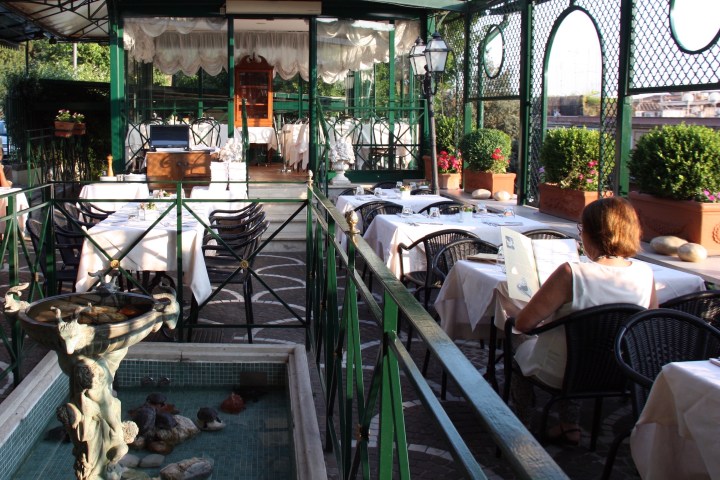
Largely undiscovered by tourists, terrace restaurant Caffè Ciampini is near the action yet out of the fray.
Words and photography by Liani Solari
A lone turtle hangs back from the group on a marble slab at one end of the pool while her two-dozen co-inhabitants jostle with one another at the other end. I know how she feels.
After a day of pounding Rome’s hot, black cobblestones, weaving through thick, airless crowds in the stifling summer heat, my mother and I are relishing our temporary escape from the City of Eternal Tourists.
Concealed behind a lush green wall near the top of the Spanish Steps, Caffè Ciampini is a verdant oasis overlooking the city’s rooftops. A welcome breeze offers respite from the still air below, and the noises of Italy’s most frenetic city are imperceptible, save for the glorious chorus of church bells at dusk. This lovely terrace restaurant is near the action yet out of the fray and, surprisingly, is largely undiscovered by tourists. Leave your spruiker repellent in your hotel room.
Over several trips to Rome since 1998, I’ve seen Caffè Ciampini undergo renovations and extensions under the management of third-generation Roman restaurateur Marco Ciampini, who took over Cafe du Jardin, as it was then called, in 1989. Today, the centrepiece of the restaurant is a tiled pool that features a goat-head fountain and is filled with (ornamental) red-eared slider turtles. These turtles have surely moved up the real estate ladder since 1998, when their humble abode was a plastic bucket in a shady corner of the terrace.
I’ve been looking forward to Caffè Ciampini’s Mediterranean menu all day. We’ve just spent seven weeks in Britain, where we’ve had our fill of black pudding sausages for breakfast, potatoes three ways (on the one plate!) and a forkful of haggis that will linger long in the memory. Not a leafy salad or coloured vegetable in sight. (Jamie, I feel your pain.) Although we’ve been in Italy for only a week, I need to start weaning myself off the three Ps (pizza, panini, pasta) and the spaghetti con vogole (spaghetti with clams) – no matter how delicious – or burst at the seams.
Scanning Caffè Ciampini’s menu, we savour every sip of our first glass of wine as though it could be our last. Really, it could be. Italian women don’t drink much, and the same is expected of their foreign sisters.
Without any prompting, a plate of prawn and salmon aperativi (appetisers) appears. I choose the prosciutto di Parma e melone (Parma ham and rockmelon) from the antipasti options on the menu, knowing I’ll have to pace myself to save space for the restaurant’s famous dessert.
There was a time when I felt obliged to order all five courses on the Italian menu, but not any more. I skip the primi piatti (first course, namely risotto and pasta) and home in on the costolette di agnello under secondi piatti. It translates to the table as succulent grilled lamb chops with a balsamic reduction, served on a bed of vegetables and sculpted rice. The sun sets over Rome’s skyline and a meal fit to revive menu turistico-weary travellers.
Though Caffè Ciampini’s generous dessert menu ranges from homemade gelati to chestnut mousse, it almost seems compulsory to part with a few extra euros for a slice of local culinary history. I order the renowned Tartufo Ciampini chocolate gelato invented by Marco’s grandfather, Giuseppe Ciampini, in 1945. The recipe remains a closely guarded family secret – Roman intrigue in every mouthful.
While we polish off dessert (and, surprisingly, a second glass of wine) the lone turtle rouses, comes down from her marble ‘pedestal’ and settles in for the night with the others. Like us, she just needed time out.
© Liani Solari
‘When in Rome: Turtles and tartufo’ was originally published on Liani Solari’s Girls’ Own Adventure travel blog (now offline).
-
Around the Globe in London
Do a tour of William Shakespeare’s historical playhouse, attend a performance, and glean fun facts about the Bard.
Words and photography by Liani Solari
Miranda is every inch the woman that Ferdinand imagines. She really is. Attending a performance of William Shakespeare’s The Tempest at the reconstructed Globe Theatre in London, I’m reminded that the only women visible in the original Elizabethan theatre would have been fanning themselves in the undercover galleries or cracking their teeth on hazelnuts in the open-air yard. Miranda would certainly have been played by a young man.
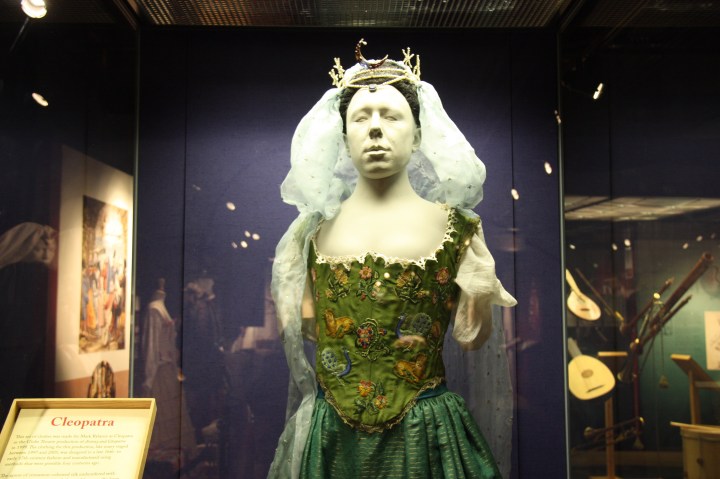
More than 400 years after Shakespeare wrote the play, a female player, Jessie Buckley, is treading the boards as Miranda. Most plays at the Globe are now performed by a mixed cast. That said, in a nod to tradition, the new Globe opened in 1997 with a performance of Henry V by an all-male cast in authentic Elizabethan costume. Similarly, in 1999, actor Mark Rylance famously strutted his stuff in the lead female role in Antony and Cleopatra, teetering on the brink of incredible platform ‘overshoes’ called chopines. These are on display in the Globe’s exhibition area, along with Cleopatra’s delicately hand-embroidered corset and silk skirt (pictured above).
In an ironic twist that Shakespeare would surely have appreciated, the Globe has presented all-female performances, too. Before The Tempest begins, we take a 30-minute guided tour of the theatre, our guide recalling six-foot-tall actress Janet McTeer “playing a very swashbuckling Petruchio” in The Taming of the Shrew. Much Ado About Nothing and Richard III, she adds, have also been performed here by all-female casts.
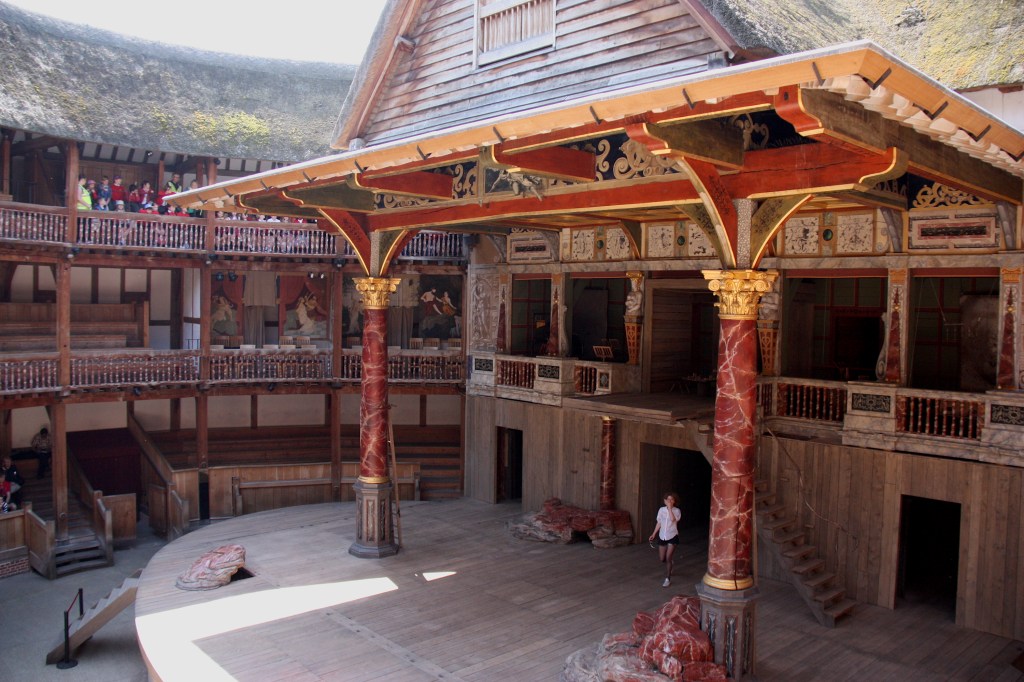
Inside Shakespeare’s Globe Theatre, London (Photograph: Liani Solari) The new Globe was late American actor/director Sam Wanamaker’s dream to resurrect the original Globe Theatre built in 1599 in nearby Park Street. No plans for the original Globe exist, but archaeological excavations of about five per cent of its foundations in 1989 confirmed the dimensions of this 20-sided open-air polygonal building.
Shakespeare’s date of birth is less certain. However, based on his baptism in Holy Trinity Church in Stratford-upon-Avon on 26 April 1564, his birthday is traditionally celebrated on 23 April. If the 23rd is correct, Shakespeare died on his 52nd birthday. Unlike the 1700 words that Shakespeare invented, you couldn’t make that up.
Fun facts
Here are some other insights about Shakespeare and his Globe that we gleaned on our visit:
1. Shakespeare didn’t attend university. Universities permitted single men only, and Shakespeare married when he was 18.
2. We quote Shakespeare every day. That’s a “foregone conclusion”.
3. The theatre was an excuse for a long tea-break. In Shakespeare’s day, plays were performed at 2pm only. “The City opposed the theatres because they drew apprentices away from work,” says the exhibition literature. Playhouses weren’t permitted within London’s walls, so pleasure-seekers would cross the Thames to visit Bankside, where the Globe and other theatres were located alongside pubs and brothels, and ‘entertainment’ included bear-baiting, bull-baiting and cock-fighting.
4. Hygiene wasn’t what it is today. The groundlings were commoners who jostled for space in the standing-room-only yard of the Globe, right in front of the stage. They could number 1000 on a hot summer’s day, when they became known as ‘stinkards’.
5. They drank ale at the theatre. When the original Globe burnt down in 1613, miraculously there were no fatalities and just one injury: a man’s britches caught fire, which was put out with a bottle of ale.
6. Shakespeare was meant to be heard, not seen. It seems counterintuitive, but the view of the stage from the premium seats in the gentlemen’s boxes is partly obscured by large oak columns. In Shakespeare’s day, people came to hear the play, so those seats were still considered the best in the house. The Globe’s acoustics are such that today’s actors don’t use microphones.
7. All the world’s a stage. This quote from As You Like It rings true at the Globe, which is a universe of sorts for the duration of each play. Above the stage is a trapdoor painted with the sun, moon and zodiac signs, and mechanical apparatus for lowering the gods through ‘the heavens’.
8. The third Globe is a first. The first Globe Theatre was the victim of fire; the second succumbed to plague and Puritans. Today’s Globe Theatre – the third – is the first thatched building permitted in London since the Great Fire of 1666.
9. It’s not the West End. There’s no lockout at the Globe – you’re free to come and go while the actors are on stage. In Shakespeare’s day, groundlings forked out one penny for standing space in the yard. Today, where else can you go to the theatre in London for five pounds?
Where to experience Shakespeare around the globe
- Australia-wide: Bell Shakespeare
Pictured below, left to right:
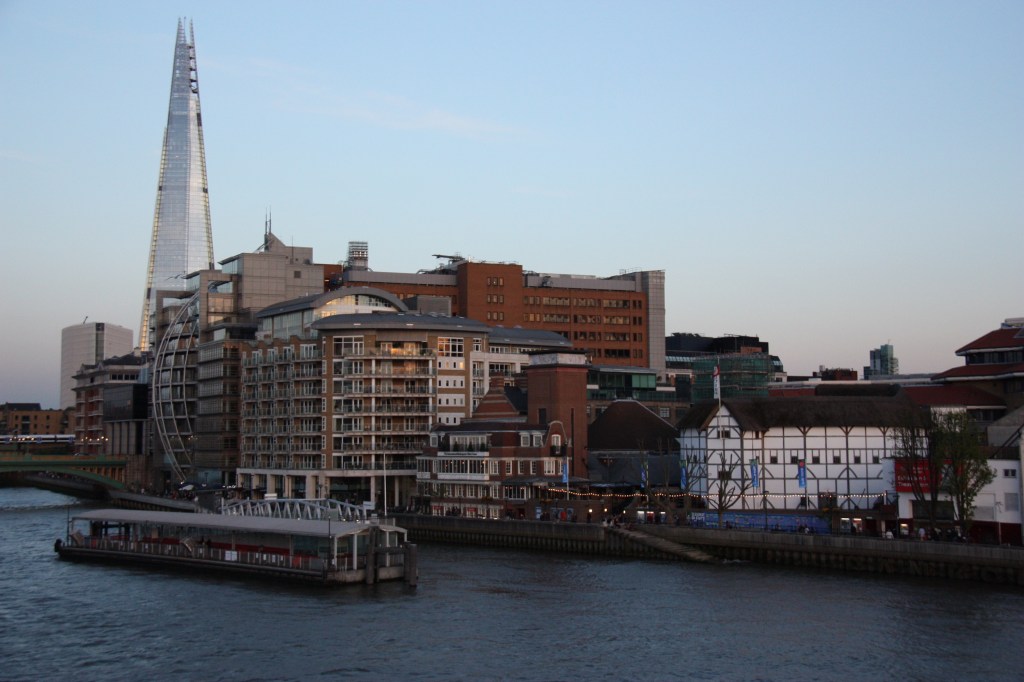
- London, England: Shakespeare’s Globe
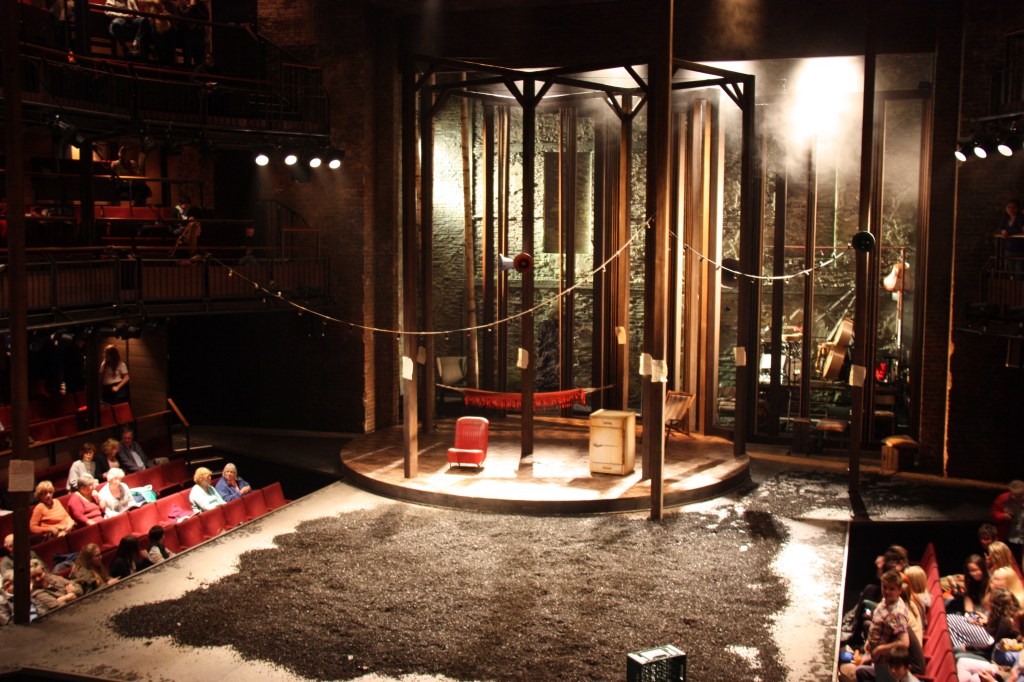
- Stratford-upon-Avon, England: Royal Shakespeare Company
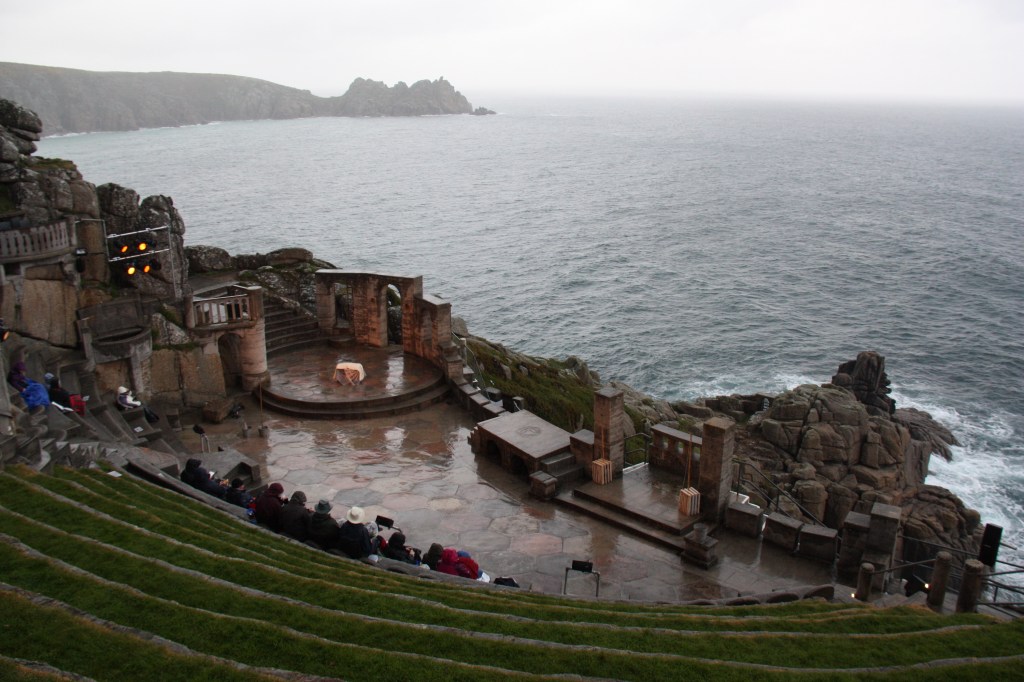
- Cornwall, England: The Minack Theatre
(Photographs: Liani Solari)
© Liani Solari
‘Around the Globe in London’ was originally published on Liani Solari’s Girls’ Own Adventure travel blog (now offline).
Writer • Editor • Copyeditor • Travel Writer