
Shakespeare’s family home – the largest in Stratford – is gone, but there’s more to the block on Chapel Street than meets the eye, including a Tudor real-life story of “murder most foul”.
Words and photography by Liani Solari
The Reverend Francis Gastrell was a tourism marketer’s worst nightmare for Stratford-upon-Avon. Until he wasn’t. Irritated by literary pilgrims to the 150-year-old mulberry tree planted in his garden by former homeowner William Shakespeare, Gastrell took an axe to the only living memorial to Stratford’s beloved Bard and felled it with “Gothick barbarity”. You’d think it a hard act to follow, but dramatic tension peaked in 1759 when he also reduced the house (later than Shakespeare’s original) to rubble, to avoid paying taxes.
Before the dust could settle, Gastrell was run out of town and entrepreneurial locals were flogging Shakespeare souvenirs carved from the salvaged mulberry wood (and a suspicious number of knock-offs). Gastrell had unwittingly sown the seeds of bardolatry, and despite Stratford’s first Shakespeare Jubilee in 1769 being a washout, the English market town was becoming a popular tourist destination.
And there’s the rub: New Place, Shakespeare’s final home for 19 years, had vanished from Chapel Street, conspicuous by its absence from a streetscape of other medieval half-timbered houses. “Do you see nothing there?” Hamlet might have asked.
In the Oscar-nominated film Hamnet, it’s the “new house” that daughter Susanna says, “everyone in town is talking about”.
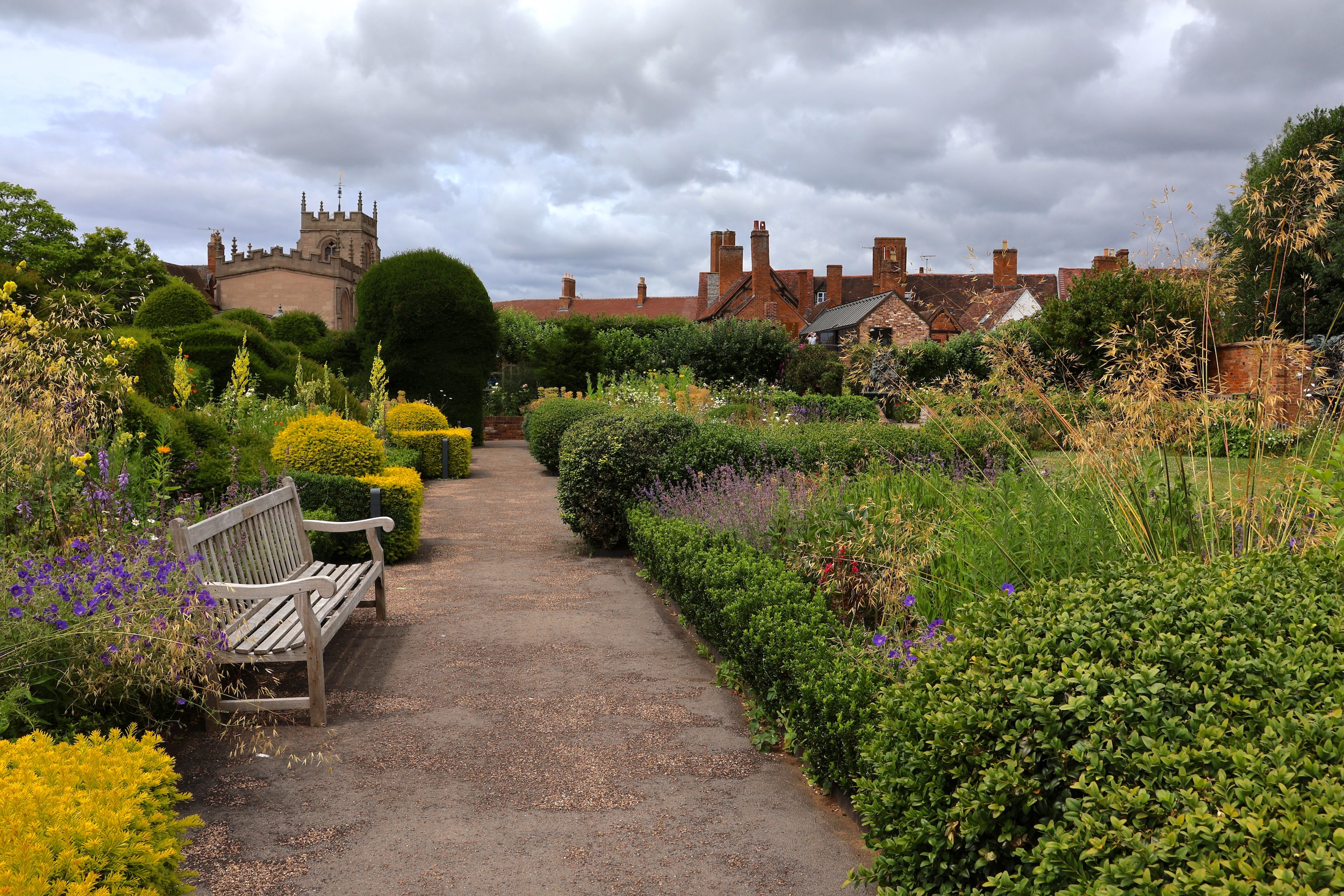
Excavating and regenerating the site 10 years ago, the Shakespeare Birthplace Trust resisted re-creating the house literally, instead reimagining New Place to appeal to literary enthusiasts and gardeners alike. Bronze markers trace the home’s footprint, purpose-designed gardens and commissioned sculptures speak to Shakespeare’s life and works, and Nash’s House next door provides an exhibition space.
Shakespeare purchased New Place in 1597, nine months after the death of his only son, 11-year-old Hamnet, from a cause unrecorded. This multistorey 20- to 30-room house at the centre of Stratford’s civic and social life was surely a status symbol, reflecting the playwright’s rising star on London’s theatre scene.
In the Oscar-nominated film Hamnet (2025), it’s the “new house” that daughter Susanna says, “everyone in town is talking about”. Everyone, that is, but grieving mother Agnes (aka Anne Hathaway, played by Jessie Buckley), who is openly hostile to her husband’s purchase of Stratford’s largest house when their family of five has been so cruelly cut down.
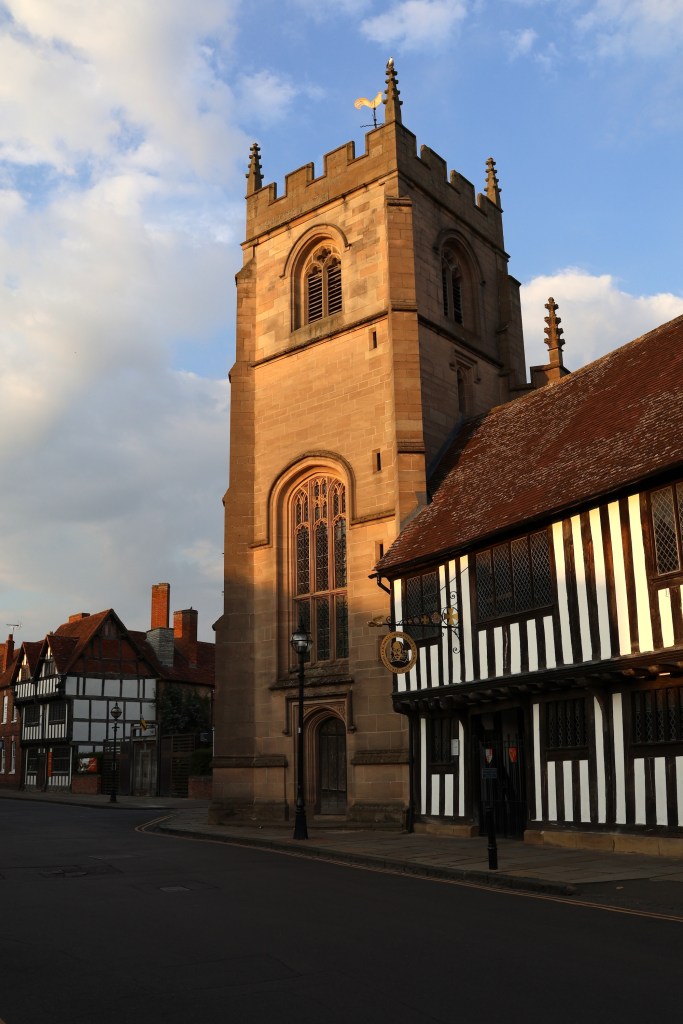
If, as the film suggests, Shakespeare’s preoccupation with prestige grated with Agnes’s raw, private anguish, there’s also the matter of Shakespeare helping his father apply for a coat of arms – the hallmark of a gentleman – 10 weeks after Hamnet died. Today, the Shakespeare coat of arms, crowned with a falcon punningly shaking a spear, lords it over visitors entering New Place on Chapel Street.
Shakespeare’s new house had come with its own fatherly ghost, casting the playwright’s ownership into legal limbo for five years.
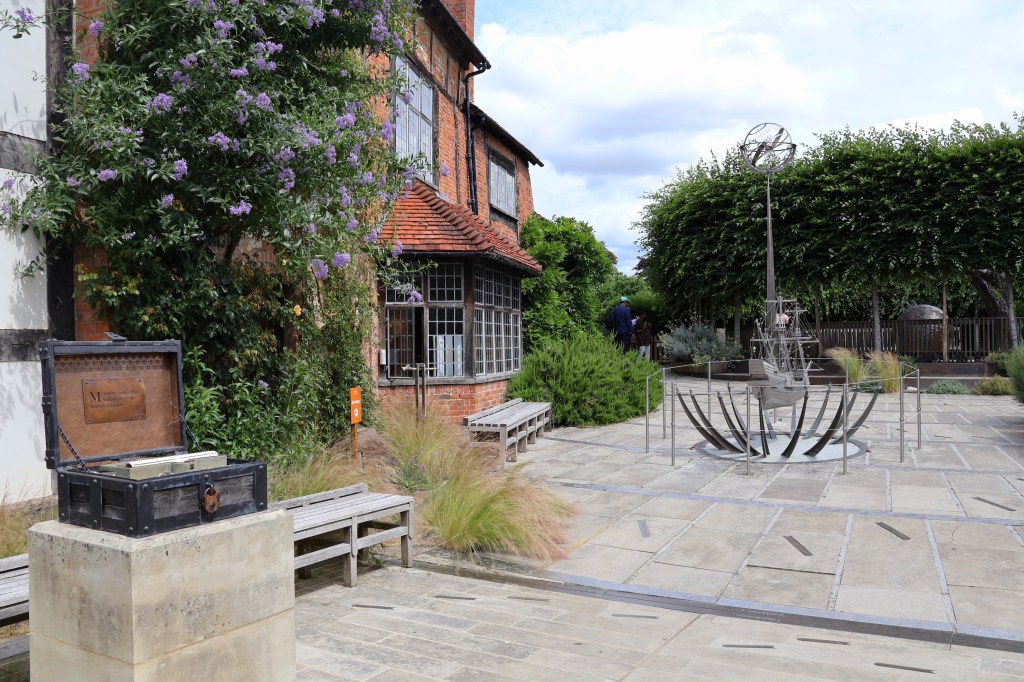
Inside the entrance, a replica Tudor strongbox holding the title deed to New House chillingly recalls the fatal poisoning of the previous owner, William Underhill, by his son Fulke. Shakespeare’s new house had come with its own fatherly ghost, casting the playwright’s ownership into legal limbo for five years. Writing Hamlet at the time, Shakespeare had found a “murder most foul” close to home, perhaps prompting him to favour the clandestine poisoning of the king over the tradition of slaying in the original sources.
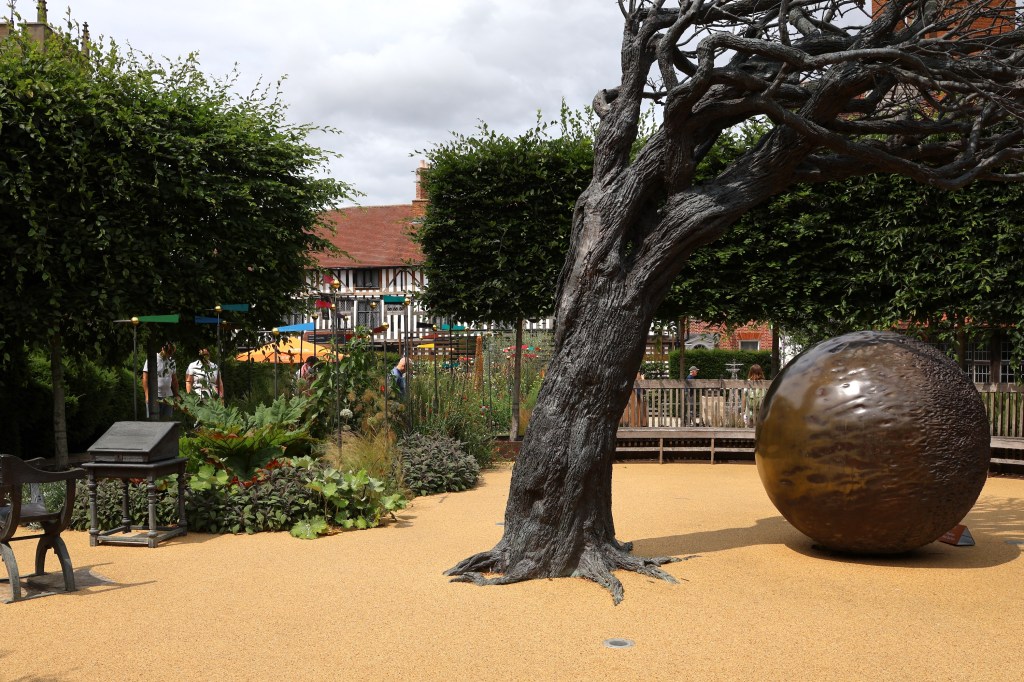
There’s no conclusive evidence that the worldly-wise dramatist ever travelled outside England, which has helped to fuel the contentious authorship question: could Shakespeare have written so knowledgeably about aristocratic life and foreign customs without experiencing them? While British sitcom Upstart Crow makes light of the debate (through Shakespeare’s parochial sources of inspiration and misadventures on Tudor public transport on the Stratford–London commute), New Place acknowledges it with Terrestrial Sphere, a metal globe with the earth’s axis thrust through Shakespeare’s Stratford-centric world, not the poles.
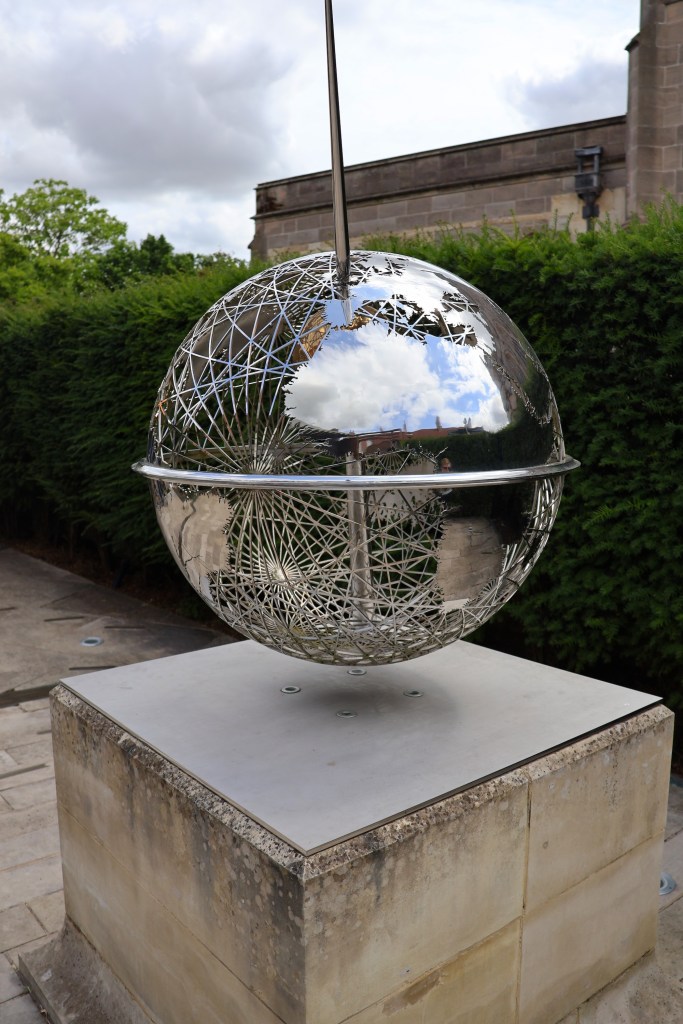
At the heart of Shakespeare’s family life was the large hall, which is now pegged out by a ring of 26 pleached hornbeam trees representing the number of plays Shakespeare wrote when he owned New Place. Their intertwined branches encircle two bronze focal pieces: a writing desk and chair; and a spectacularly windswept hawthorn tree and massive sphere suggesting Shakespeare’s genius. Surprisingly, there’s no nod to the family members who energised this space more than Shakespeare did (owing to his absences in London) – namely the Shakespeare women. Four generations, from Shakespeare’s mother to his granddaughter, are likely to have gathered here in the spring/summer of 1608.
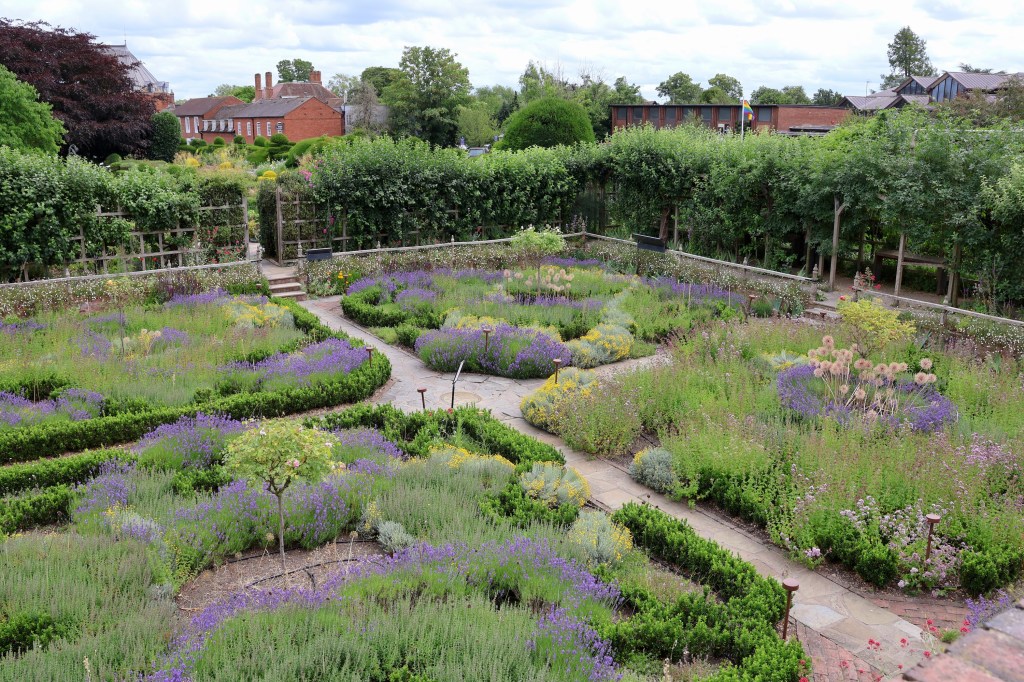
It’s debatable whether the Shakespeares had a knot garden, and the film Hamnet shows Agnes tending an informal patch (at a 15th-century country house in Surrey that stands in for New Place) rather than the fashionable manicured parterre. To get a sense of Agnes’s beautifully untamed garden (without perfectionist stepmother Joan appearing like an attack of blight), visit New Place in summer when the flowering perennials are swaying to a wilder beat.
To get a sense of Agnes’s beautifully untamed garden (without perfectionist stepmother Joan appearing like an attack of blight), visit New Place in summer when the flowering perennials are swaying to a wilder beat.
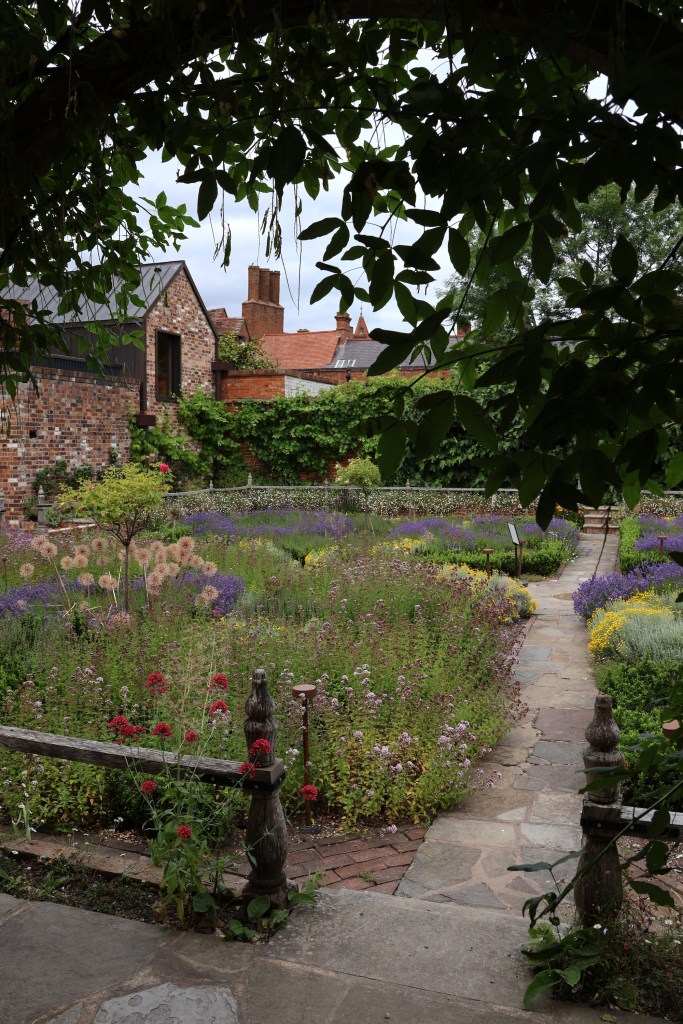
It’s when the sunken knot garden is flush with purple lavender spikes and yellow santolina orbs, and the giant onion flowers guarding the standard roses from aphids are getting ready to stand down. See if you can spot the evergreen spindle substituted for diseased box hedges, a horticultural nod to Shakespeare’s fondness for using mistaken identity as a plot device.
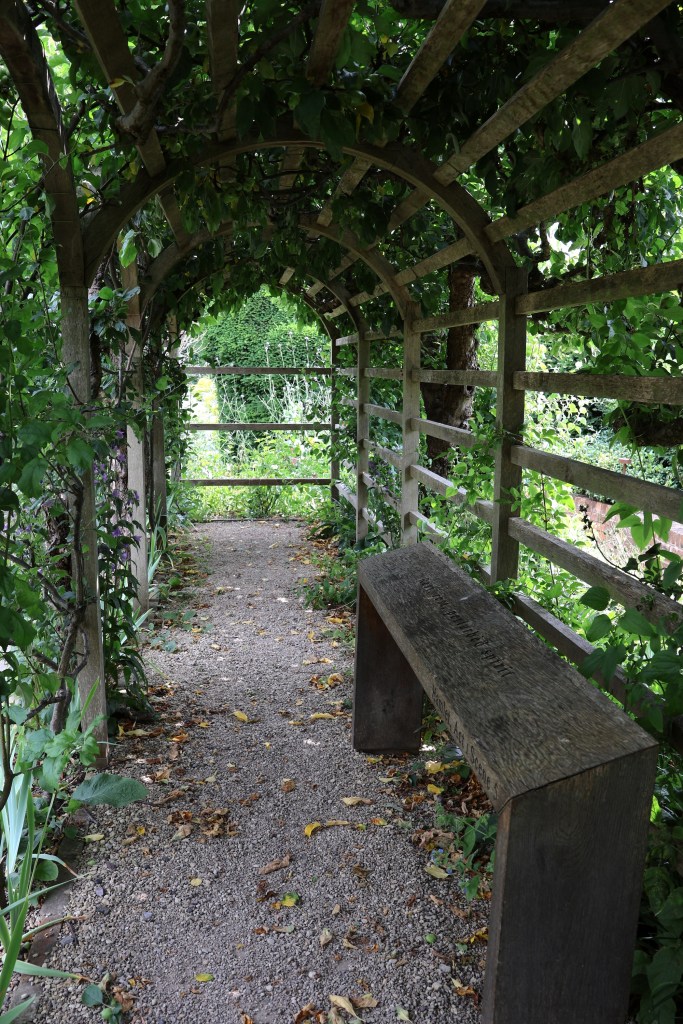
Flanking the knot garden, the crabapple arbour promises midsummer shade and tantalisingly immature fruit. Take a leaf out of Hamlet here (“Rest, rest, perturbèd spirit,” invites an oak bench) before going up to the viewing terrace at Nash’s House for an overview of the knotwork and a distant glimpse of the Royal Shakespeare Company’s Theatre Tower sprouting up behind the tree line.
The garden’s showstopper is arguably the yew hedge that runs past the Great Garden to the Wild Bank, where beneficial insects and pollinators board at Falstaff’s Luxury Bug Hotel and dine on flowers mentioned in Shakespeare’s plays. Like the knot garden, the yew walk is a relic of an earlier interpretation of the site, intended as a neat, straight hedge but allowed to grow with abandon during World War I and sprout cloud-like bulges.
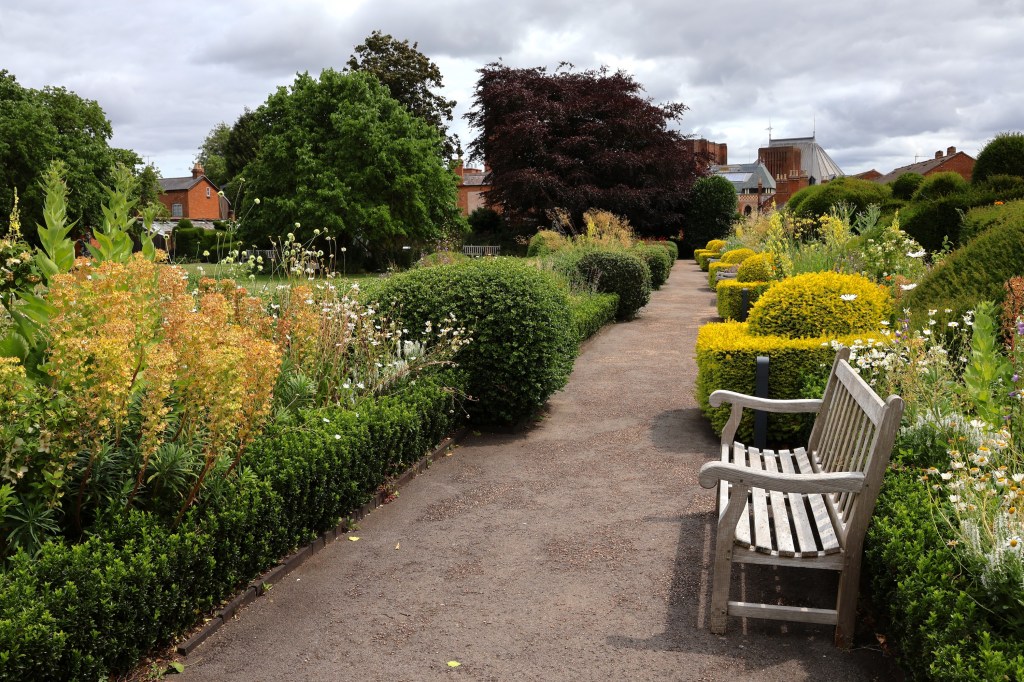
Sculpted yew buttresses now cradle borders of flowering perennials: fragrant mock orange, spiky sea holly, intensely vibrant cranesbill and – no, your eyes do not deceive you – opium poppies (a permitted garden-variety plant in the UK, unlike Australia). If this attention-loving wing of the garden has a dark, secretive side, it’s the yew tree’s traditional association with death and its possible identity as the “cursed hebenon” used to poison the king in Hamlet.
Bordering the Great Garden’s half-acre lawn, a sculpture trail of bronzes inspired by Shakespeare’s plays commemorates the site of Stratford’s first permanent theatre, which staged its last performance (Hamlet) in 1872 before being demolished.

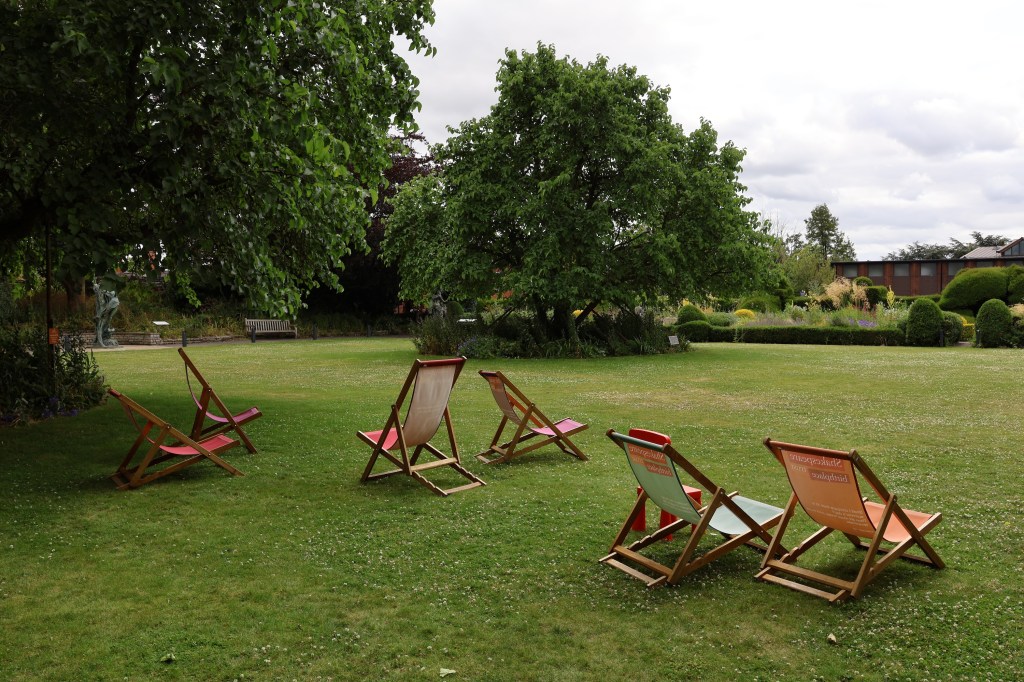
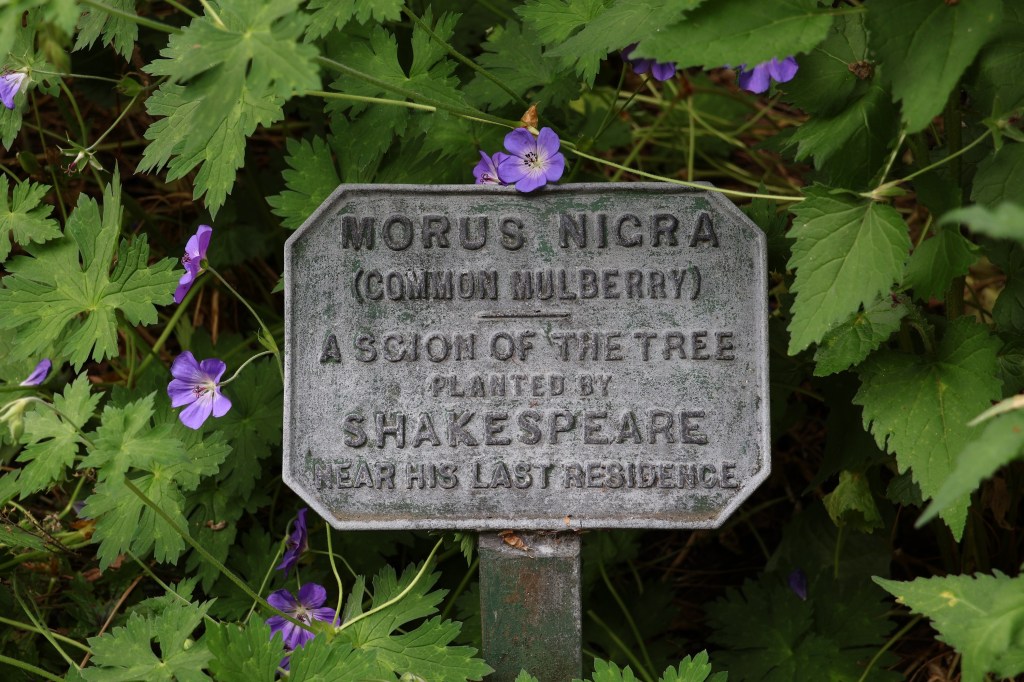
Low-slung deckchairs sprouting Shakespeare quotes are strewn across the lawn, inviting you to watch the clover grow in the shade of a 270-year-old mulberry. “I am old and frail. Please do not shake my branches,” says this immortal tree propagated from Shakespeare’s felled mulberry.
Not even Shakespeare himself could have devised a better plot twist.
© Liani Solari
Posted 15 March 2026.
The writer saw the film Hamnet and visited New Place at her own expense.

 Liani Solari