
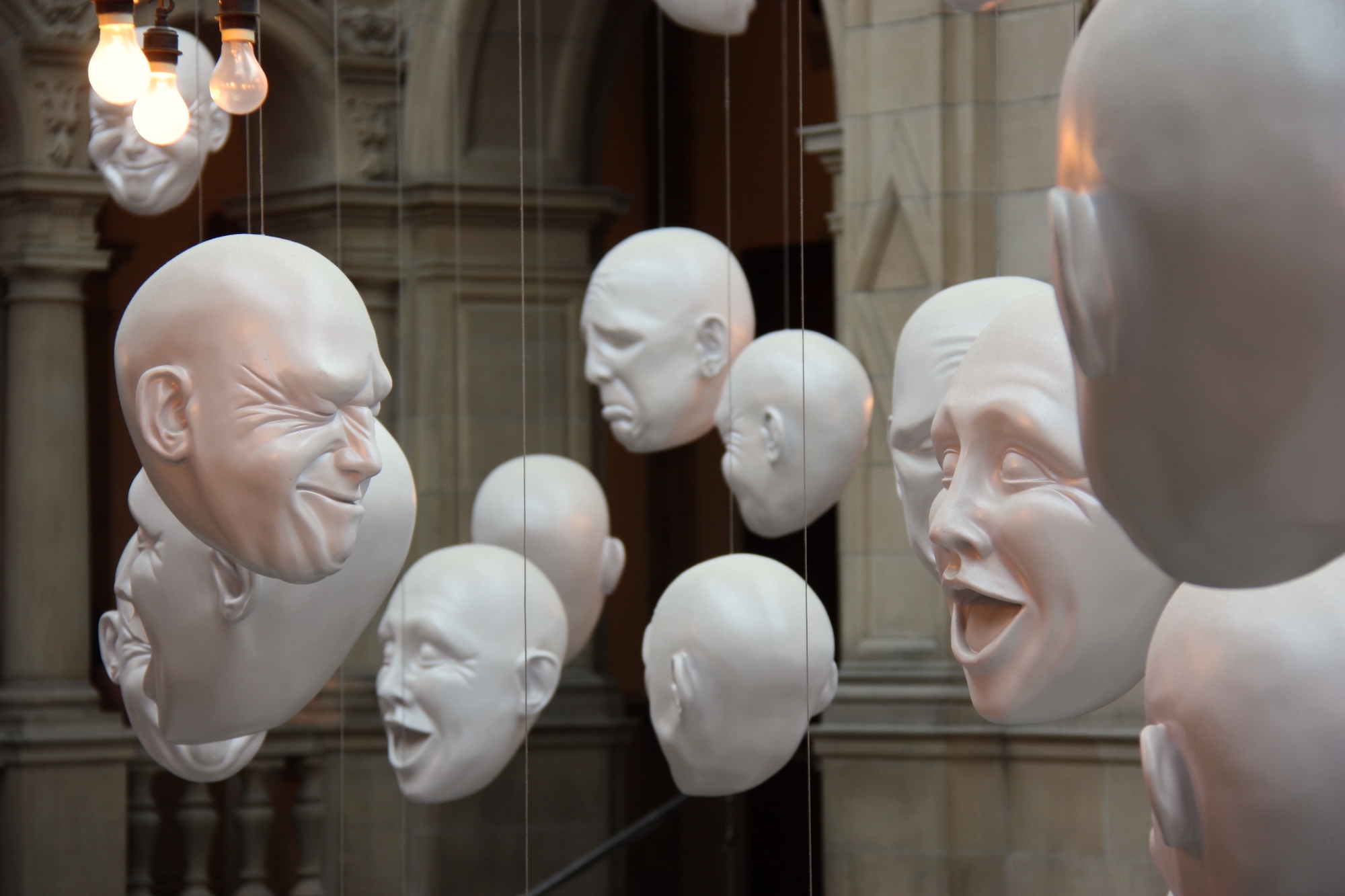
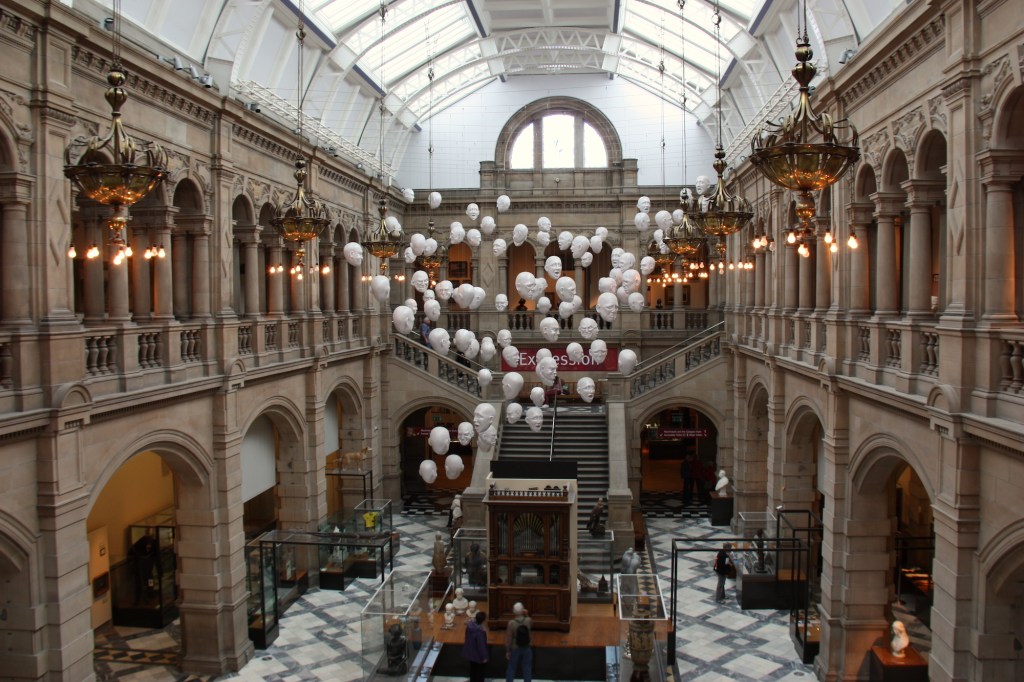
The popular Kelvingrove Art Gallery and Museum houses 8000 objects in 22 galleries. But what if you have only one hour?
Words and photography by Liani Solari
“You have one hour. Be back at the bus on time,” our guide announces laconically when we pull up outside Glasgow’s Kelvingrove Art Gallery and Museum and get an eyeful of its magnificent red ‘Spanish Baroque’ facade. My jaw drops. I’m being asked to give art the hurry-up, which is foreign to me. But, then, so are coach tours.
We race up the stairs of the grand entrance, trying to think fast on our feet. If we have 60 minutes to see 8000 objects in 22 galleries, how many nanoseconds per object, minus sprint time from gallery to gallery?
At the very least, we figure, we have time to see Kelvingrove’s most famous painting… and then come what may. Liberated by this quick thinking, within minutes we’re gazing up at the painting declared Scotland’s favourite in a Herald poll in 2005: Salvador Dalí’s Christ of St John of the Cross (1951).
Not everyone was enamoured of the Spanish surrealist’s painting when Dr Tom Honeyman, then director of Glasgow Museums, acquired it on behalf of the City in 1952. Though the price of the work was reduced from 12,000 to 8200 pounds, Glasgow art students protested against what they considered an extravagant purchase, arguing that supporting Scottish contemporary artists should have been the City’s higher priority. The newspaper cuttings in the curator’s electronic scrapbook paint the full, controversial picture.
Leaving the intimate room where Dalí’s evocative portrait of Christ is displayed, I can’t help but think Sister Wendy would have been in her element here, gliding along the tiled colonnades from one gallery to the next. We need to get our skates on.
In one of these airy thoroughfares, a bronze sculpture by New York-based artist Patricia Cronin stops me in my tracks. Memorial to a Marriage is a mortuary portrait of Cronin and her life partner, artist Deborah Kass, lying half-naked in a loving embrace. It’s a brave artist who would portray herself in death.
The bronze is a copy of Cronin’s ‘19th-century American neoclassical’ Carrara marble sculpture installed on the Cronin–Kass burial plot in Woodlawn Cemetery, New York, in 2002. For a time, it was the third most visited plot in the Bronx cemetery after those of jazz greats Duke Ellington and Miles Davis.
“In death I make official my marriage, which was not legal for most of our relationship,” Cronin is quoted on the poster above the bronze, which includes a photo of the women celebrating their nuptials (yes, they are very much alive!) outside City Hall in July 2011 after the New York State Senate passed a bill allowing same-sex marriage.
If the best stories are those you come across unexpectedly, we strike gold again when we hurriedly gloss over the usual suspects (the European masters) and chance upon Lafaruk Madonna in a small adjacent room. The triptych was painted by Italian POW Giuseppe Baldan for the tiny mud chapel in the POW camp near Berbera, northwest Somalia, where he was held by the British during World War II.
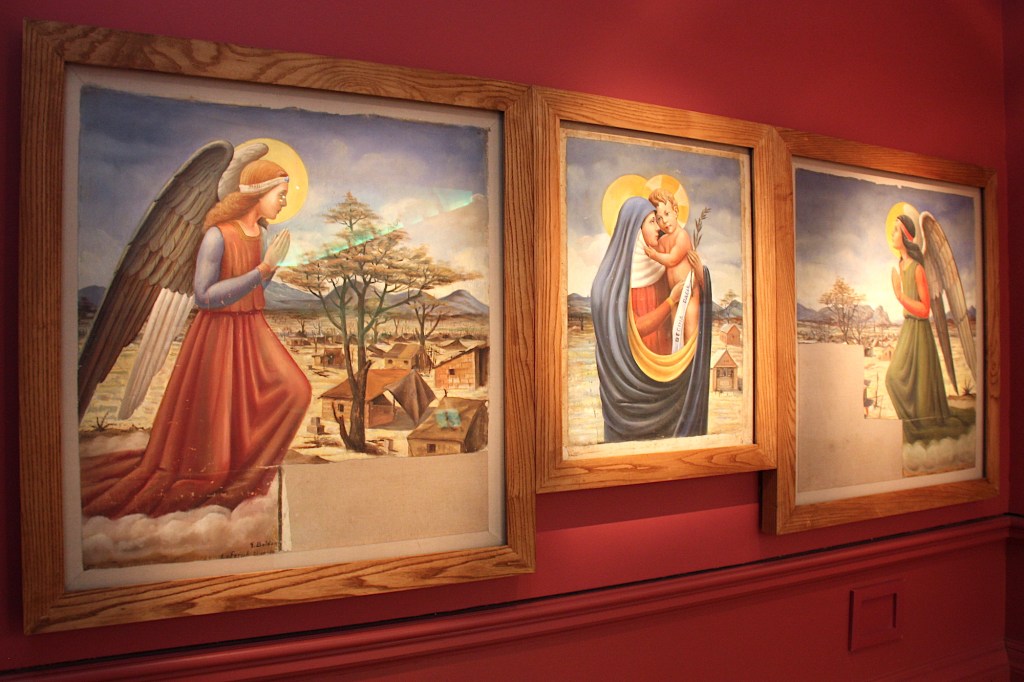
Using the only materials available to him in the austere desert camp, Baldan painted the Madonna, Christ and angels on the back of flour bags. The background, far from grandiose or romanticised, depicts the POW camp, including the chapel where the paintings were installed above a makeshift altar. In an inconspicuous corner of one canvas, the Italian flag is disguised as washing on a line.
The survival of these poignant paintings amid the devastation of war is nothing short of miraculous. When the camp was disbanded, Somali soldiers destroyed the chapel and slashed the paintings. However, the Italian soldiers rescued the canvases and gave them to Captain Alfred Hawksworth, the British officer in charge of the camp.
When Captain Hawksworth tried to return the paintings to the former POWs in 1965, camp interpreter Luigi de Giovanni wrote to him: “You must keep them for ever as a gauge of gratitude and love by the 35,000 people who owe you, beyond their life, the dignity of a human treatment.” Thirty years later, Mrs Hawksworth gave the paintings to Kelvingrove, where they are displayed today in the Every Picture Tells a Story gallery.
Reflected in every brushstroke is the fact that Baldan and his fellow POWs had endless hours in the camp to contemplate their fate. Time stands still before we run for the bus.
© Liani Solari
‘Giving art the hurry-up in Glasgow’ was originally published on Liani Solari’s Girls’ Own Adventure travel blog (now offline).

 Liani Solari