
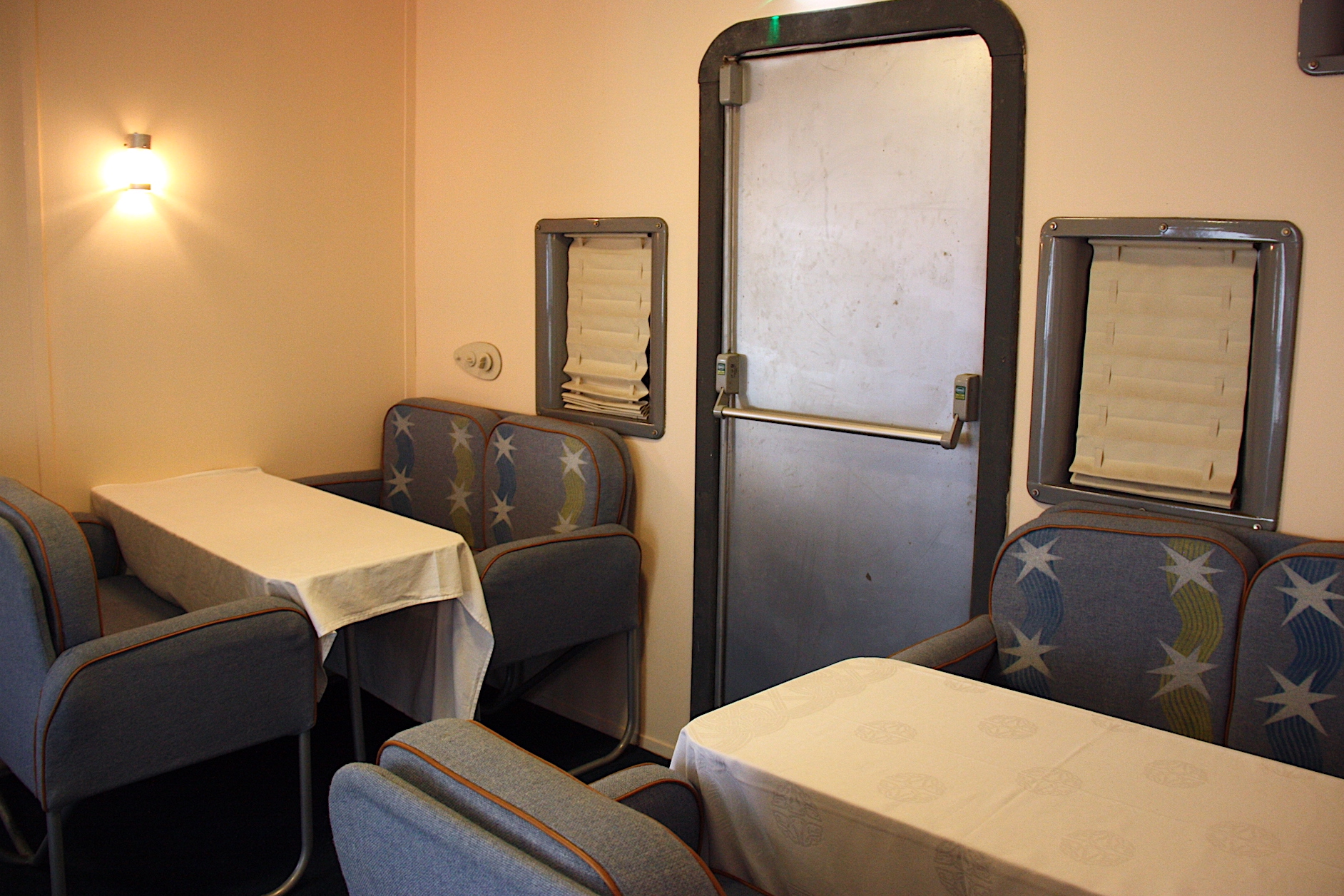
At the Foynes Flying Boat Museum discover aviation firsts that put the Irish village on the map as ‘the centre of the world’.
Words and photography by Liani Solari
The Pan Am press junket on 9 July 1939 was something to write home about. Propelling themselves into aviation history, 11 executives from America’s major newspapers and broadcasters boarded the luxurious flying boat Yankee Clipper in New York for the first transatlantic passenger flight to Foynes, Ireland. What a cub reporter would have given to be a fly on the wall…
In the 14-seat dining room (pictured above) of the Boeing 314, its tables laid with crisp linen, these high-flying media execs had 20 hours to swill champagne from crystal glasses and dine out on stories of their encounters with politicians, royalty and Hollywood stars.
Today, more than 80 years later, the Yankee Clipper’s inaugural transatlantic crossing is remembered for putting the village of Foynes, County Limerick, on the map as ‘the centre of the world’. In a long list of firsts, aviation would also give this picturesque spot on the River Shannon other claims to fame as the birthplace of Irish coffee and duty-free shopping.
The first hotel in Foynes, the Monteagle Arms, became the airport terminal building and the first headquarters for aviation in Ireland in 1939 (until 1945). Today it houses the Foynes Flying Boat Museum, the only one of its kind in the world.
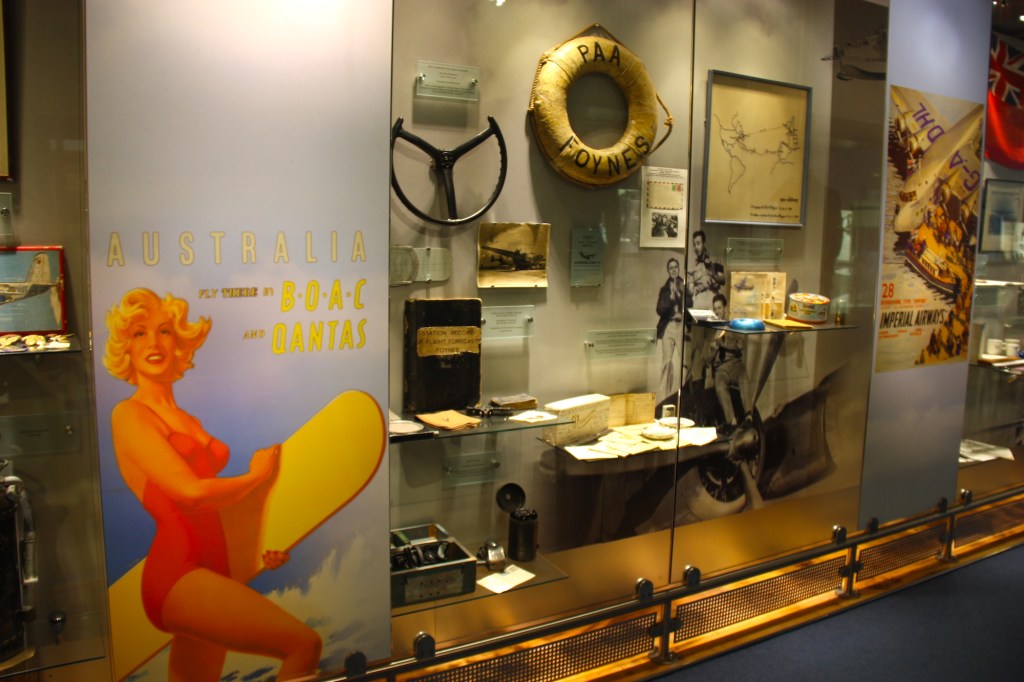
The collection covers everything from navigators’ logbooks and radio communications receivers to a Tyne Brand continental cake that travelled around the world on the flying boats but was never opened. Glass cabinets filled with aviation artefacts are flanked by vintage posters promoting flights to Bermuda, Havana, India and surf-loving Australia.
The museum’s centrepiece is the world’s only full-scale replica of a Boeing 314 (B314), the Yankee Clipper. The original Yankee Clipper was one of a dozen B314 flying boats built for Pan Am to facilitate long-range flights over the Atlantic Ocean in the wake of the Hindenburg disaster, which had tarnished the golden age of transatlantic airship travel. Designed to land on water, flying boats were also a solution to the lack of runways around the world, even in the major cities, before World War II.
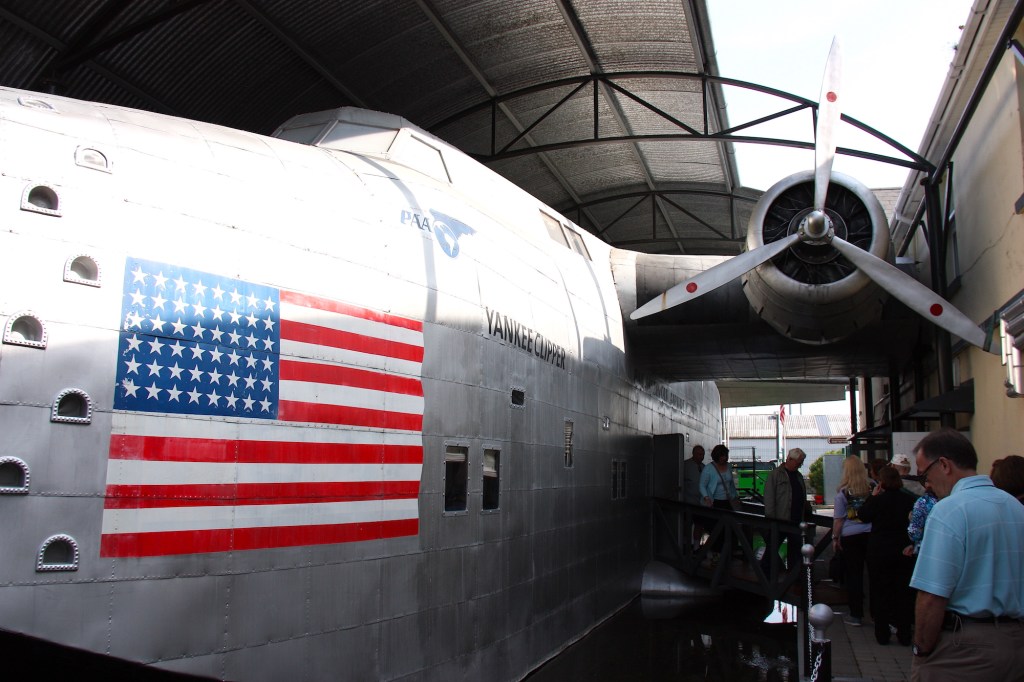
From the outside, the B314 looks like an unwieldy metal box with wings. However, stepping on board and into the spacious passenger areas, we’re reminded of a time when cattle class wasn’t an option and leg room was a given.
Ascending the stairs to the flight deck’s sprawling navigation and radio room, we enter nervous territory. These were the days before satellite navigation, when the crew would climb into the celestial observation turret at the top of the aircraft to check the flying boat’s position according to the sun, moon and stars. They would also toss a flare from the aircraft and observe the drift of the smoke to determine the strength and direction of the wind. Provided visibility was good, of course.
Unpredictable and treacherous conditions over the Atlantic Ocean could force a flight to turn back halfway, necessitating pleasant diversions at the Foynes terminal while the passengers waited out the weather.
One such night in 1943 led to the invention of Irish coffee when a group of damp, travel-weary passengers had to return to Foynes 10 hours after take-off. Called back to the terminal, the airport’s chef, Joe Sheridan, thought they could well do with a drop of whiskey, so he added it to their coffee. It’s said that a surprised American passenger asked, “Hey, buddy, is this Brazilian coffee?” to which Sheridan famously replied, “No. That’s Irish coffee.”
The beverage was an instant hit. And just as well. At the time, a return airfare between Foynes and the USA was half the average annual salary. Having paid for a flight that hadn’t delivered, the passengers were consuming a very expensive coffee indeed.
We round off our visit to the museum with an Irish coffee demonstration and tasting. Where better to learn the tricks to the perfect Irish coffee than in the airport terminal where the first Irish coffee was made? The key is in the spoon action, or lack thereof, to be sure.
Misty-eyed nostalgia for Foynes’ heyday increases with every sip and it’s almost easy to forget that World War II was constantly playing in the background like a black-and-white newsreel. Surprisingly, the war didn’t stop the flights into Foynes, although the flying boats were soon transporting more VIP military personnel and wartime politicians than civilians, including then Australian Prime Minister John Curtin.
Though Ireland was officially neutral during the war, Foynes secretly assisted the Allies by providing flights for Royal Navy and US Navy officers, transporting USO entertainers, relaying messages to the British Embassy in Lisbon, Portugal, and deciphering coded weather data – all the while taking pains to maintain the semblance of neutrality.
Foynes also “became a vital escape route for refugees from the war in Europe”, explains the museum’s website. “If they could get on a flight in neutral Lisbon, they’d be flown into Foynes and await a seat on a flight to America to begin a new life.”
When the war ended, so did the era of the flying boat. Most of the B314s were subsequently scuttled or scrapped, with the notable exception of the original Yankee Clipper, which had crashed in 1943 on approach to Lisbon, killing two of the seven USO entertainers on board.
Operations moved across the estuary from Foynes to Shannon Airport, where the world’s first duty-free shop was established in 1947. With the development of aircraft that could take off and land on solid runways, change was afoot.
© Liani Solari
‘Foynes: Flying boats and Irish coffee’ was originally published on Liani Solari’s Girls’ Own Adventure travel blog (now offline).

 Liani Solari