
Not everything in your travel sights has to be original to be authentic. These eight reproductions could even surpass your expectations.
Words by Liani Solari
If imitation is the sincerest form of flattery, ancient Roman sculptors were slathering the compliments on thick as plaster while making casts of Greek originals they admired.
Despite the cultural legacy of this practice of copying, somewhere on our travels we conflated ‘original’ with ‘authentic’ and snubbed replicas as ‘not the genuine article’. We haven’t really looked back. If anything, the pervasiveness of reality-altering AI has only ramped up our obsession with authenticity, and where authentic travel experiences were largely about seeking immersion, today they’re also about taking a break from fake news, deepfakes and fake it ’til you make it.
Of course, just because something isn’t original doesn’t mean it can’t be authentic. Take the following eight reproductions of famous works and sites, which range from the actual to the virtual, the ancient to the modern. They’re not fakes that would have art authenticators on Fake or Fortune? clutching their pearls, but unmistakable imitators that have their own intrinsic meaning and value beyond appearances.
Read on or jump the queue:
1. Mona Lisa
2. Terrace of the Lions
3. The Parthenon
4. Il Porcellino
5. Statue of Liberty
6. Michelangelo’s David
7. Hearst Castle
8. ABBA concert
1. Mona Lisa
The original: Florentine woman Lisa Gherardini, painted by Leonardo da Vinci 500 years ago, is unlikely to leave her fixed abode at the Louvre any time soon. During the Paris Olympic and Paralympic Games (26 July to 8 September 2024), about 30,000 visitors a day will jostle for a fleeting squint at her diminutive portrait as they speed date the artwork from behind a guardrail.
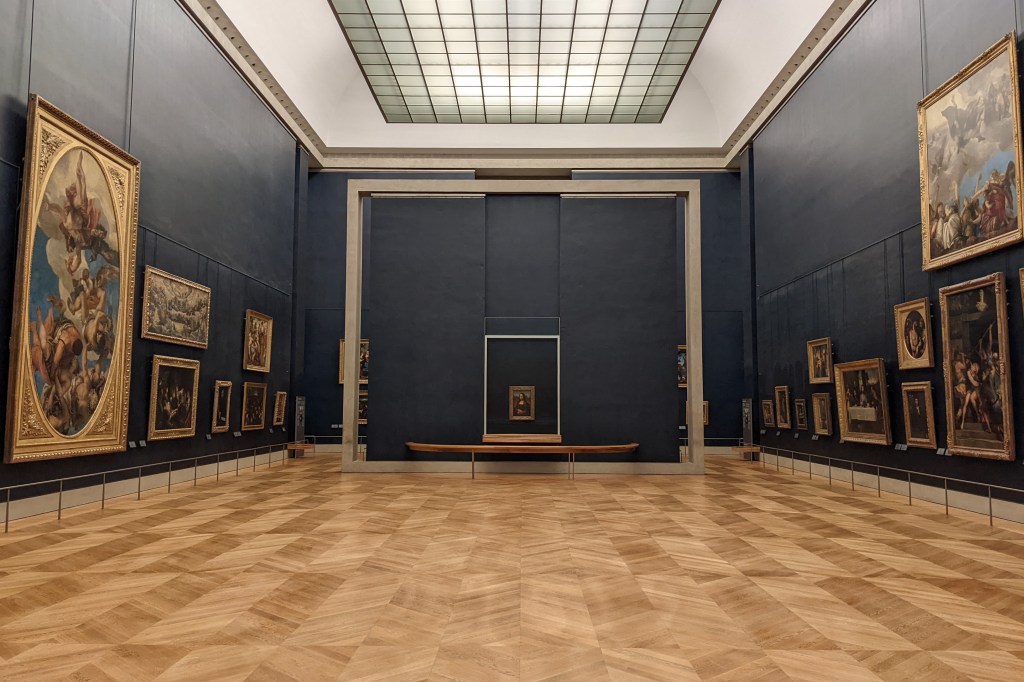
The Mona Lisa of your dreams – without the crowds on a Tuesday, when the Louvre in Paris is closed (Shonagon, CC0, via Wikimedia Commons, cropped) 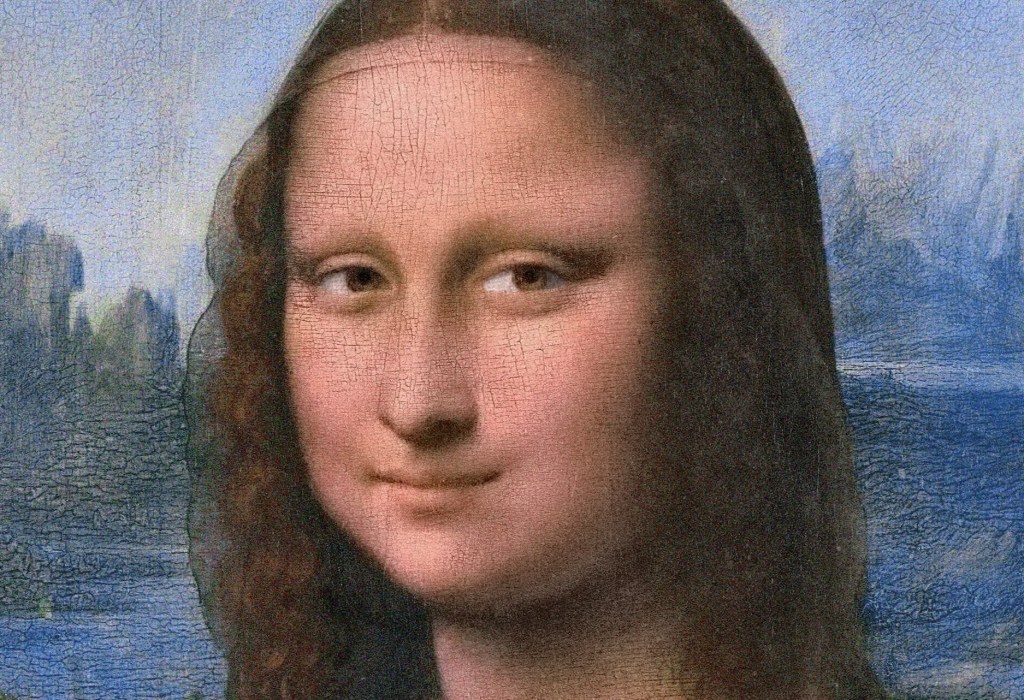
Digitally enhancing Mona Lisa visibly increases the appearance of fine lines (Leonardo da Vinci, Public domain, via Wikimedia Commons, cropped)
The copy: Mona Lisa is projected from floor to ceiling across the walls of the world’s largest digital art gallery, The Lume Melbourne, as part of the exhibition Leonardo da Vinci – 500 Years of Genius (16 March to 16 June 2024). Larger-than-life, digitally enhanced Lisa has reason to smile, liberated from the confines of the heavy frame and climate-controlled glass case in which her original likeness resides. She beams down on her admirers, who have longer than 30 seconds to forensically study the fine craquelure hairlines that are her badge of authenticity. Rounding out the representations of Mona Lisa is the world’s only 360-degree replica of the painting, which was produced using a powerful multispectral camera.
The takeaway: The da Vinci exhibition in Melbourne is the latest in the global trend of digitalising well-known artworks to provide viewers with an immersive, multisensory experience of an artist’s works in the context of their world. Traditionalists could argue the large-format projection of Mona Lisa is light-years away from the original oil painting on wood, but it does facilitate greater access to the work, or at least a semblance of the work, that is ironically more intimate.
And another thing… Purists can take a break from the debate with the Melbourne exhibition’s display of original pages from da Vinci’s Codex Atlanticus notebooks, along with machine inventions faithfully constructed from the Renaissance polymath’s sketches.
2. Terrace of the Lions
The original: Before it was eclipsed by Piraeus as the largest passenger port in Greece, Delos had its time in the sun as a cosmopolitan port buzzing with visitors to the Cyclades’ most sacred island, the birthplace of twin deities Apollo and Artemis. From the 7th century BCE, awe was inspired in worshippers by a row of up to 16 marble lions that roared across the island’s Sacred Lake. In the early 1900s, these leonine guardians of the sanctuary – weathered toothless and numbering only five – were unearthed by archaeologists and installed on pedestals in situ.
The copy: To protect them from further exposure to the Aegean’s strong northerly winds, the 2600-year-old lions on this World Heritage-listed island were moved inside to the onsite archaeological museum in 1999 and replaced with replicas.
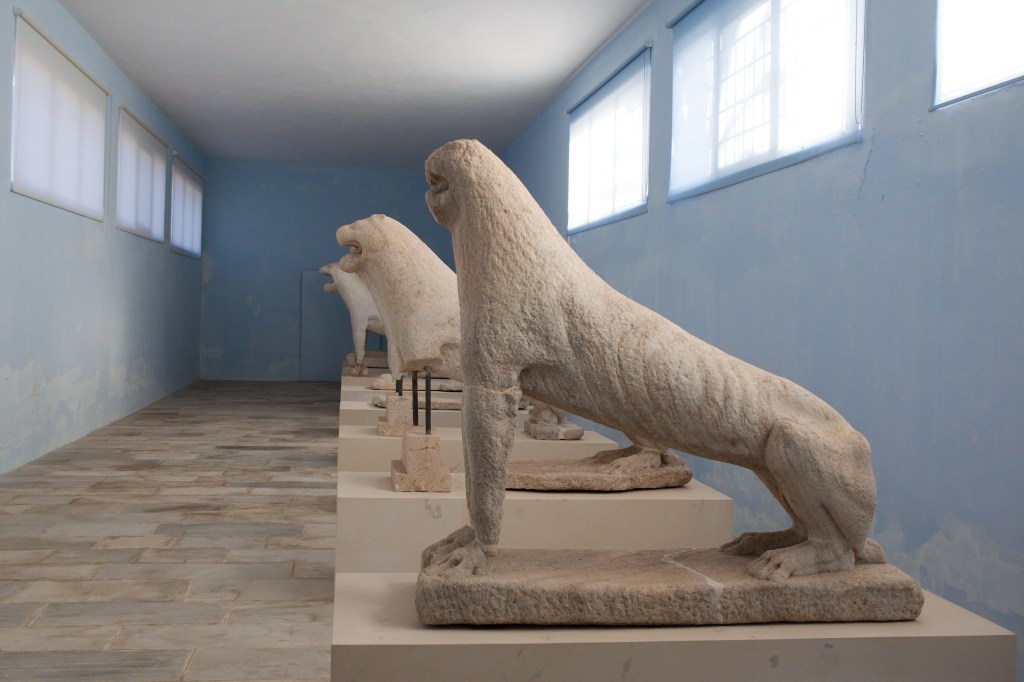
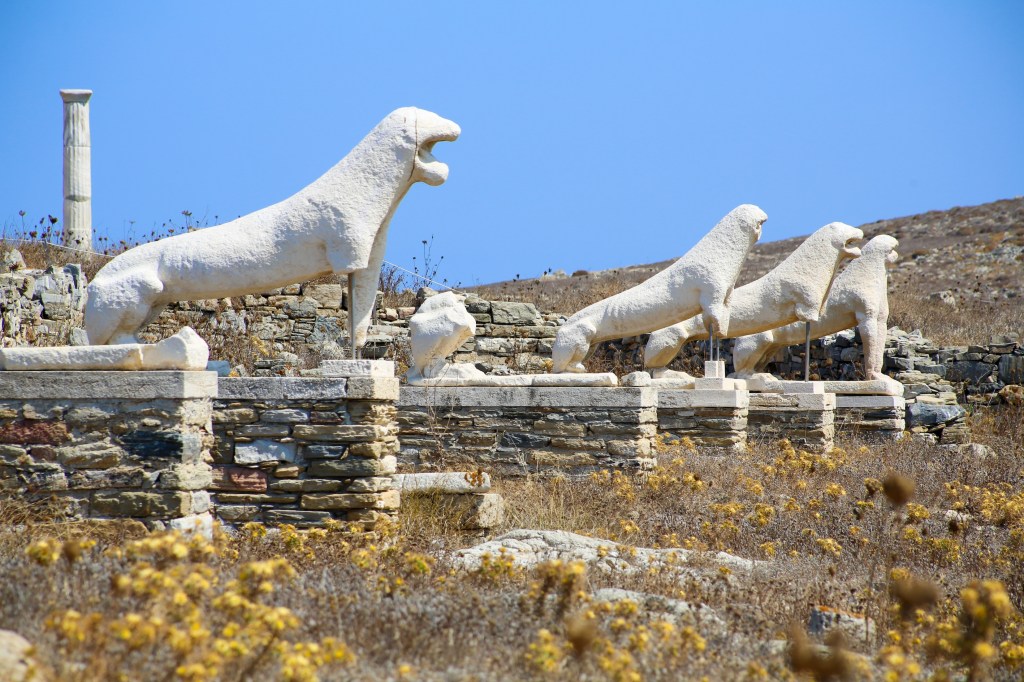
The takeaway: Retirement isn’t all it’s cracked up to be for the longstanding original lions now confined to a museum room, their silent roars bouncing off the wall opposite. Still, they have been saved from extinction, and their only risk of overexposure is the social media kind. Their body doubles enable daytrippers from Mykonos to appreciate the Delos lions in their ‘natural habitat’, although there’s the thorny question of whether the lions in antiquity were raised on pedestals or placed on the ground.
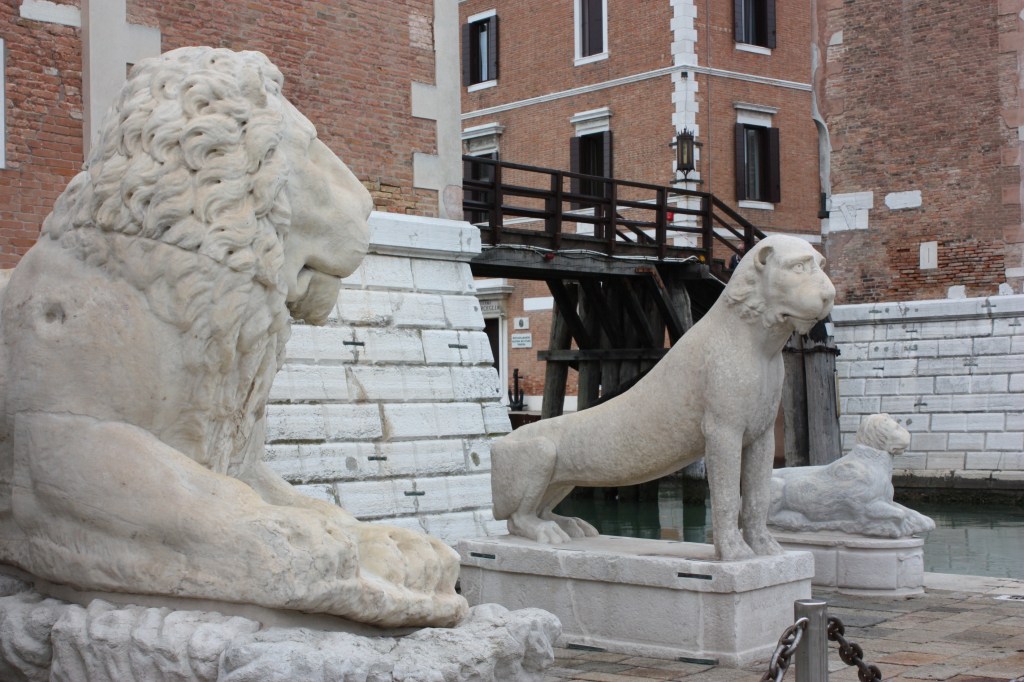
And another thing… Attempts to herd the missing cats have led to one being spotted outside the main gate to Venice’s Arsenale, an Art Biennale venue (20 April to 24 November 2024). Standing sentinel with two other Greek big cats and an accidental ‘lion dog’ – all spoils of war – the Delos lion looks decidedly woeful with its later, slightly oversized head and clammed-shut mouth.
3. The Parthenon
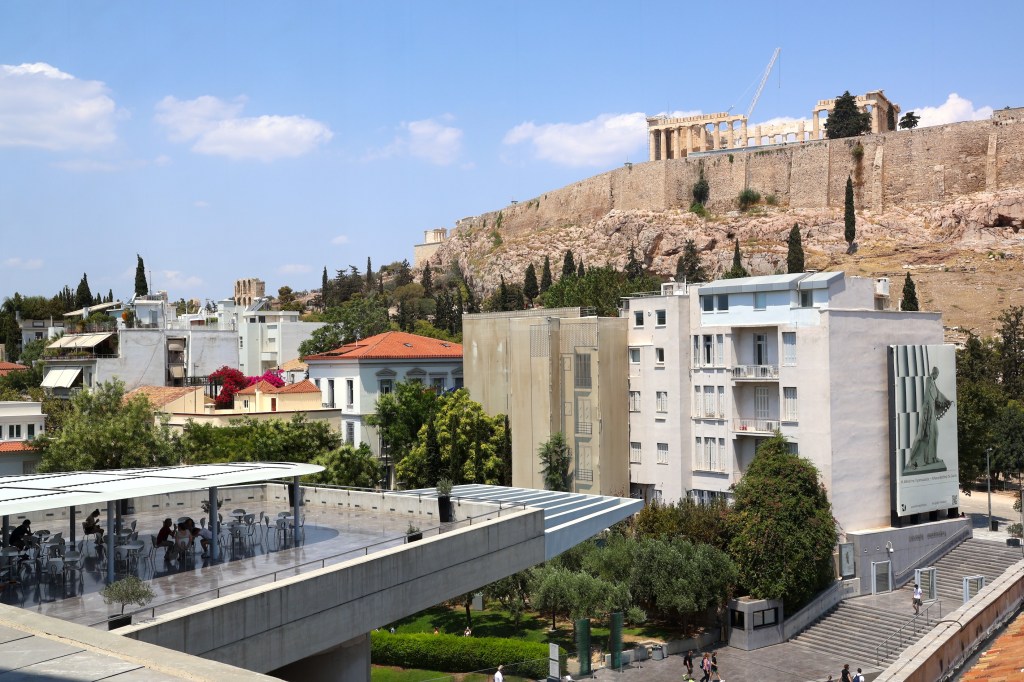
The original: The Parthenon has been the crowning glory of Athens’ Acropolis since it was raised in the 5th century BCE as a shrine to the city’s patron deity, Athena. Doubling as Athens’ treasury, the marble temple contained a colossal ivory statue of the goddess that reportedly stood 11.5 metres tall and contained more than one tonne of removable gold. The sands of time have seen the temple converted into a Christian church, Islamic mosque, gunpowder store, army barracks and today’s archaeological site. They have also witnessed the building’s ruin from a wartime explosion and the souveniring of decorative features. Only the shell of the classical temple remains, its pediment statues and most of the frieze now controversially split between the Acropolis Museum and The British Museum. By late antiquity, Athena had left the building.
The copy: America’s country music capital, Nashville, was once touted as the ‘Athens of the South’ – a centre of learning and culture with a proliferation of colleges and universities, and Greek Revival edifices such as the Tennessee State Capitol. Taking Greek Revival to the nth degree, the 1897 Tennessee Exposition in Nashville’s Centennial Park featured a temporary replica of the Parthenon, which was later re-created in concrete and opened as a city museum in 1931. Athena eventually returned for an encore in the form of a gilded cement replica to rival her dazzling prototype.
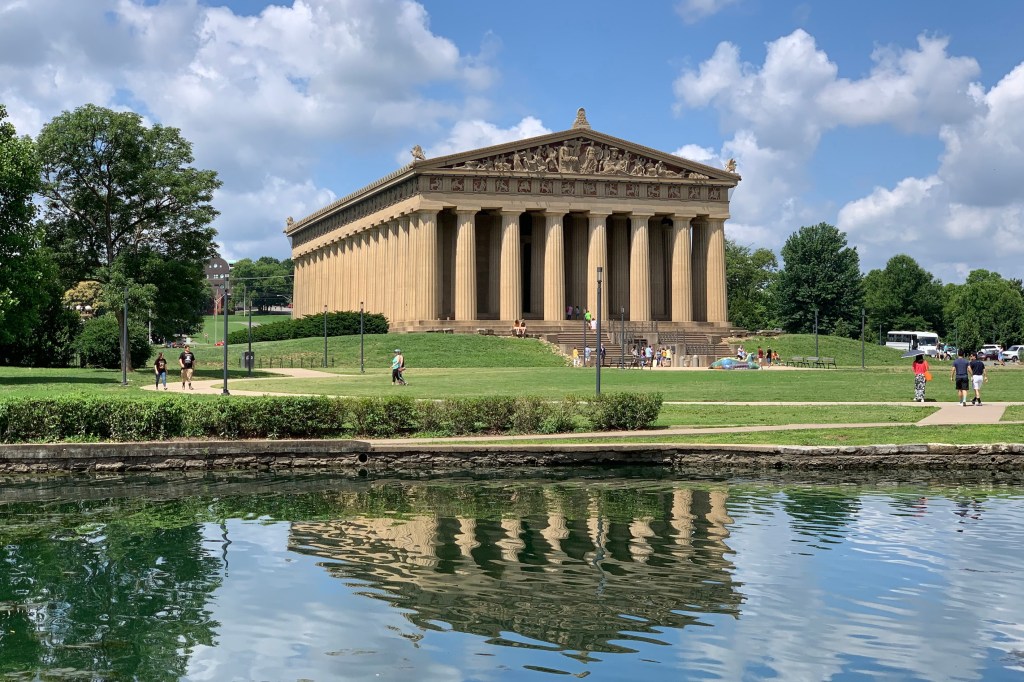
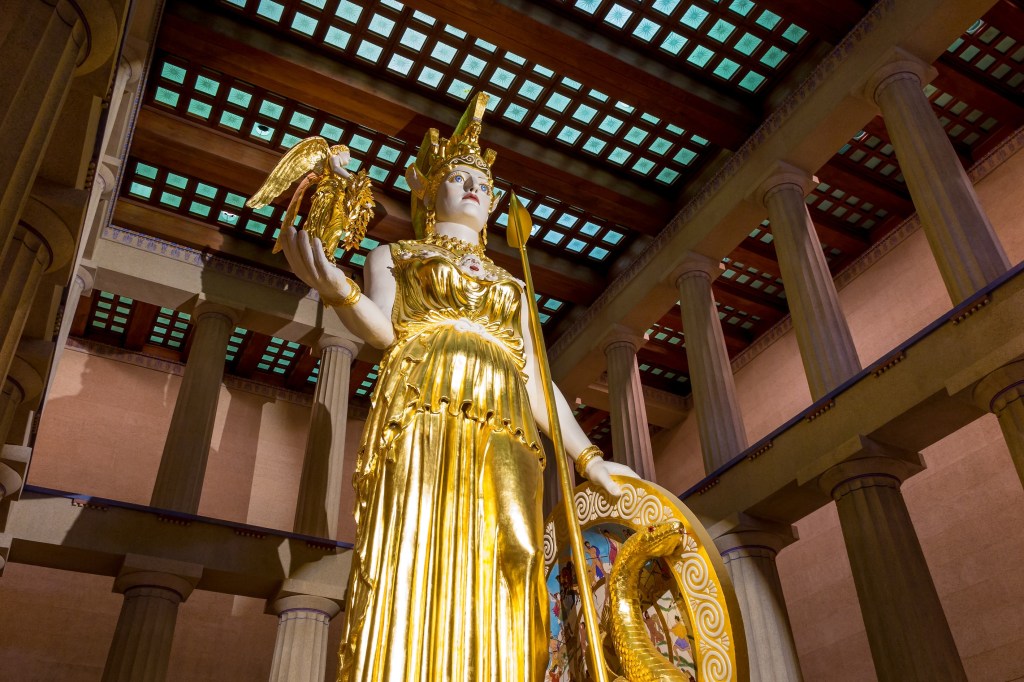
The takeaway: The Nashville Parthenon fleshes out the skeletal remains of the ancient Greek megastructure, allowing visitors to envisage the original in its glorious entirety (minus the frieze). However, the replica’s lakeside location amid manicured parklands is clearly 9000 kilometres removed from the real thing atop a rocky outcrop overlooking Athens.
And another thing… Knowing the local historical context of the Nashville landmark – its precursor was built for an exposition that segregated African-American attendees and appealed to Confederate nostalgia – enables visitors to engage with it more critically and thoughtfully.
4. Il Porcellino
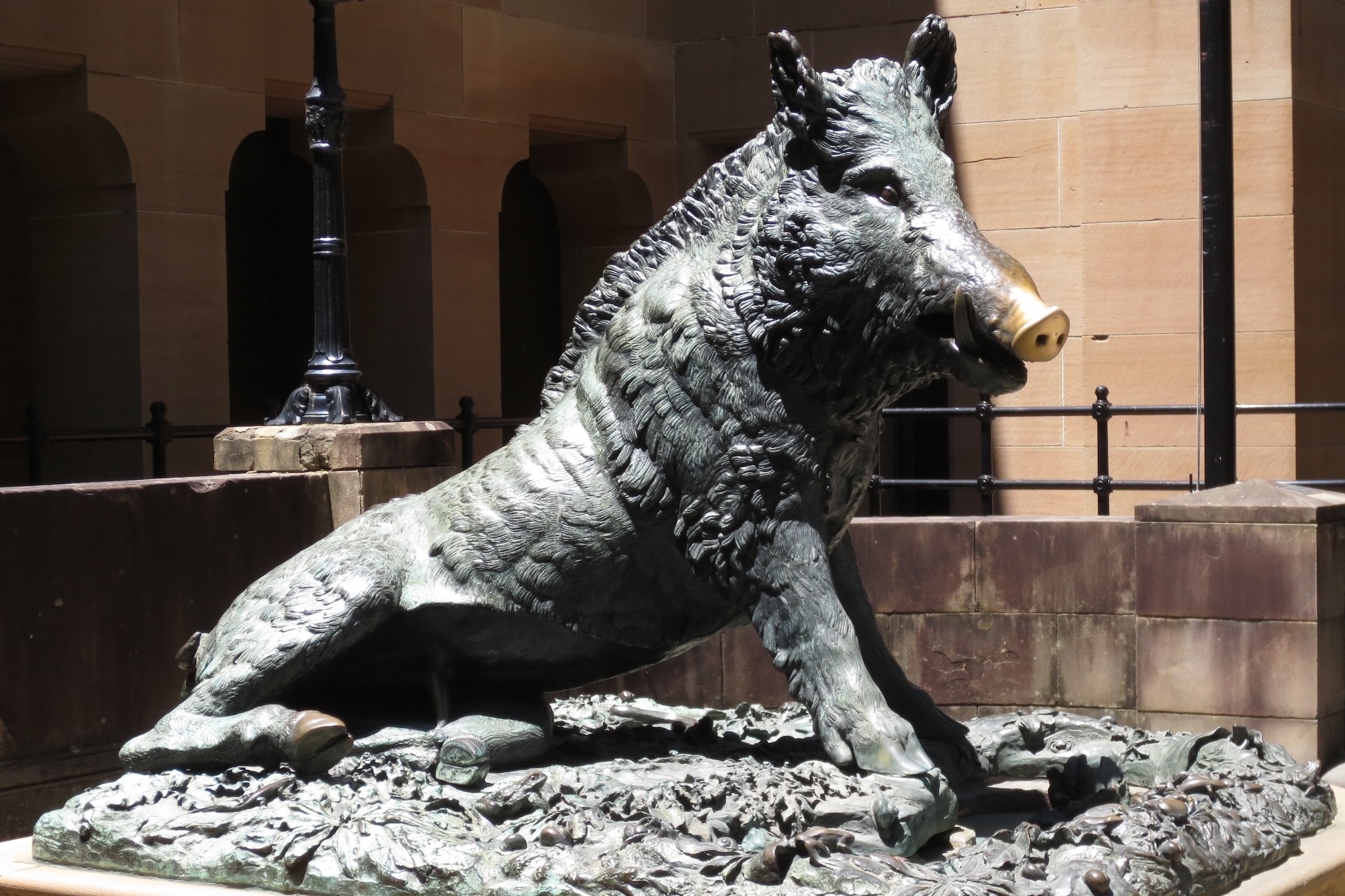
The original: The Uffizi Gallery in Florence says one of its most popular sculptures is a monumental boar. Enthusiasm for the Greek-inspired Roman marble of a feral pig hasn’t waned since the gallery’s early days, when Francesco Bocchi waxed lyrical about this work “so rare and so admirable that it reminds us of the animal’s fierce nature” in his 1591 guidebook The Beauties of the City of Florence. The Boar had entered the collection of the powerful Medici family in 1560 and, like the beast in nature, proved indomitable when it survived a devastating fire in 1762 that burnt other works to a crisp.
The copy: Since 1640, Florence’s locals and visitors have taken a shine to the more famous bronze copy of The Boar commissioned by the Medicis. Cast by Pietro Tacca, who re-created the statue as a fountain with a base of plants and small creatures, the ironically nicknamed Il Porcellino (meaning ‘little pig’ or ‘piglet’) was installed in the loggia of the New Market, near the Uffizi, where it could hog the limelight. For centuries, visitors have rubbed its snout daily and fed it with coins to invoke good luck and a return to Florence. Damage from overuse meant the celebrity swine had to be replaced in 1897 and again in 1998, but in recent years it has had a less invasive nose job.
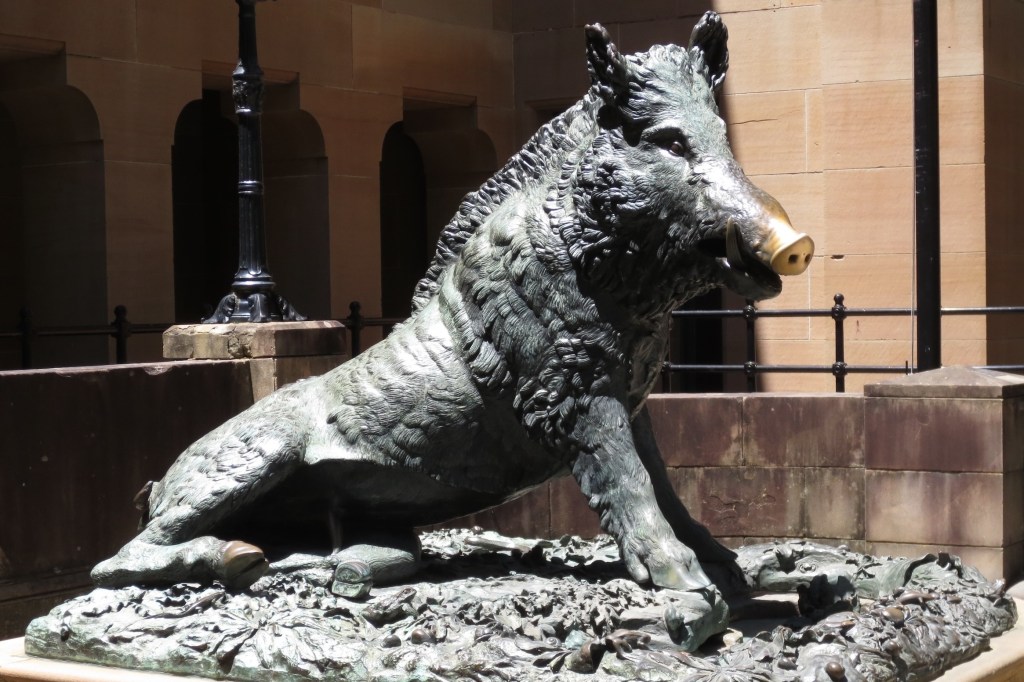
The takeaway: Numbering about 50, the many copies of Il Porcellino around the world speak to the work’s wide-ranging and enduring appeal. Australia has its own bronze replica outside Sydney Hospital. There’s great humour in reimagining a ferocious beast as an endearing mascot you can pat without losing your hand, and the level of detail in the animal’s naturalistic rendering is masterful. Sure, Il Porcellino is a representation of a wild pig. But it’s a beautiful wild pig, so you can put away your lipstick.
And another thing… Someone forgot to tell these replicating replicas that the collective noun for a group of boars is ‘a singular’. How ironic.
More look-alikes to look out for
5. Statue of Liberty
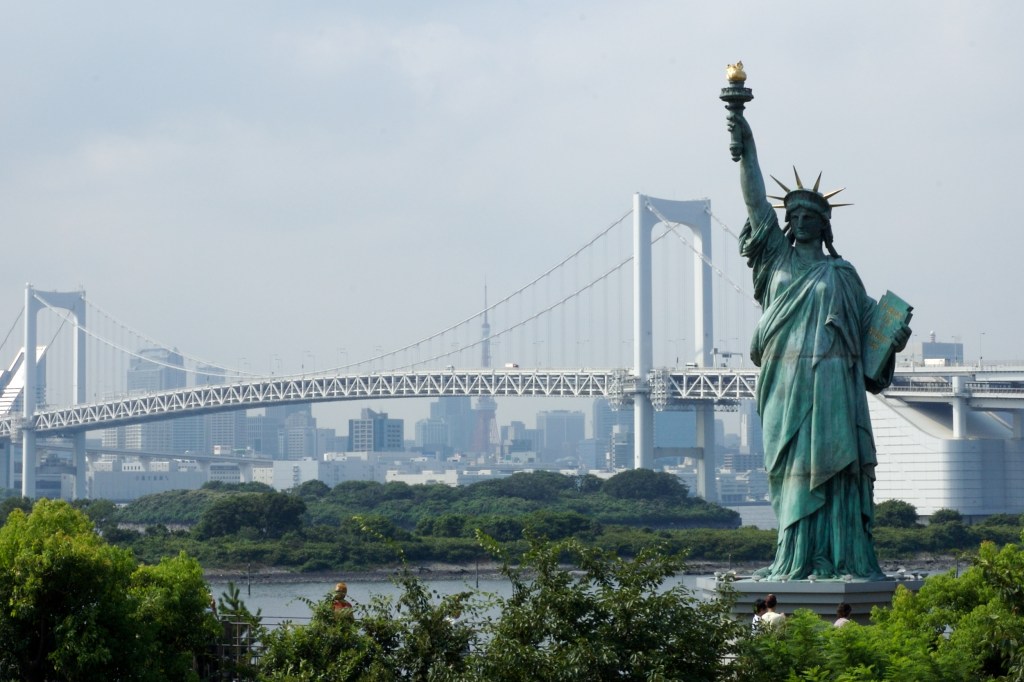
A trick of the eye makes Tokyo Bay’s replica of New York Harbor’s Statue of Liberty appear just as large, but in reality the original could cradle the copy in her arm. Both have water views from their respective islands but, needless to say, you can’t access them from inside the crown of Japan’s Lady Liberty.
6. Michelangelo’s David
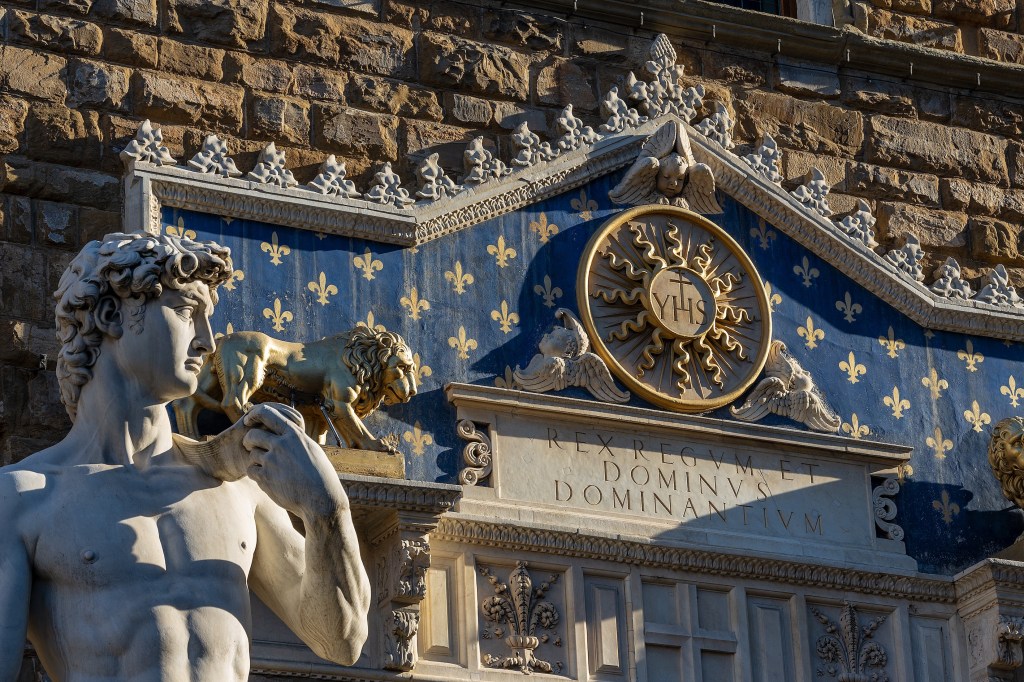
Originally overlooking the piazza outside Florence’s Palazzo Vecchio, Michelangelo’s 16th-century marble masterpiece, The David, conquered Goliath but was no match for protesters and pigeons. Today, admire ‘a David’ in the piazza and the original in the city’s Accademia Gallery.
7. Hearst Castle
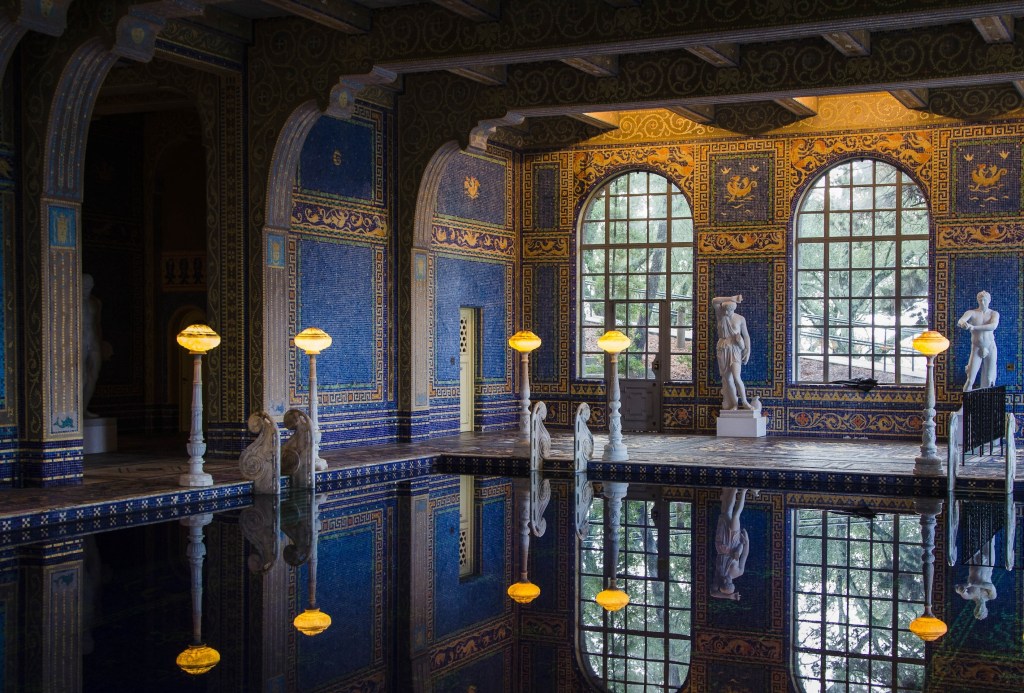
Built by yellow journalism pioneer William Randolph Hearst in the early 1900s, Hearst Castle commands the fog-shrouded hills above San Simeon, California. On a tour of the estate, marvel at the mix of genuine antiquities and imitative Mediterranean Revival elements in the architecture, decor and grounds.
8. ABBA concert
See virtual avatars of ’70s Swedish supergroup ABBA perform the Voyage concert in London (27 May 2022 to 5 January 2025), or sing on stage with the band’s holograms at ABBA The Museum in Stockholm.
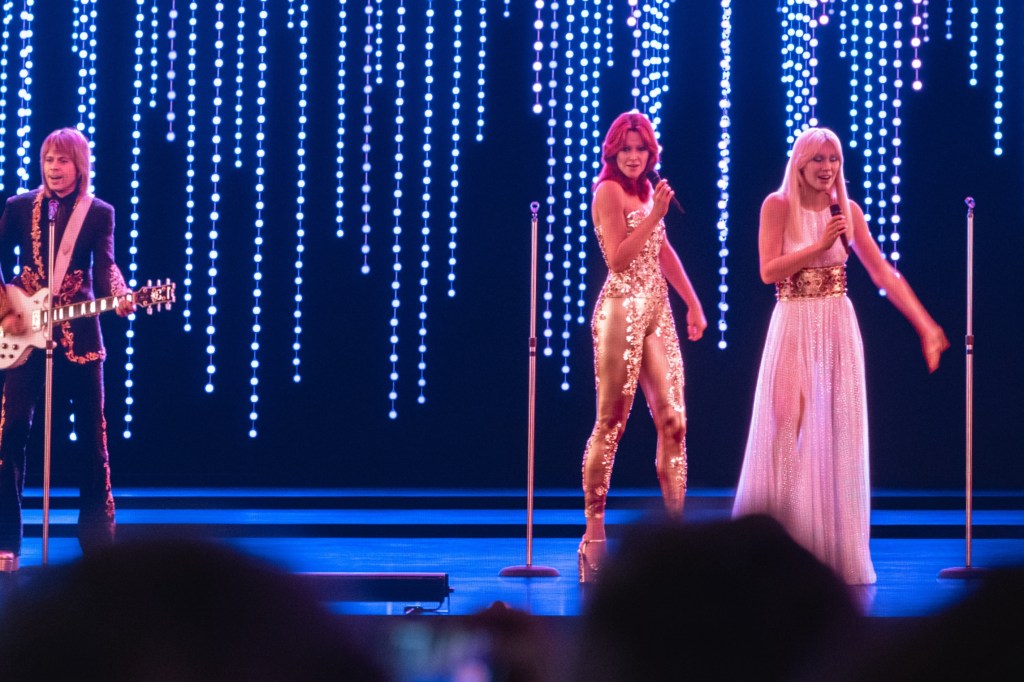
ABBAtars of Björn, Anni-Frid and Agnetha performing at the ABBA Arena in London, England (Raph_PH, CC BY 2.0, via Wikimedia Commons, cropped) 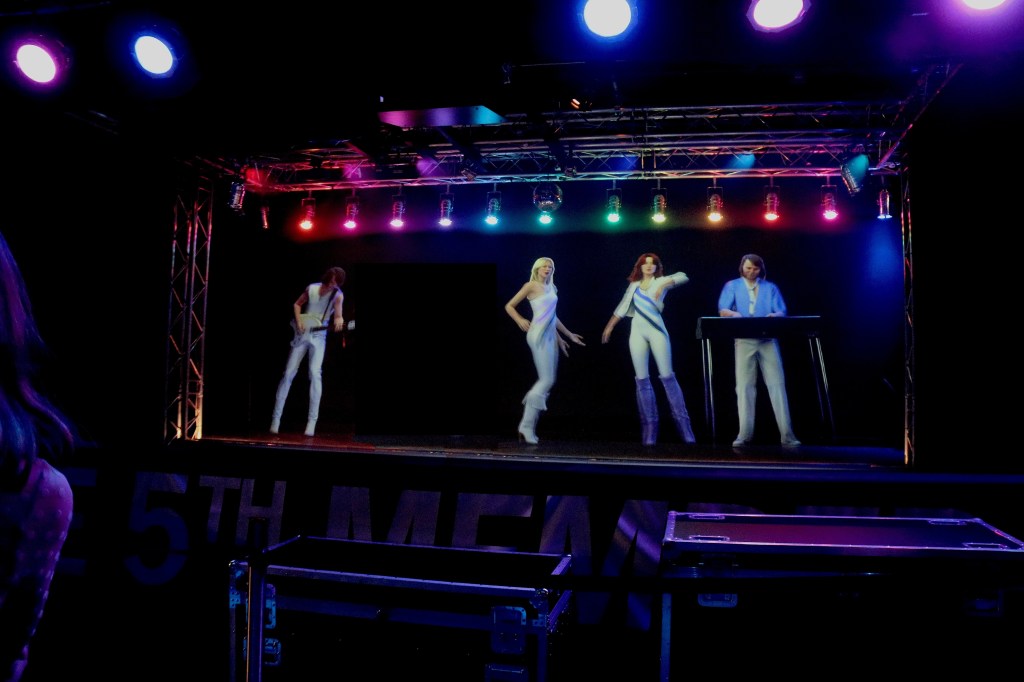
Holograms of Björn, Agnetha, Anni-Frid and Benny invite visitors to join them on stage as “the 5th member” at ABBA The Museum in Stockholm, Sweden (Photo © Liani Solari)
Words © Liani Solari
Posted 7 May 2024.

 Liani Solari