
Do a tour of William Shakespeare’s historical playhouse, attend a performance, and glean fun facts about the Bard.
Words and photography by Liani Solari
Miranda is every inch the woman that Ferdinand imagines. She really is. Attending a performance of William Shakespeare’s The Tempest at the reconstructed Globe Theatre in London, I’m reminded that the only women visible in the original Elizabethan theatre would have been fanning themselves in the undercover galleries or cracking their teeth on hazelnuts in the open-air yard. Miranda would certainly have been played by a young man.
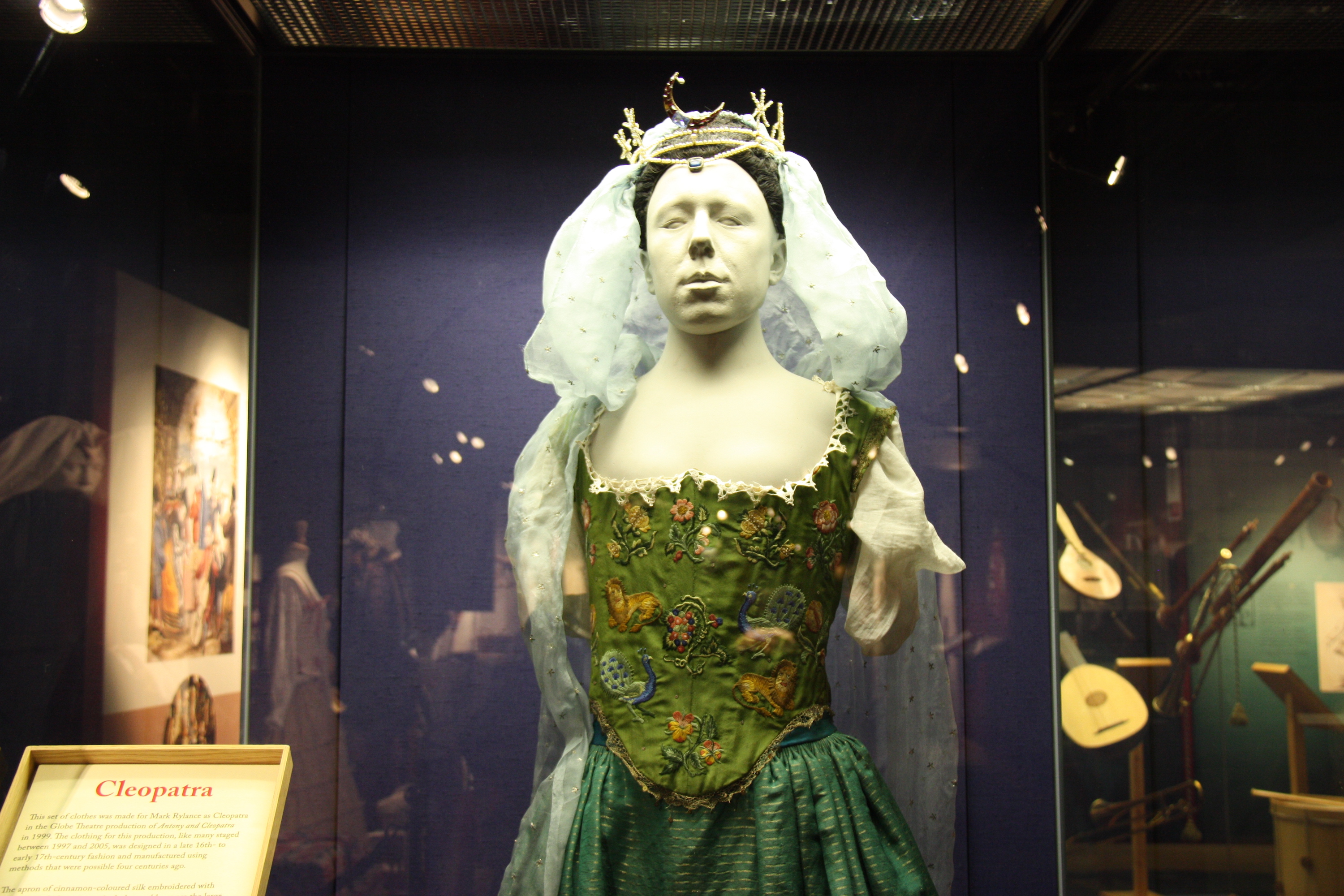
More than 400 years after Shakespeare wrote the play, a female player, Jessie Buckley, is treading the boards as Miranda. Most plays at the Globe are now performed by a mixed cast. That said, in a nod to tradition, the new Globe opened in 1997 with a performance of Henry V by an all-male cast in authentic Elizabethan costume. Similarly, in 1999, actor Mark Rylance famously strutted his stuff in the lead female role in Antony and Cleopatra, teetering on the brink of incredible platform ‘overshoes’ called chopines. These are on display in the Globe’s exhibition area, along with Cleopatra’s delicately hand-embroidered corset and silk skirt (pictured above).
In an ironic twist that Shakespeare would surely have appreciated, the Globe has presented all-female performances, too. Before The Tempest begins, we take a 30-minute guided tour of the theatre, our guide recalling six-foot-tall actress Janet McTeer “playing a very swashbuckling Petruchio” in The Taming of the Shrew. Much Ado About Nothing and Richard III, she adds, have also been performed here by all-female casts.
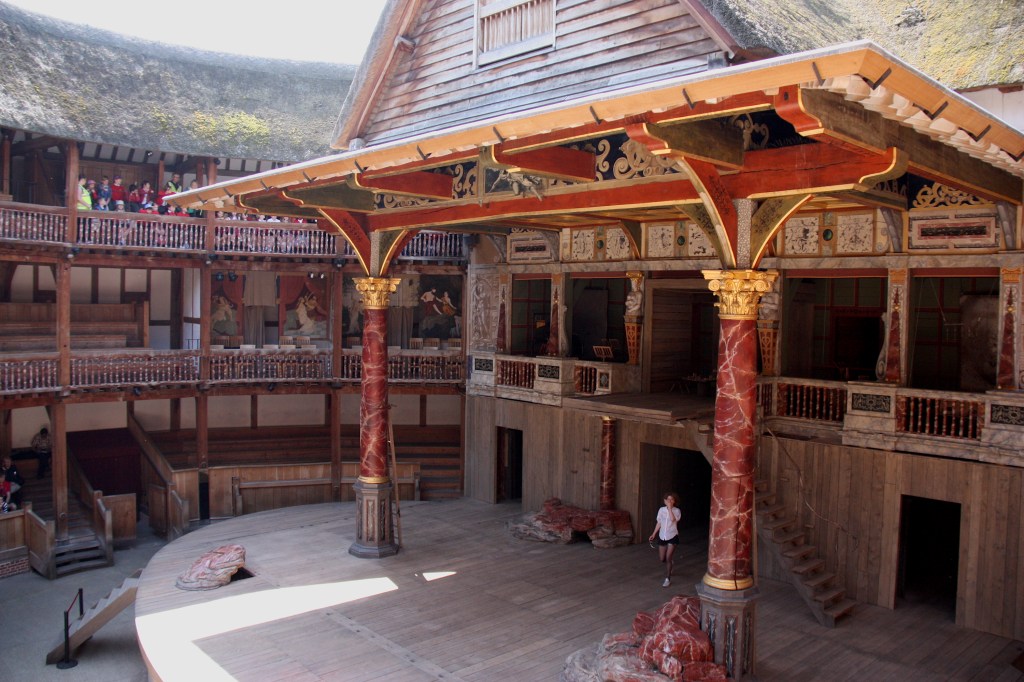
The new Globe was late American actor/director Sam Wanamaker’s dream to resurrect the original Globe Theatre built in 1599 in nearby Park Street. No plans for the original Globe exist, but archaeological excavations of about five per cent of its foundations in 1989 confirmed the dimensions of this 20-sided open-air polygonal building.
Shakespeare’s date of birth is less certain. However, based on his baptism in Holy Trinity Church in Stratford-upon-Avon on 26 April 1564, his birthday is traditionally celebrated on 23 April. If the 23rd is correct, Shakespeare died on his 52nd birthday. Unlike the 1700 words that Shakespeare invented, you couldn’t make that up.
Fun facts
Here are some other insights about Shakespeare and his Globe that we gleaned on our visit:
1. Shakespeare didn’t attend university. Universities permitted single men only, and Shakespeare married when he was 18.
2. We quote Shakespeare every day. That’s a “foregone conclusion”.
3. The theatre was an excuse for a long tea-break. In Shakespeare’s day, plays were performed at 2pm only. “The City opposed the theatres because they drew apprentices away from work,” says the exhibition literature. Playhouses weren’t permitted within London’s walls, so pleasure-seekers would cross the Thames to visit Bankside, where the Globe and other theatres were located alongside pubs and brothels, and ‘entertainment’ included bear-baiting, bull-baiting and cock-fighting.
4. Hygiene wasn’t what it is today. The groundlings were commoners who jostled for space in the standing-room-only yard of the Globe, right in front of the stage. They could number 1000 on a hot summer’s day, when they became known as ‘stinkards’.
5. They drank ale at the theatre. When the original Globe burnt down in 1613, miraculously there were no fatalities and just one injury: a man’s britches caught fire, which was put out with a bottle of ale.
6. Shakespeare was meant to be heard, not seen. It seems counterintuitive, but the view of the stage from the premium seats in the gentlemen’s boxes is partly obscured by large oak columns. In Shakespeare’s day, people came to hear the play, so those seats were still considered the best in the house. The Globe’s acoustics are such that today’s actors don’t use microphones.
7. All the world’s a stage. This quote from As You Like It rings true at the Globe, which is a universe of sorts for the duration of each play. Above the stage is a trapdoor painted with the sun, moon and zodiac signs, and mechanical apparatus for lowering the gods through ‘the heavens’.
8. The third Globe is a first. The first Globe Theatre was the victim of fire; the second succumbed to plague and Puritans. Today’s Globe Theatre – the third – is the first thatched building permitted in London since the Great Fire of 1666.
9. It’s not the West End. There’s no lockout at the Globe – you’re free to come and go while the actors are on stage. In Shakespeare’s day, groundlings forked out one penny for standing space in the yard. Today, where else can you go to the theatre in London for five pounds?
Where to experience Shakespeare around the globe
- Australia-wide: Bell Shakespeare
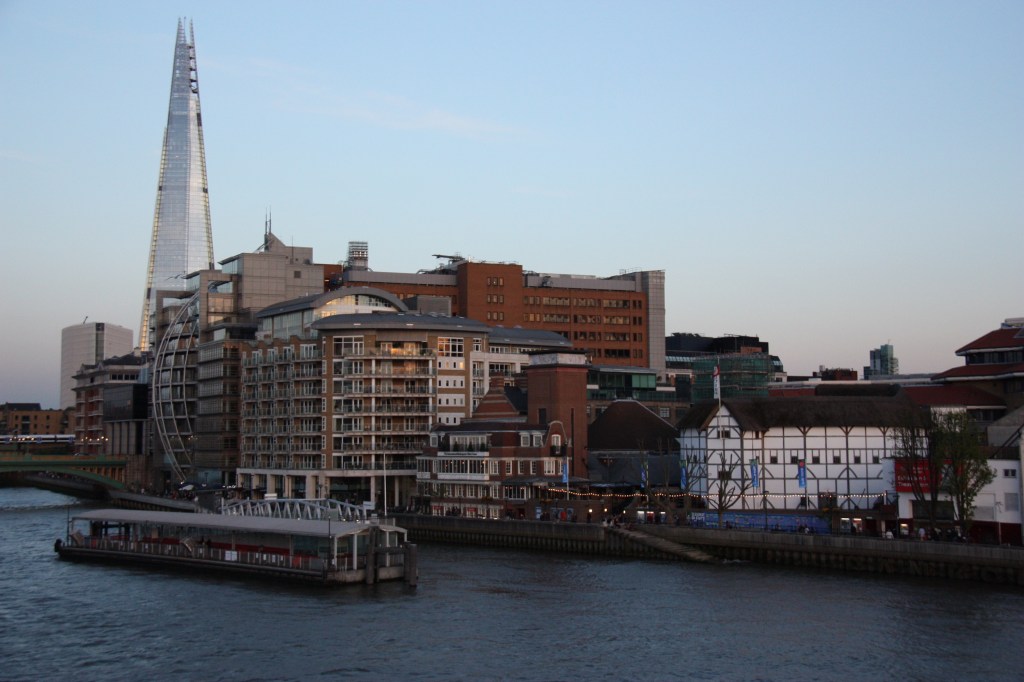
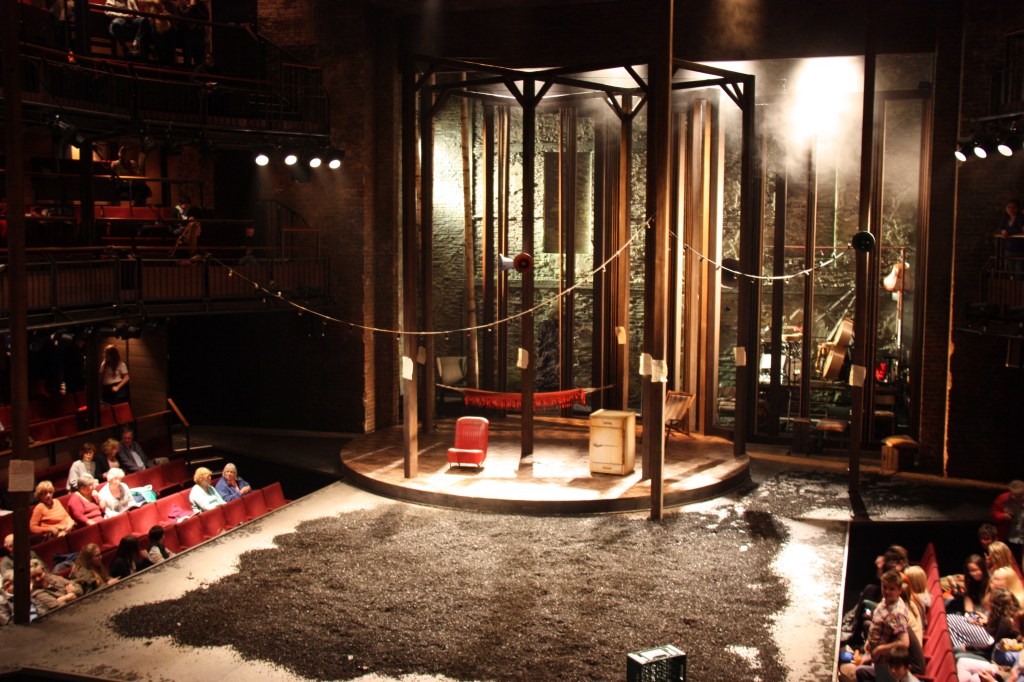
Pictured below, left to right:
- London, England: Shakespeare’s Globe
- Stratford-upon-Avon, England: Royal Shakespeare Company
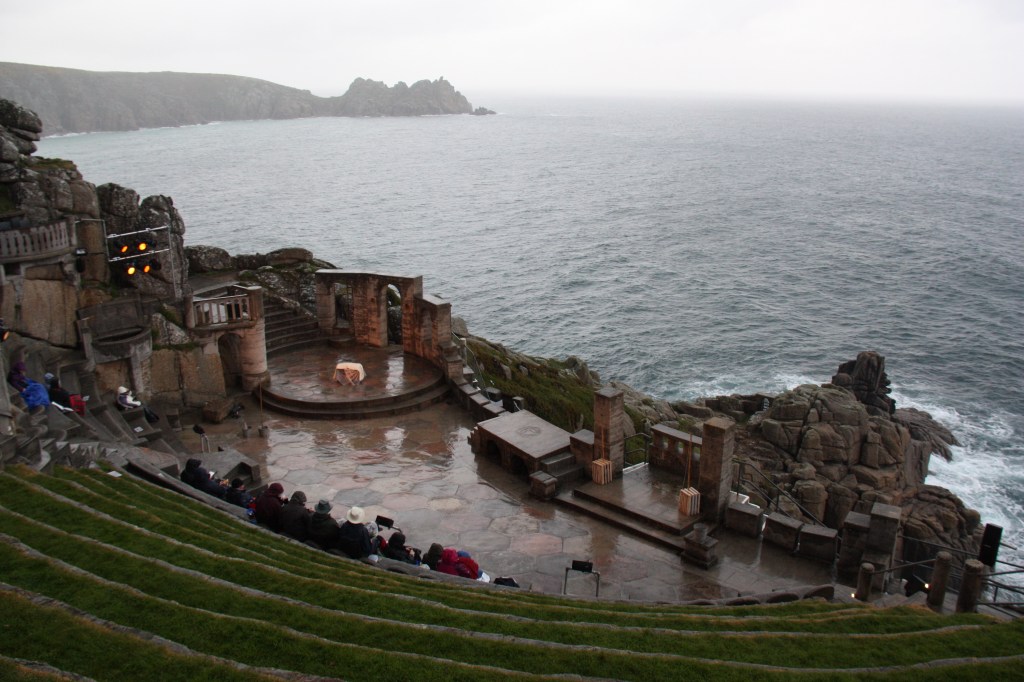
- Cornwall, England: The Minack Theatre
(Photographs: Liani Solari)
© Liani Solari
‘Around the Globe in London’ was originally published on Liani Solari’s Girls’ Own Adventure travel blog (now offline).

 Liani Solari